The one that belongs to you depends on whether you are fixing soil, hiding a fence, or building a room you can sit in.
Warm bulbs read as flame, cool bulbs read as clinic, and that distinction is what keeps garden lighting from turning your lawn into a parking lot.
[link-whisper-related-posts]1. Pollinator Gardens
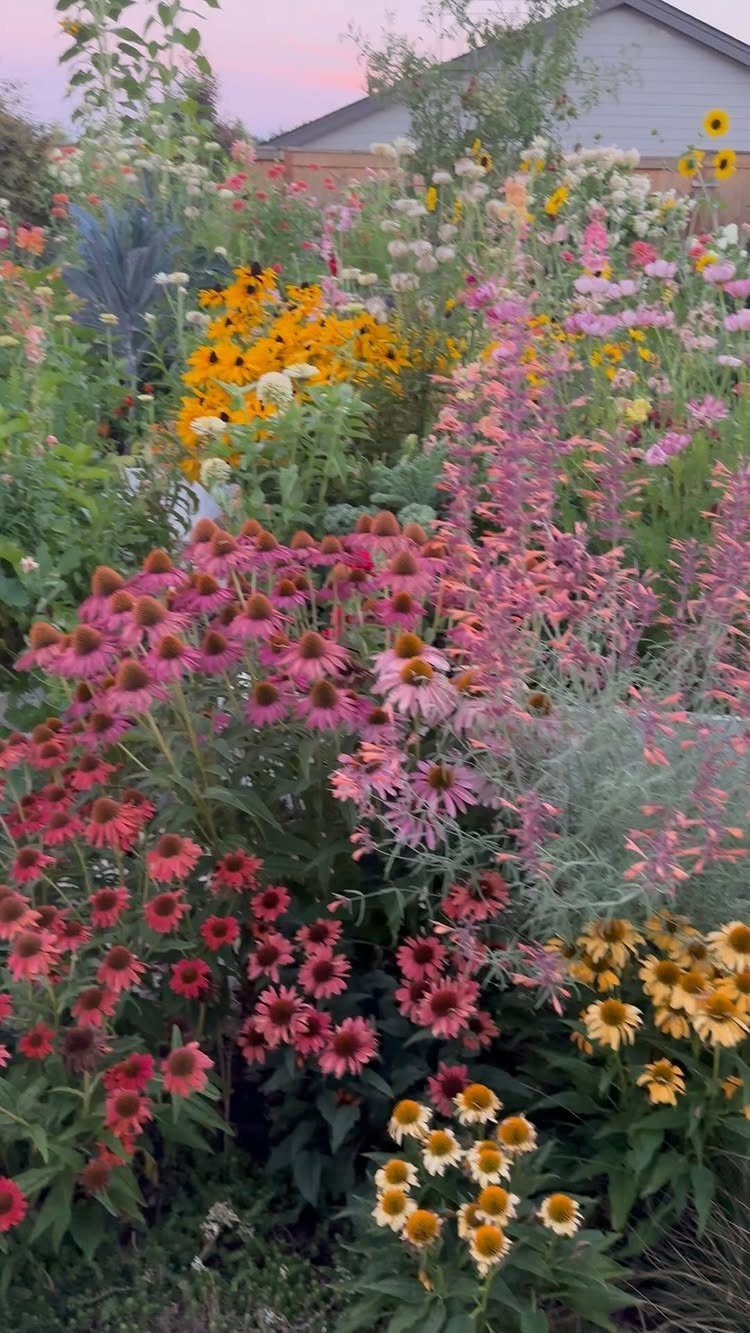
A pollinator garden is not a flower bed with a sign; it is a sequence of blooms that keeps something flying from March through October.
Native plants do the heavy lifting.
Coneflower, black-eyed Susan, and salvia handle summer drought once their roots settle in, and they reseed where they are happy. Grouping them in drifts lets a bee work one patch without crossing open ground.
A shallow dish of water with a few stones for landing saves more pollinators than any single plant. Pesticides, even organic ones, defeat the purpose; I handpick Japanese beetles instead.


Perfect Size for Any Garden: Measuring 12.5 x 22 inches, this vibrant garden flag fits most standard flag stands (sold separately), making it easy to showcase your seasonal style. No guesswork—just hang and enjoy!

2. Secret Garden Retreat
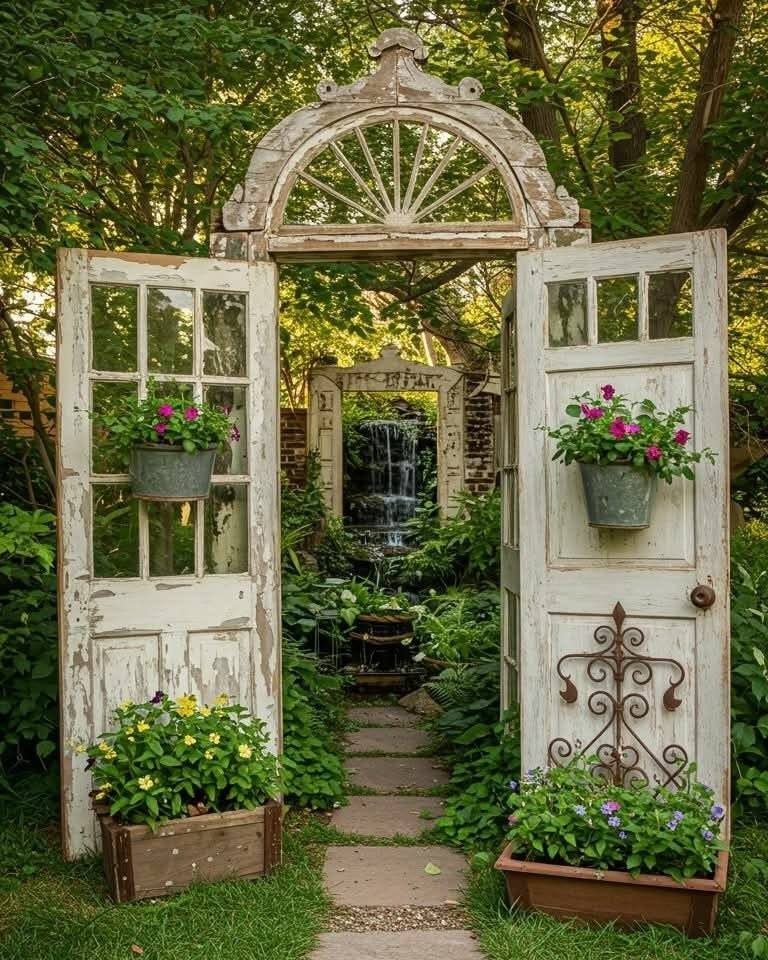
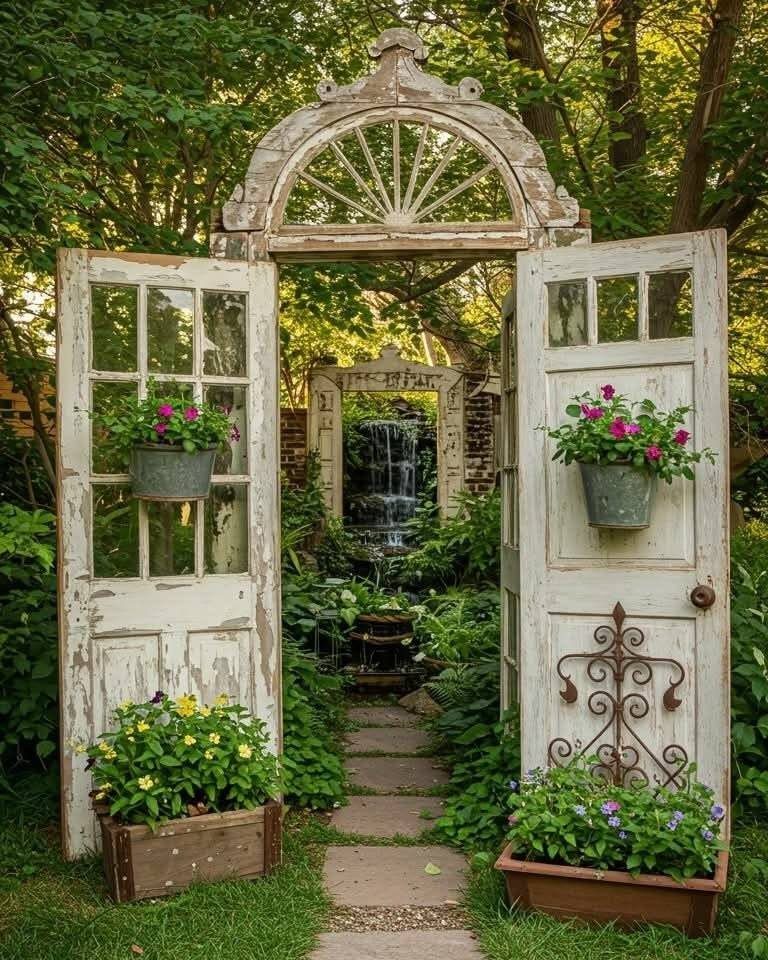
Seclusion in a garden is built, not found. A weathered doorframe works because it narrows the view to a path and something moving at the end.
I would start with the water sound, since that is what stops people. A small recirculating fountain or a basin with a bubbler runs on a basic pump and hides the neighbor’s fence line.
Planting goes dense and tall on both sides: miscanthus, elderberry, or a fast-growing vine on wire. The bench or hammock sits where the path turns, so the sitter faces away from the house.
A single overhead element, a pendant pot or a hanging basket, completes the enclosure without walls.

SOLAR POWERED FOUNTAIN PUMP: Mademax solar birdbath fountain only needs 3 seconds to operate automatically in direct sun, with a spray height of 4–27.5 inches (10-70cm). No electricity or battery needed. (Solar fountains does not store energy, can not work on cloudy days or night, please make sure the product is used in direct sunlight, and it is recommended to use it in clean water, which will prolong the life of the product

Wonderful Garden Addition: Powered by sunlight, 1 W solar fountain does not need any electricity or battery to attract a lot of hummingbirds to your backyard; It runs automatically in 3 seconds when sunlight is sufficient, with a spray height of 30-40 cm

[Eco-friendly Design]: Do you want to attract a lot of hummingbirds to your backyard? 1.5W Solar bird bath fountain is powered by solar energy. High-efficiency solar panels work immediately when placed in the sun. The more sunlight, the better the effect, Bring a better ecology to your courtyard,and the fountain will bring you unexpected beauty.
3. Raised Bed Gardening
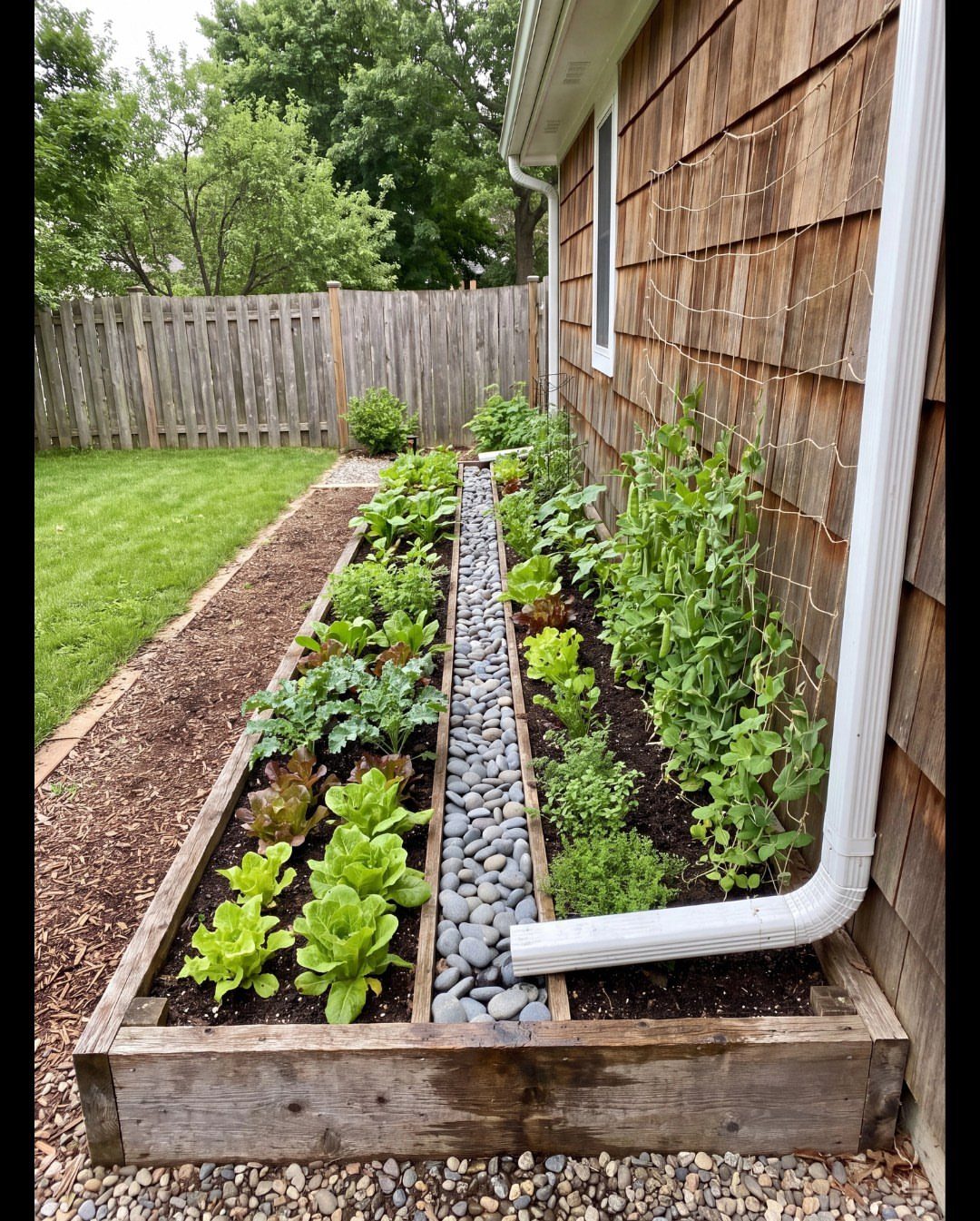
Raised beds solve the soil you have, not the soil you want. A pebble channel fed by a downspout is the detail that makes this one work; it moves roof water through instead of letting it pool.
Cedar 2 x 10s last years in my climate, longer with a liner.
I fill the bottom third with fallen wood and branches, then topsoil and compost above. Root crops are what you get for the trouble: carrots straight as pencils in loose fill that never saw the native clay.
That width is about the limit for reaching the center without stepping in. I orient beds north-south so tall peas on the back edge do not shade short lettuce.

Ready-to-Use Formula: No mixing or extra steps required. Simply pour and plant - perfect for gardeners of all experience levels.

WATER EVERY PLANT, NOT JUST SOME: Each of the 18 planting squares delivers 16 streams for even, soil-level irrigation at every plant. This vegetable garden watering system prevents dry spots & removes the guesswork of laying drip line & emitters.

EASY SET UP: Quick assembly in minutes; No need for hammering and wood-cutting skills; Assemble as a bed box for flowers, tomato planter, indoor or outdoor vegetable garden, as or main garden bed
4. Garden Art & Décor
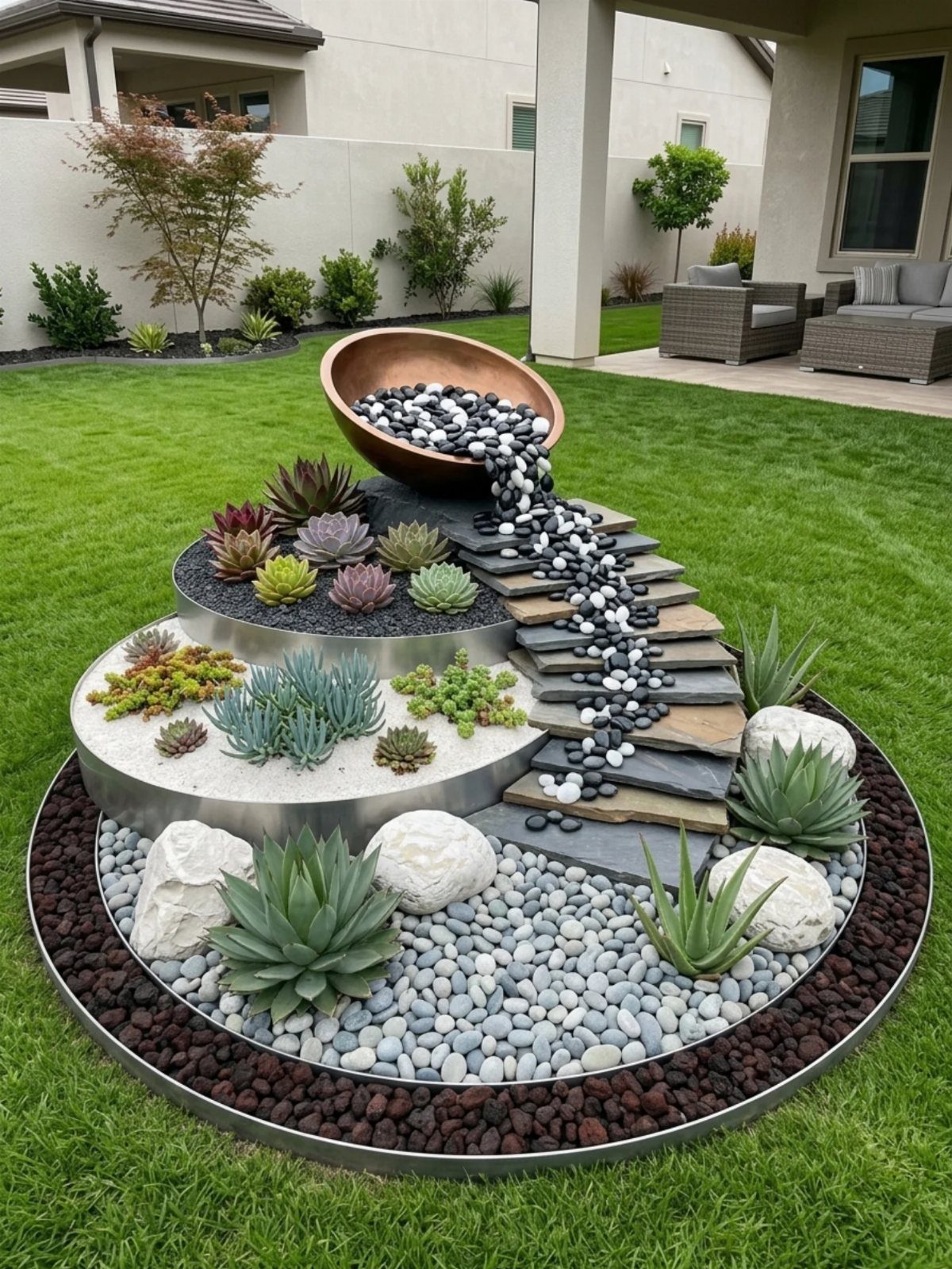
Garden art fails when it tries too hard to be art. A tilted bowl spilling stones reads as water because of the gesture, not because it fools anyone.
Metal holds up; ceramic cracks at the first freeze. I look for pieces with a patina already started, or I force one with vinegar and salt on copper.
Wind chimes belong where the breeze actually moves, not where you wish it did; I test with a ribbon on a stick before I hang anything.
DIY options that survive: concrete leaf castings as stepping stones, rebar spirals in pots, bowling balls as gazing globes with marine epoxy and flat marbles.
One piece per view is enough. More competes.

Beautifully functional: This detailed tabletop bird bath pedestal can be used for indoor decoration our outdoors. Its metal construction makes it a perfect accent piece for your garden, yard, table, shelf, or patio.

ELEGANT DESIGN: Get everything you need to set up a beautiful spot for your feathered friends with our heavy duty weatherproof and waterproof metal hourglass birth bath stand. Designed with both simplicity and style in mind, support any of our beautiful glass birdbaths with this hourglass shape metal bird bath stand.

【Handmade Metal Construction】 Crafted from high-quality, weather-resistant metal with meticulous hand-finishing, this garden stake features an artistic flower design that serves as both a decorative element and a functional water source. Unlike cheap plastic alternatives, the durable metal construction ensures long-lasting performance in outdoor conditions, resisting rust, fading, and wear season after season.
5. Color in the Garden
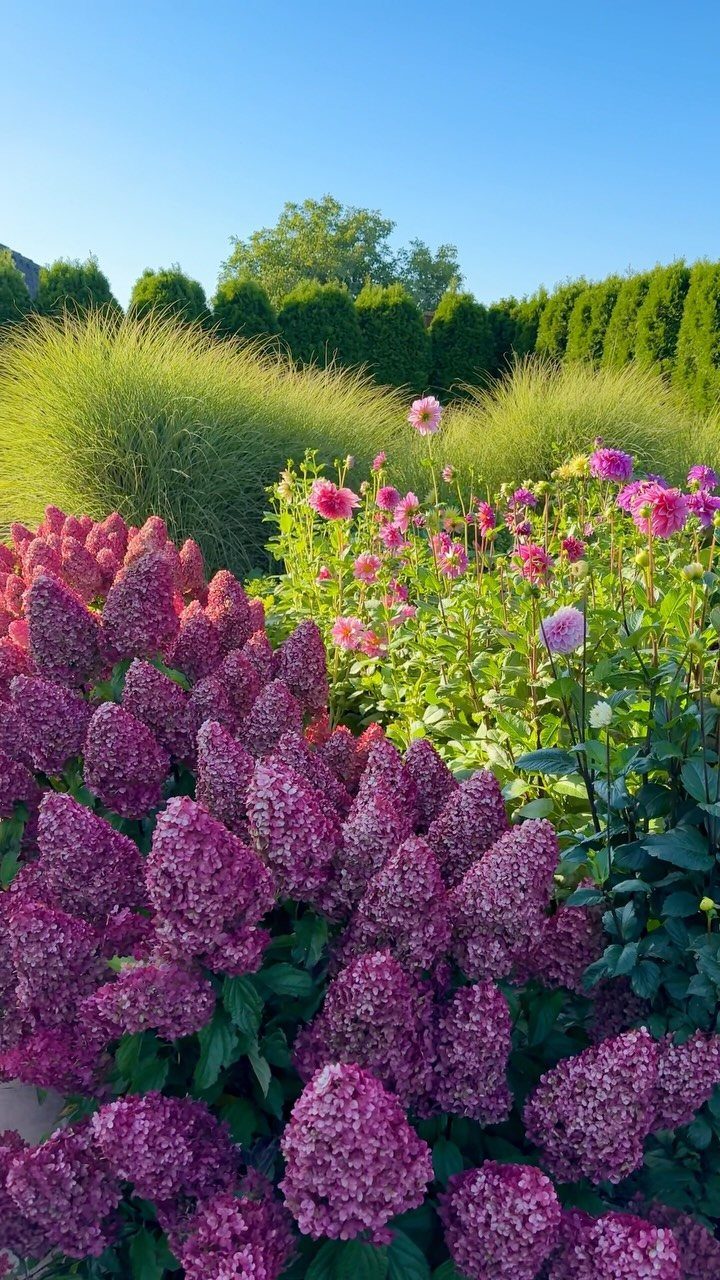
Color in a garden is not a bouquet; it is a sequence of performances from spring through fall. The hydrangea and dahlia pairing works because both peak in late July, when earlier beds have gone to seed.
I think in value, not just hue.
A pale blue next to a saturated purple reads as a mistake; two saturated tones, or two pale ones, hold together. Foliage is the stabilizer: the grass carries the pink through weeks when neither flower is at full tilt.
White and silver do what black does indoors: they recede, they rest the eye. I place them where I want the viewer to pause.
6. Cottage Garden Ideas
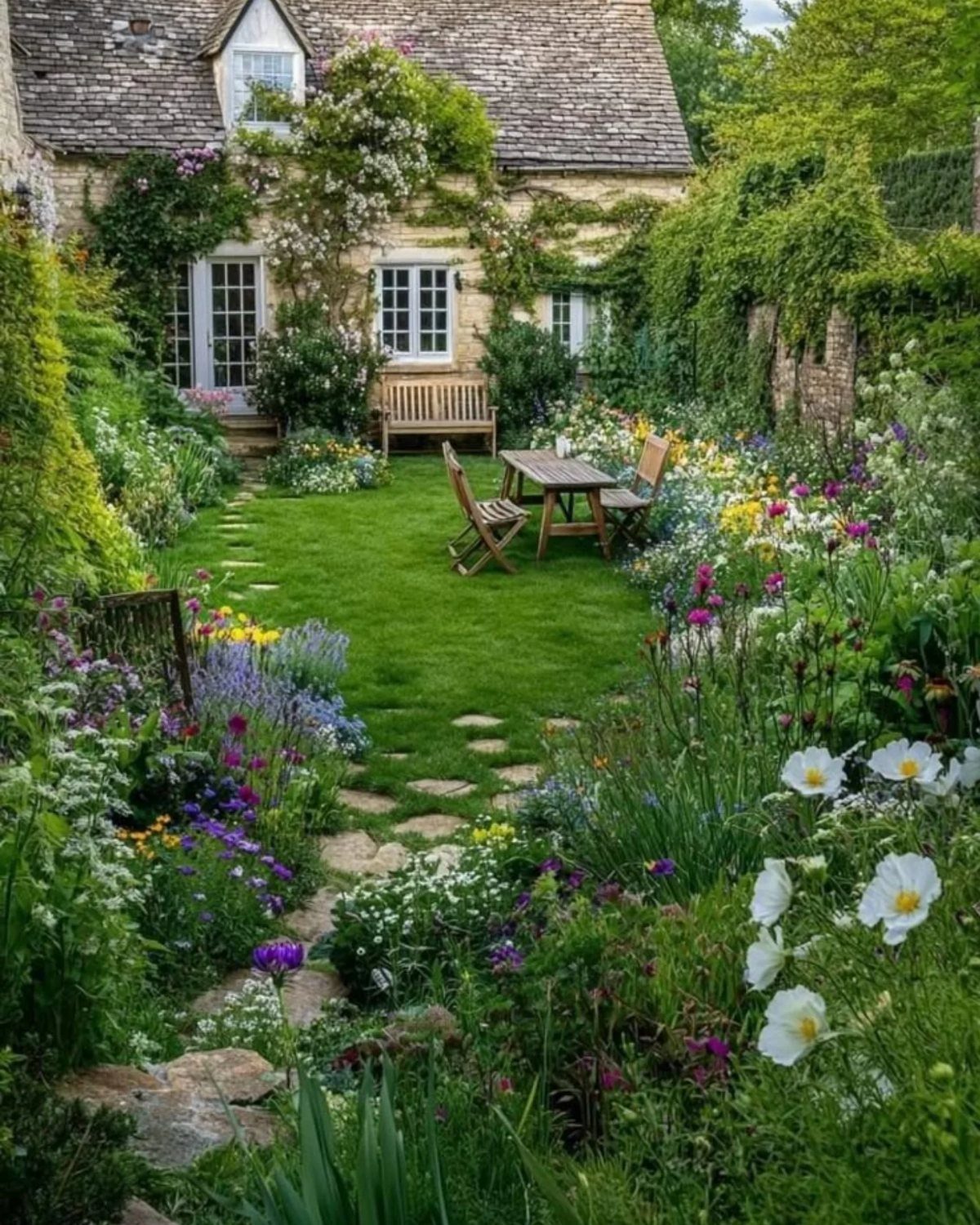
A cottage garden is not messy; it is full to the point where weeds cannot find light. A stone house half-hidden by climbers got that way because someone planted clematis or climbing hydrangea decades ago and let it alone.
The mix matters: herbs for scent when brushed, vegetables for the odd tomato or kale plant among flowers, self-seeders like calendula or nigella that fill gaps without my help.
Paths of stepping stones let me work from the edges without compacting soil.
I plant in layers: bulbs below, perennials at knee height, shrubs at shoulder height, climbers above.
Nothing stands alone; every plant leans on its neighbor. The lawn stays small, a negative space between borders that would swallow it whole if I let them.
7. Meadow Gardens
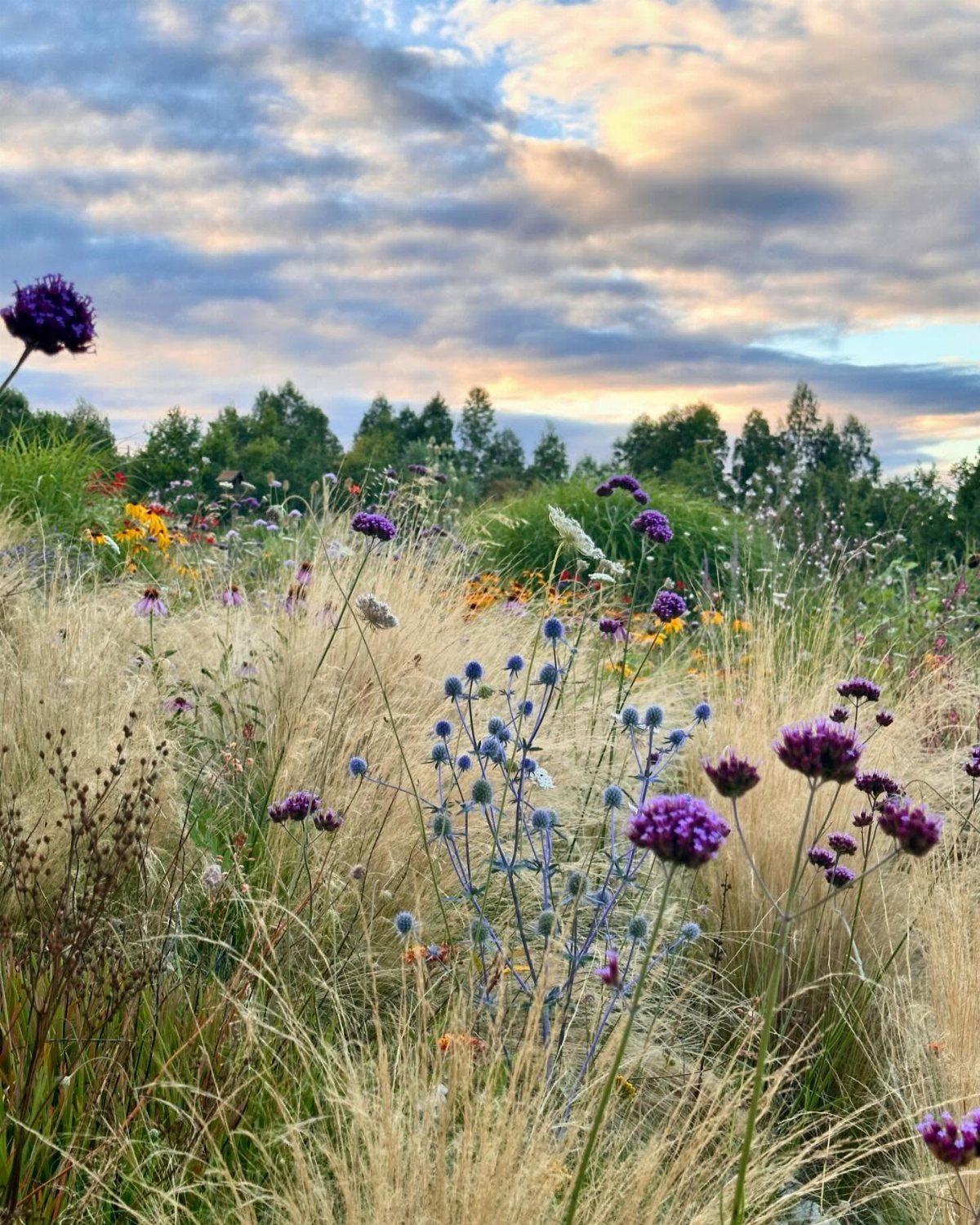
A meadow garden is what grows when you stop mowing and start editing. Native grasses and wildflowers replace the lawn in patches that read as intentional because of the paths between them.
I would start with a single season, since full succession planting overwhelms most weekends.
Purple verbena and yellow coreopsis handle summer dry spells once established; ornamental grasses give structure when flowers fade. Density matters, enough that weeds cannot find purchase, but not so uniform that it looks like a planting plan.
A meadow asks for one cut a year, late winter, and otherwise manages itself. It suits anyone tired of feeding a lawn that gives nothing back.

Ready to Use, Right from the Bag: No prep required. This raised bed garden soil is packed with organic compost and nutrients, ready to use for quick and easy planting

DIMENSIONS: 32. 3 in. L x 14. 7 in. W x 30. 7 in. H

Ergonomic Height: Standing at 30 inches tall, it reduces strain from bending and kneeling, promoting more comfortable gardening.
8. Garden Paths
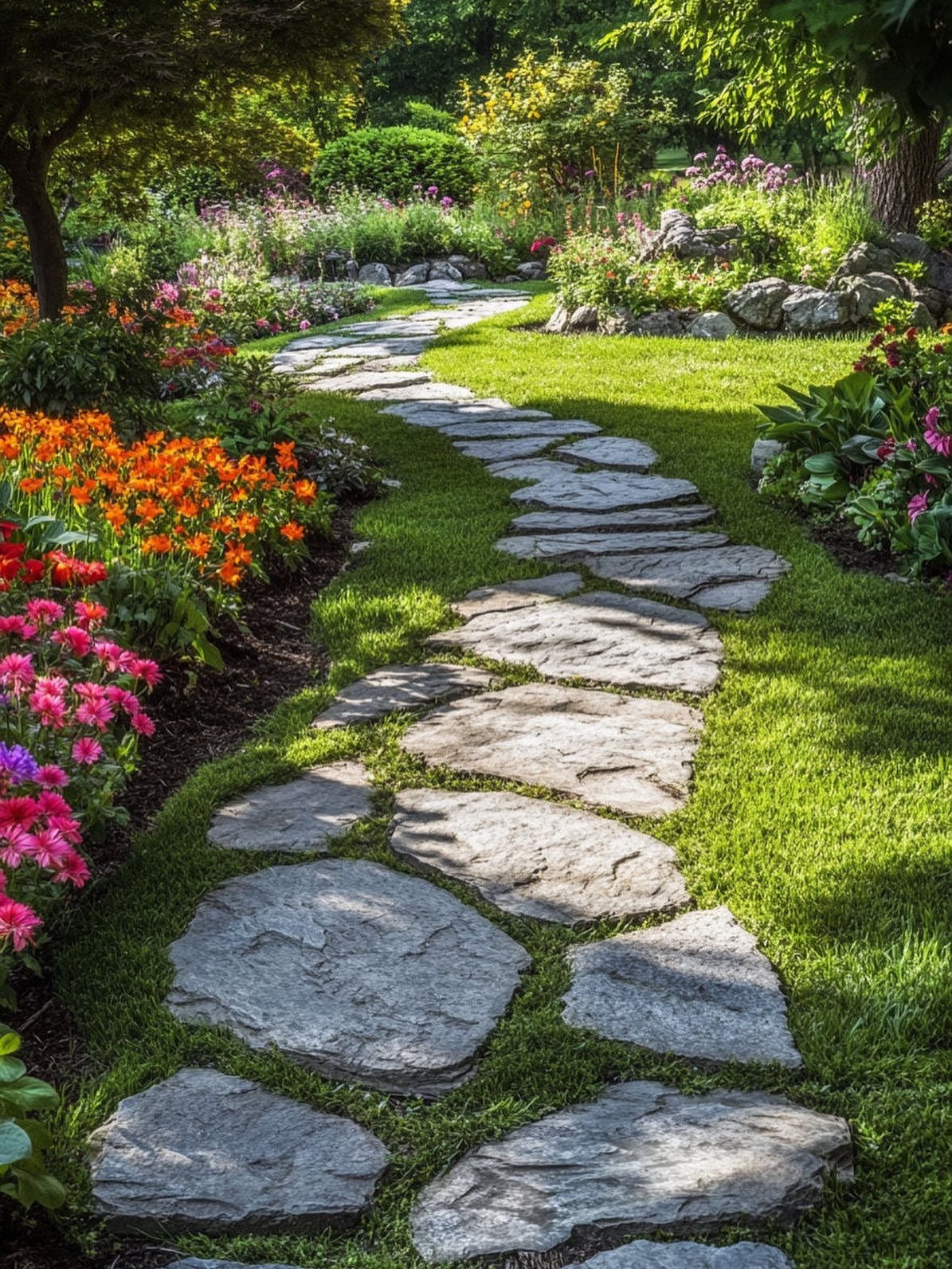
A path that turns out of sight changes a garden from a yard into a place you want to walk.
Flagstone set on compacted sand handles foot traffic without the cost of poured concrete, and the gaps fill with low thyme or sedum on their own.
Wider stones, 18 inches or more, let two people pass or one wheelbarrow roll.
I set them with a slight crown so water sheds to the sides, and I dig the first one only after I have walked the route a dozen times, adjusting where my feet naturally fall.
Gravel between stones needs a solid edge; without it, the gravel wanders into the beds within a season.
The destination matters less than the promise of one. A bench, a birdbath, or simply a turn where the view opens keeps the walk from feeling like exercise.
9. Water Features
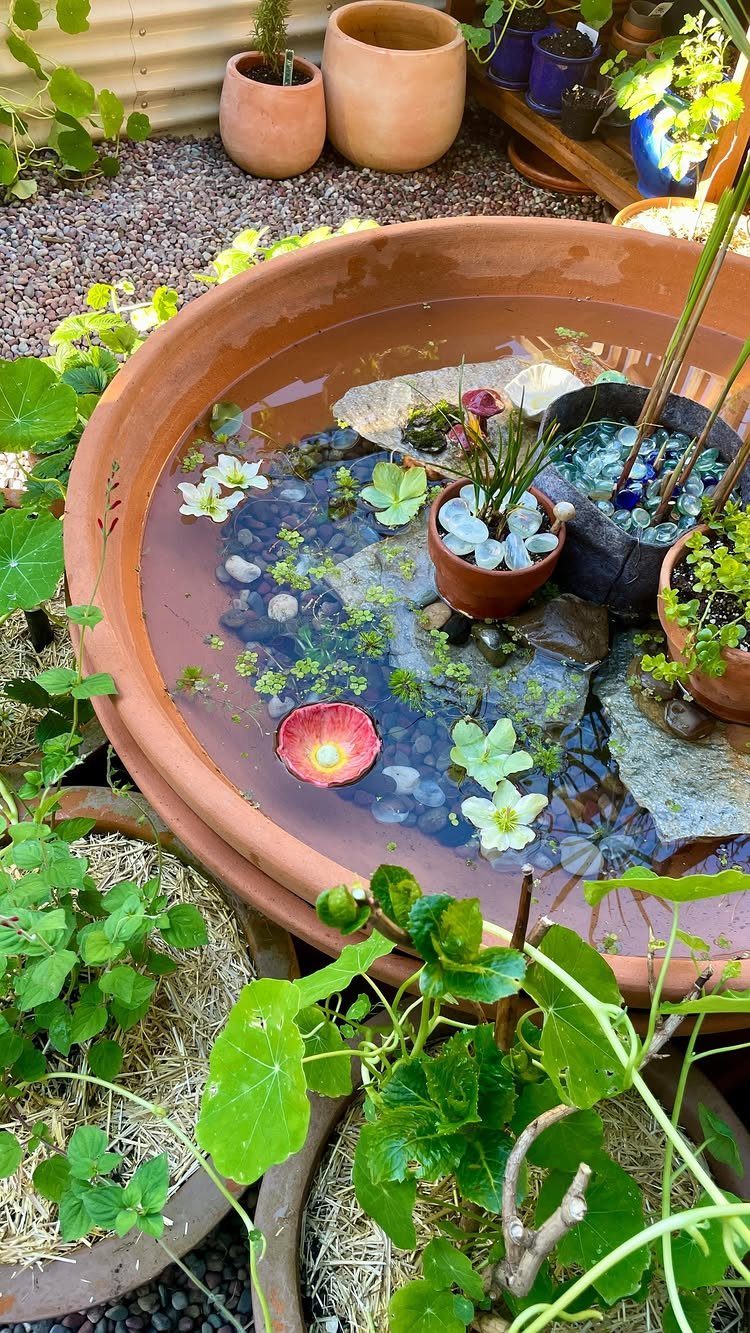
Water in a garden works on the ears before the eyes.
A terracotta saucer turned into a miniature pond fits a balcony or a corner where digging is not an option; stacking a second pot beneath as a waterproof barrier works, since terracotta breathes and would otherwise seep.
A small recirculating pump runs the show, hidden behind stones or a clump of dwarf sedge.
Aquatic plants float or sit on submerged ledges; their roots keep the water clear enough that you are not fighting algae weekly. The sound masks traffic, and the moisture draws dragonflies on summer evenings.
I would place it where I pass in the morning with coffee, not where it becomes background noise I stop hearing.


Show your passion for native plant gardening and eco-friendly yards with this bold statement design celebrating pollinator gardens, wildflowers, and wildlife-friendly landscapes over traditional turf lawns.
10. Garden Lighting
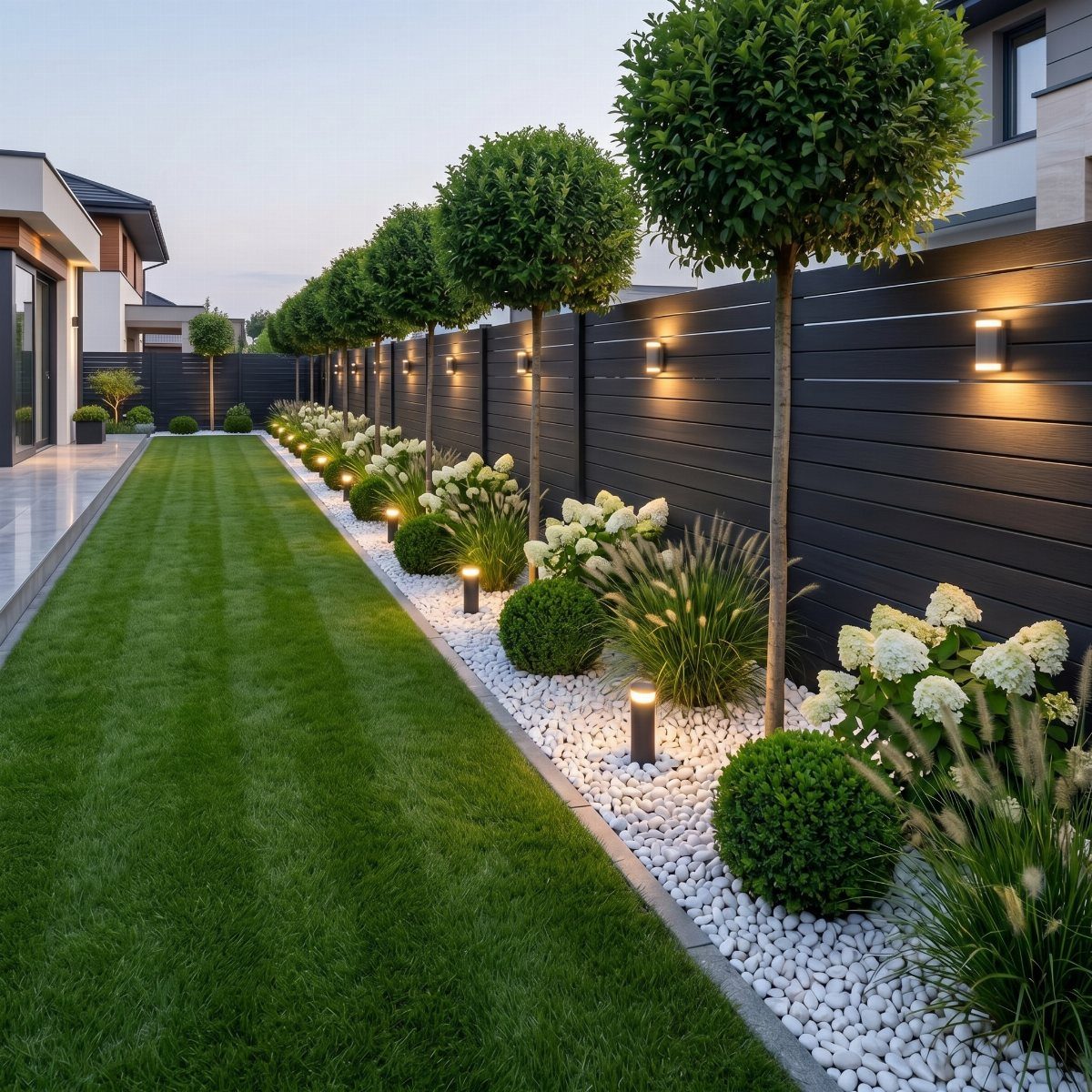
Garden lighting is about what you remove from darkness, not what you add to it.
Sconces on a fence wash the horizontal slats with warmth; bollard lights at knee height mark a path without turning the lawn into a parking lot.
I wire for fewer fixtures than I think I need and add a dimmer. Solar fixtures have improved, but they still fade by midnight in zones with short summer days; wired low-voltage LED runs consistent and costs less over years.
The color temperature matters: 2700K reads as flame, 4000K reads as clinic. I stay at the warm end.
Pools of light let the eye rest between them; uniform brightness erases the night. Fairy lights in a tree work because they are small enough to read as stars.

[✔High-efficiency and Eco-friendly]: AISITIN 3.5W solar power fountain uses high-efficiency solar panels with high solar energy conversion efficiency. It requires no additional batteries or power supply and is very friendly to the environment. The solar fountain attracts birds and provides fun for your garden.

LATEST SOLAR POWERED FOUNTAIN: Mademax bird bath fountain with 100% full solar panel to reach 3.5W power. The solar birdbath fountain only needs 3 seconds to operate automatically in direct sun, with a spray height of 4–27.5 inches (10-70cm). No electricity or battery needed. What an Eco- Friendly and stable product! The most important this will attract a lot of hummingbirds to your garden

Latest 100% Glass Solar Panels: SZMP upgraded with the latest solar panel technology. All solar fountain pumps feature 100% glass solar panels across the board. Compared to the plastic panel solar fountain on the market, our glass solar panels with stronger light transmittance, it's can promote the conversion of sunlight into stronger energy and make the water spray more stable and lasting
11. Hummingbird Gardens
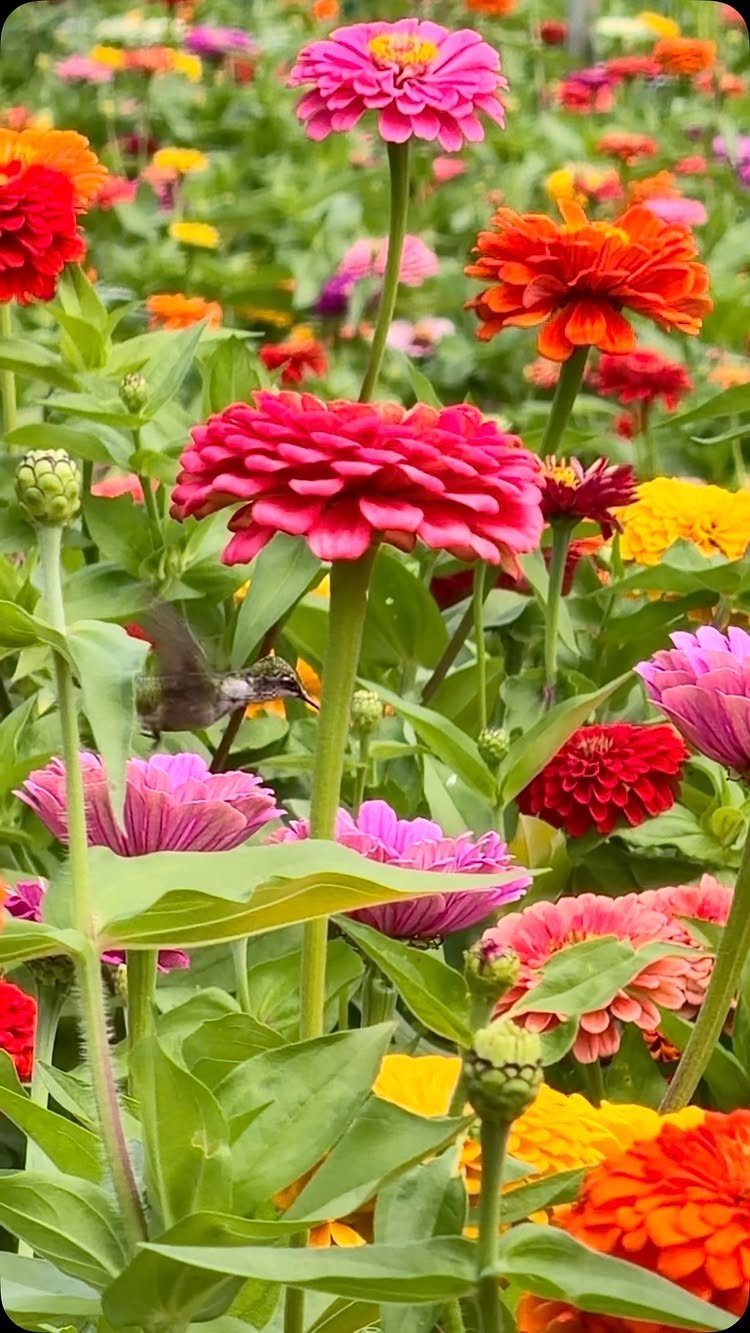
A hummingbird garden is not a single feeder hung where you can see it from the kitchen.
The birds remember geography; they return to reliable bloom, so the garden needs sequence: coral honeysuckle for early spring, then salvia, then zinnias that keep producing until frost.
Tubular flowers in red, orange, and pink signal nectar to a bird that cannot smell.
I cluster these plants in groups large enough to show up from above; a single pot gets ignored, a drift gets worked. Water matters as much as bloom, a misting spray or shallow basin where they can bathe.
Feeders need cleaning weekly in heat; I skip them and plant more flowers instead.
12. Container Gardening with Pots
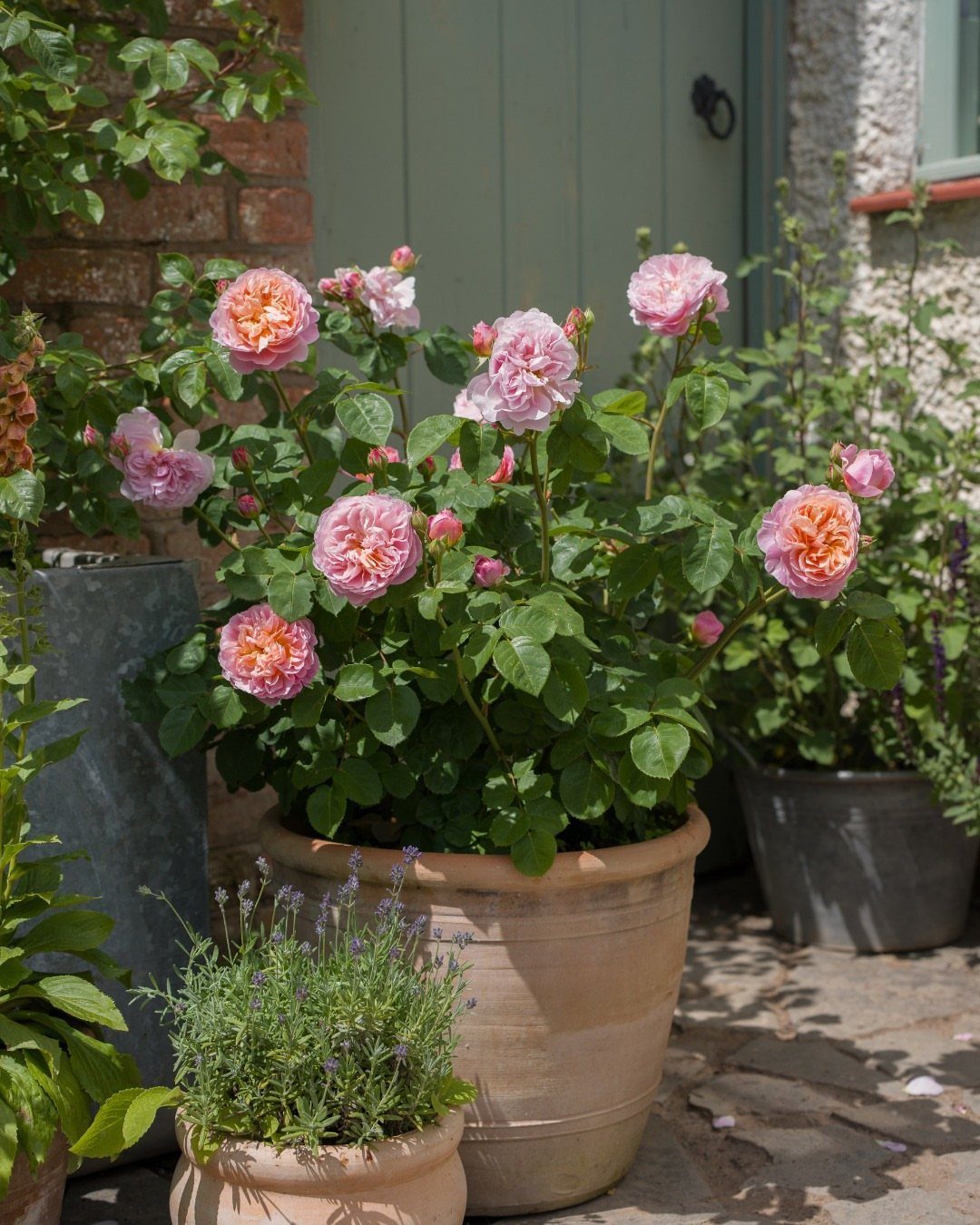
Container gardening is the answer to bad soil, no soil, or soil that belongs to someone else.
Terracotta breathes, which roots prefer, and it weathers to a color that already looks like it belongs. The cost is weight and winter cracking; I line mine with bubble wrap if I cannot move them under cover.
A large pot for roses needs drainage I can see from the bottom, not just a single hole.
I set it on pot feet so water exits freely and air reaches the roots. Lavender beside it shares the sun and the dry feet; both sulk in the damp.
Pairing pots works when the scale differs, a large pot anchoring a smaller one, and when the colors are few and warm. I would add nothing else to that grouping; restraint reads as intention.
13. Picket Fence Garden Borders
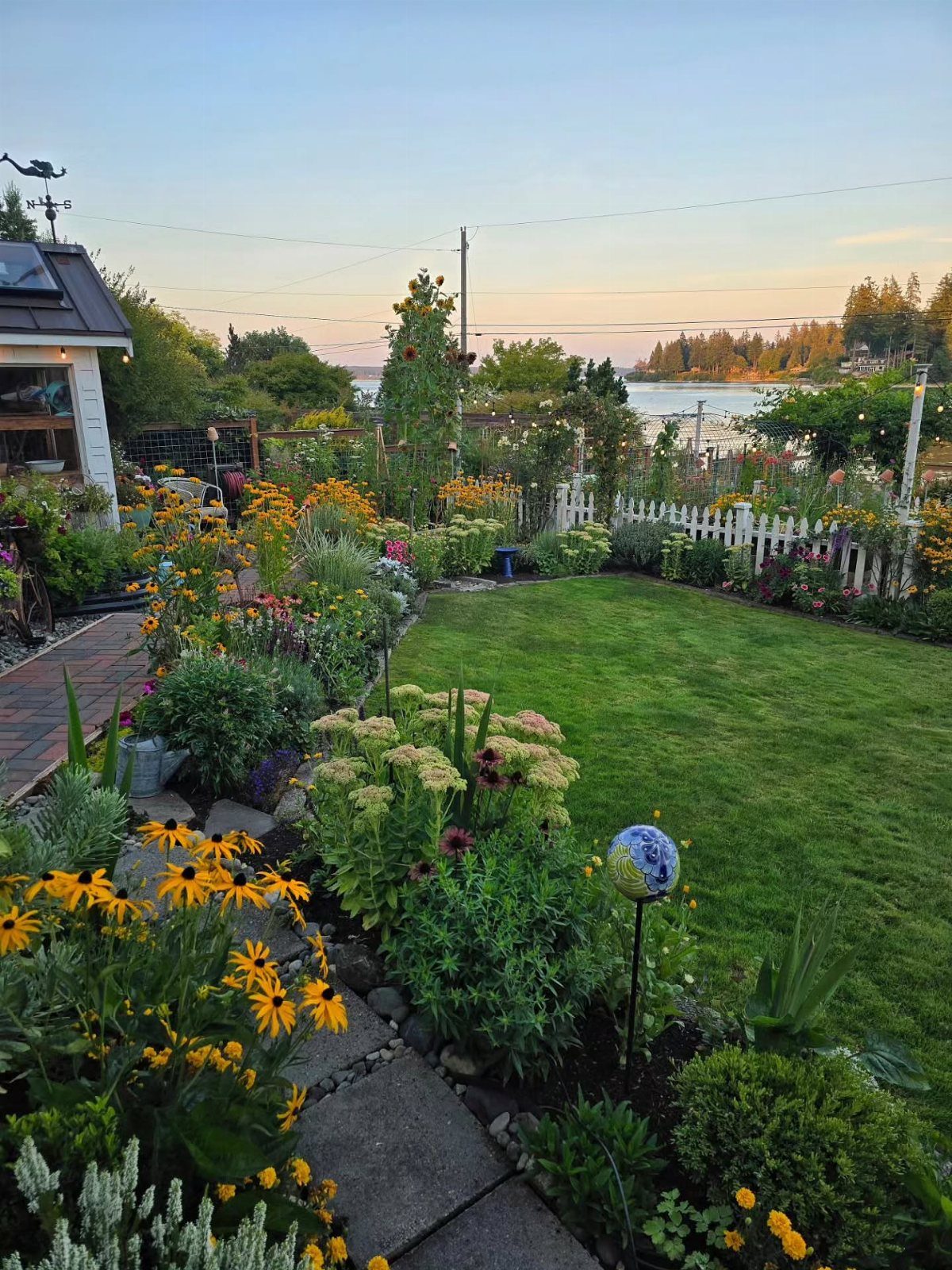
A white picket fence is not the garden; it is the frame that makes the garden readable. The border along it works because the fence gives the eye a stopping place, and the plants spill forward to soften the line.
I would plant in layers: low sedum or creeping thyme at the fence base, mid-height black-eyed Susan in drifts, and a shrub or two at the corners for winter structure.
The fence stays visible; that is the whole idea. Paint it when the finish starts to thin, or let it weather to gray and replace boards as they fail.
The lawn side needs edging, steel or a sharp spade cut, or the grass invades the bed by July.
14. Japanese Zen Garden
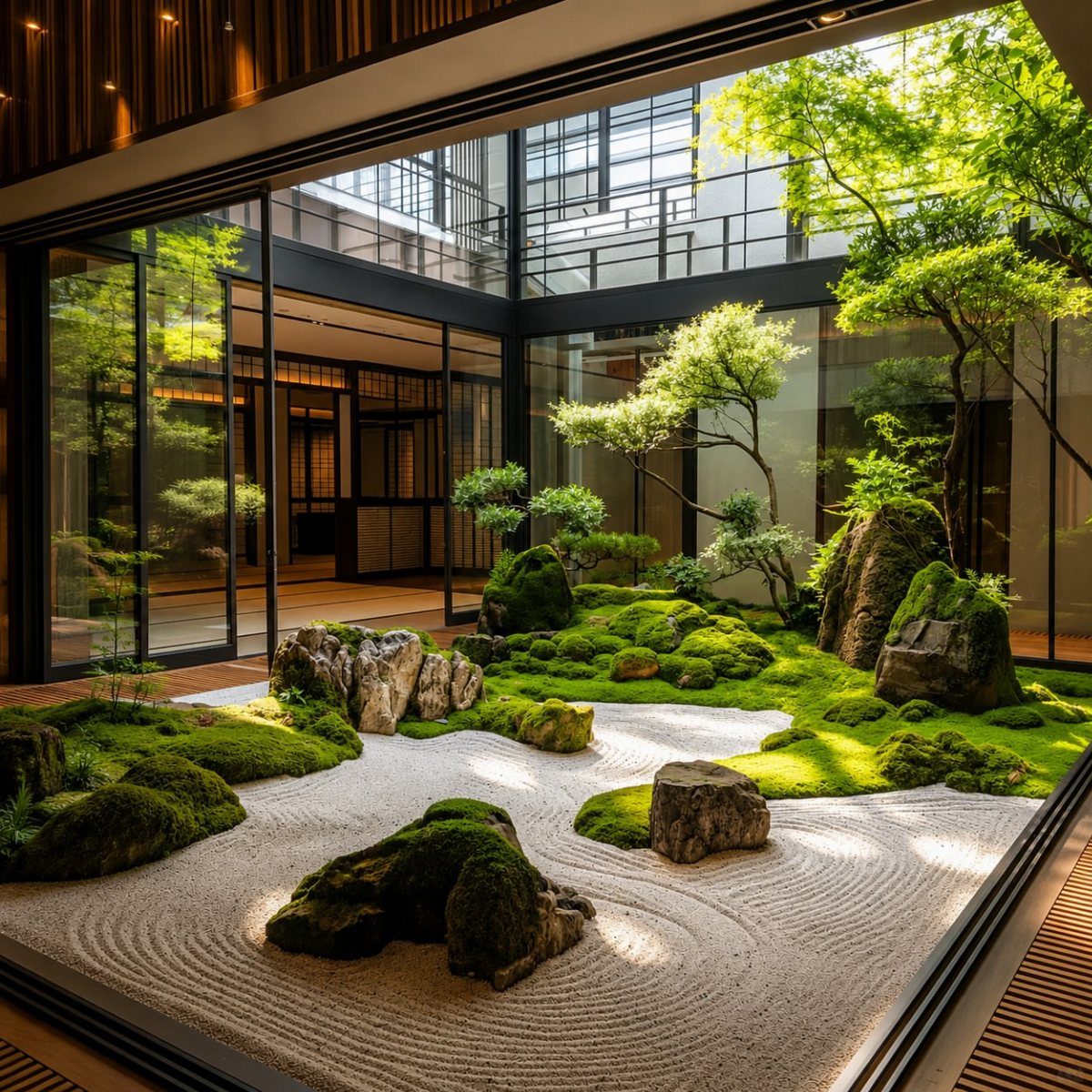
Raked white gravel, moss, and boulders in the plural: the Zen garden is not a style to copy but a maintenance routine to adopt.
The gravel stays clean only with regular raking and weeding; the moss needs shade and moisture that most US summers do not provide without help.
Before building one, check your drainage.
Standing water kills moss and washes gravel into mud. A subtle grade beneath the surface, sloped to a hidden drain, keeps the composition intact.
An indoor version works when glass walls control light and humidity. Outdoors, partial shade and a water source nearby are non-negotiable.
15. Garden Bed with White Gravel
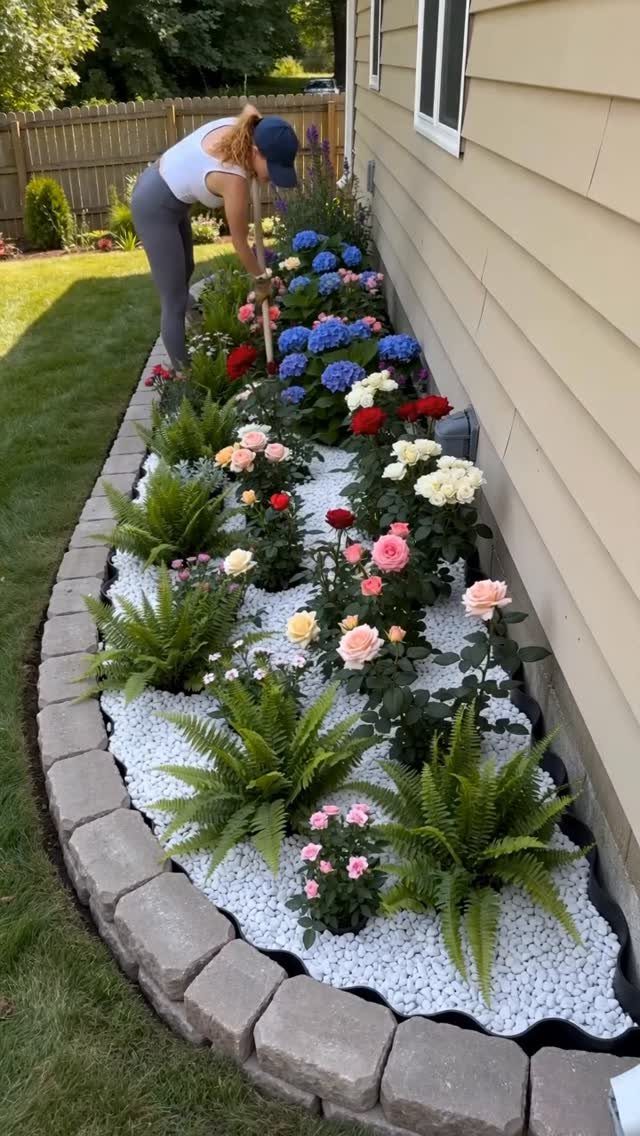
White gravel as mulch reflects light onto the undersides of leaves and keeps mud from splashing during rain. Stone blocks hold the edge and the grade; without them, the gravel migrates into the lawn within a season.
I would check the house foundation first.
Gravel against wood siding invites termites and holds moisture where it should not. A gap of bare earth or a narrow strip of concrete solves this.
The ferns and hydrangeas tell you the exposure: morning sun, afternoon shade, consistent moisture.
Roses in the same bed need more sun than the ferns prefer; when they are planted together, either the roses are a variety tolerant of shade or they are struggling where you cannot see.
16. Flowering Garden Archway
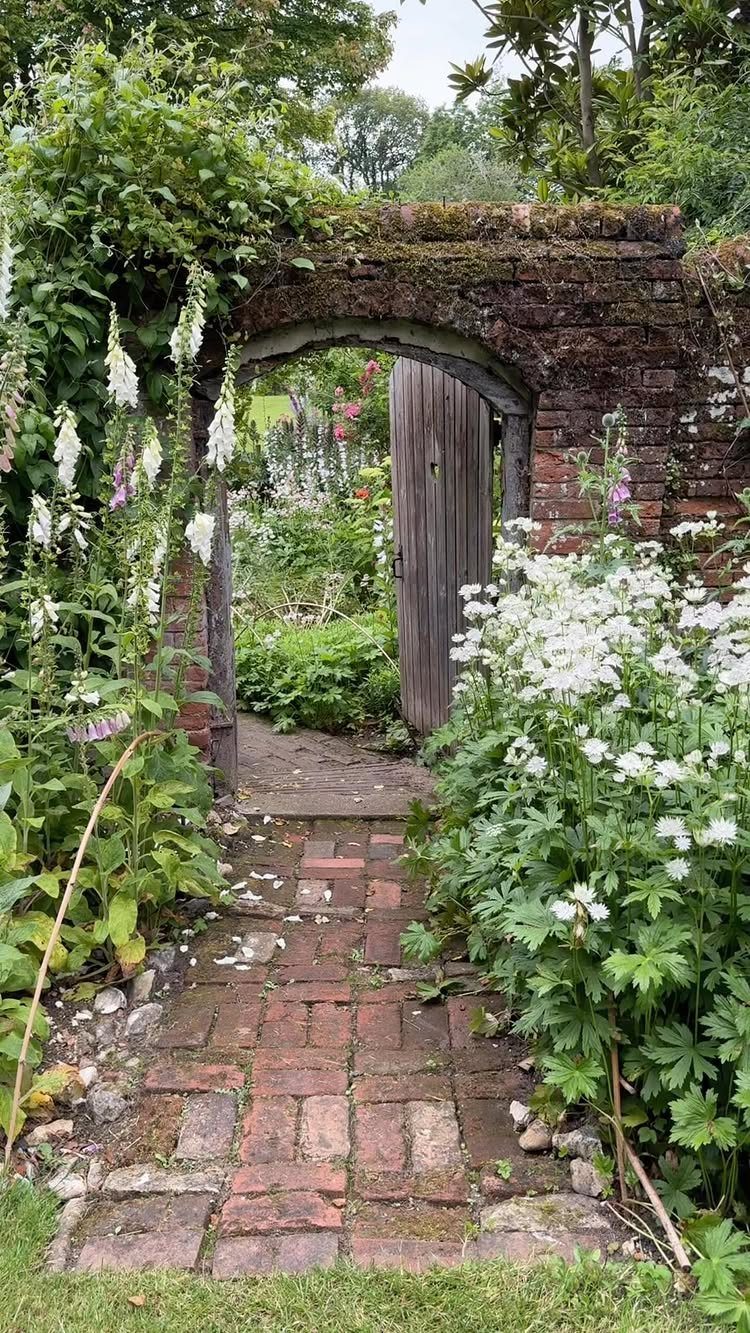
A brick archway with a wooden gate is permanent infrastructure, not a weekend project.
Old, soft brick that has already settled carries an arch fine; new construction needs footings below the frost line or the arch cracks in its first winter.
The foxgloves are biennial, which means year one is rosettes and year two is bloom. Plant them in autumn if you want the effect by spring.
I would check the gate swing before planting anything nearby. A gate that opens inward needs clearance the photo hides; a gate that binds against a root ball is a gate that stays open.
17. Floral Arbor Garden Swing
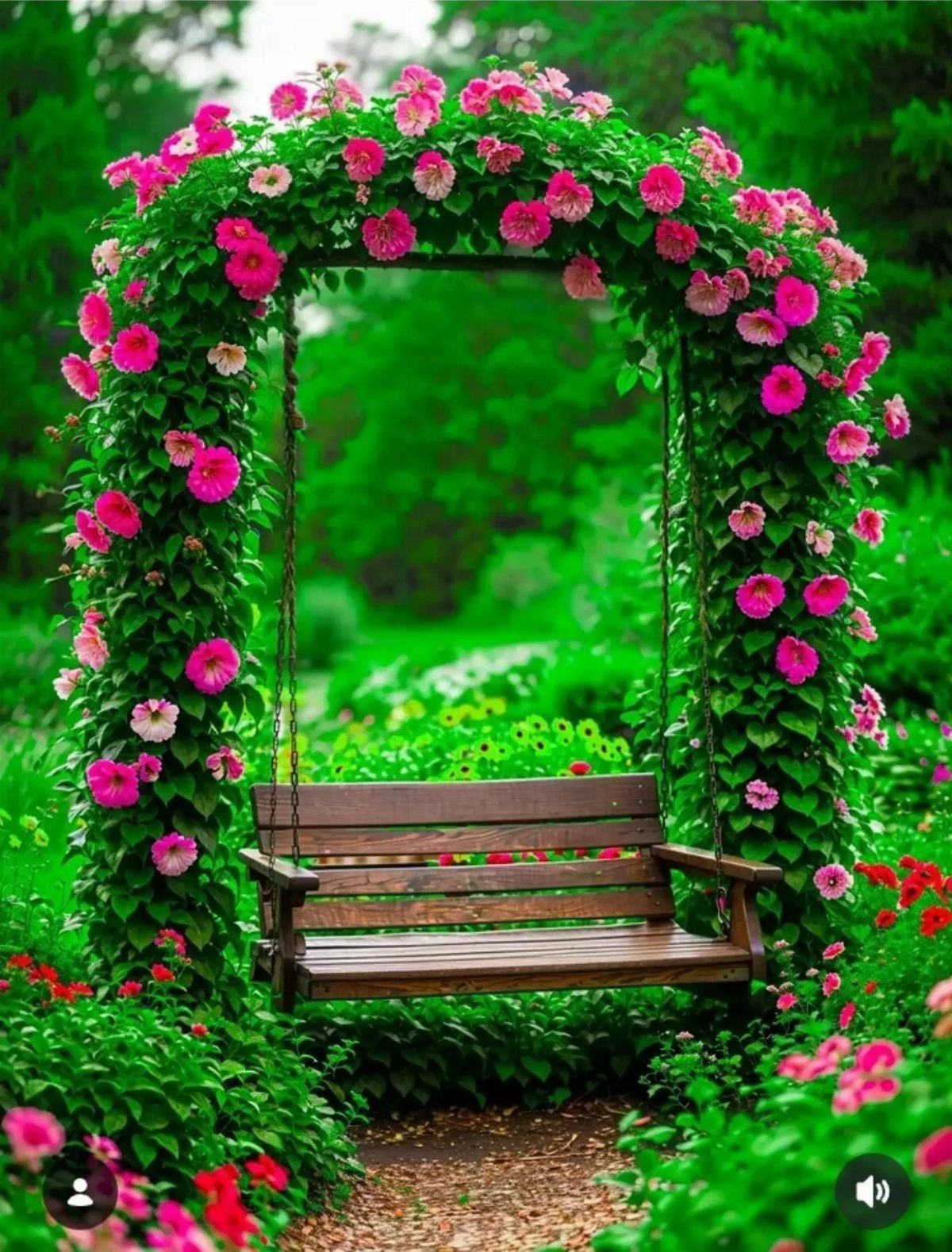
A swing hung from an arbor moves, and movement wears wood. The chains are bolted through the crossbeam, not screwed into end grain, which is the detail that keeps the swing from dropping someone in year three.
The arbor itself needs posts set in concrete, or it rocks with every push. I would use pressure-treated 4 x 4s minimum, with the crossbeam notched over the posts rather than face-screwed.
The ivy and pink flowers are what the eye sees; the hardware is what the body relies on. Check chain links annually for rust or wear, and replace the eye bolts before they elongate.
18. Courtyard Dining Space
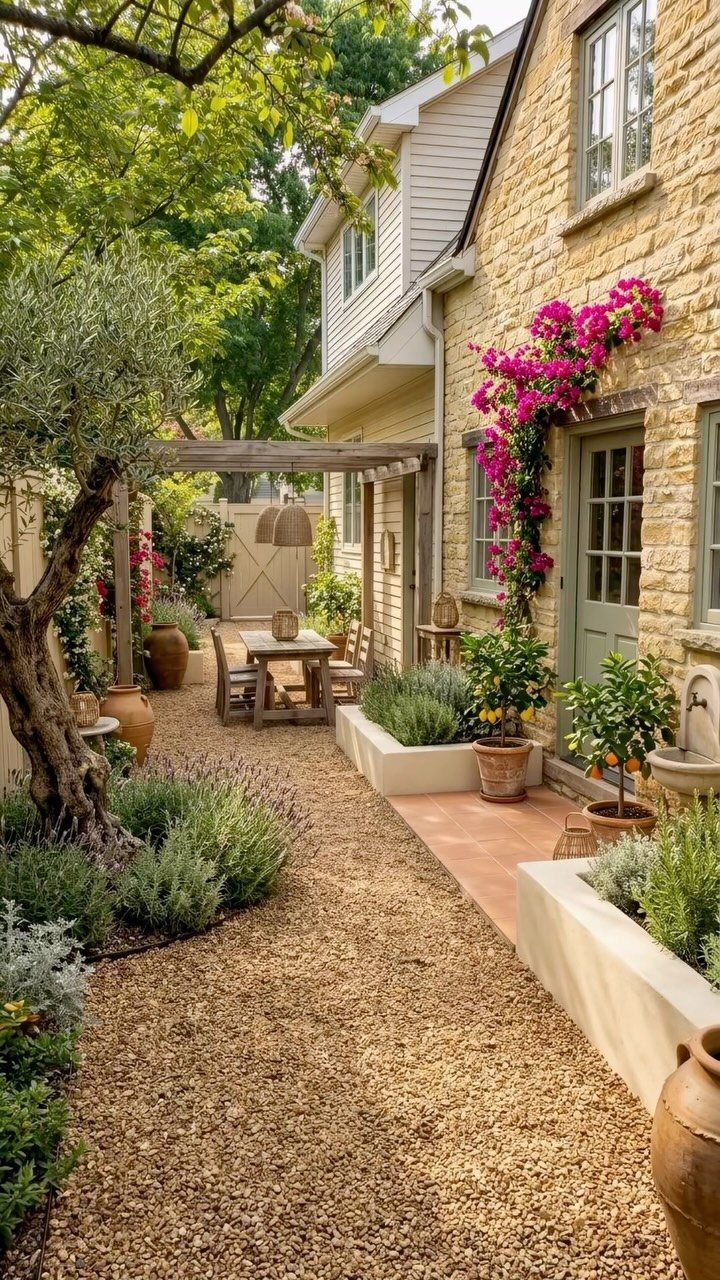
A courtyard is a room without a roof, and the gravel floor is what makes it feel like one.
Stone house walls reflect heat into the space, extending the season on either end; a freestanding courtyard in open yard loses this advantage and needs a windbreak or hedge to enclose it.
The bougainvillea wants winter protection below USDA zone 9; in colder climates, a hardy clematis or grape vine gives similar draped color for less risk. The potted citrus trees move indoors or into a greenhouse when nights drop below freezing.
I would size the dining set to the courtyard, not the guest list. A smaller table leaves room to move around it; a larger one turns the space into a corridor with chairs.
Garden Design Tips
Layout starts with how you move through the space, not how it looks from above.
Water, light, and color shape the experience as much as any plant. A water feature draws the ear before the eye; lighting creates pools of darkness between pools of light.
Focal points need breathing room.
Sustainable Gardening Practices
Lawn alternatives trade fertilizer and mowing for something that gives back.
Rain gardens handle runoff where it pools, but they need well-designed drainage or they become mud. Wildfire-wise landscaping uses resilient plants and thoughtful spacing; the goal is not a parking lot but a garden that holds together under stress.
Maintenance Advice
Regular pruning keeps plants from outgrowing their neighbors in a cottage garden where nothing stands alone.
Seasonal Gardening
Crop rotation prevents disease from building in the same spot.
Succession planting extends bloom and harvest.
Planting tomatoes, basil, and peppers together makes sense because they like the same sun and water; the bed stays full and working as a single system instead of sitting half-empty while you figure out what fits next.
Flowers and herbs fill the gaps while vegetables are between harvests, so the bed never looks like a dirt patch with ambition.
Frequently Asked Questions
What is the 3-5-7 rule in landscaping?
This rule means planting in odd-numbered drifts, like 3, 5, or 7 plants of the same variety together, so the eye reads the grouping as natural rather than regimented.
The idea is to create repetition without monotony, giving the eye enough rhythm to read the planting as intentional rather than random.
Drifts of one species let a bee work a whole patch without crossing open ground, which is the same effect the 3-5-7 rule chases with its odd-numbered clumps.
What are some unique ideas for a garden?
Container gardens handle bad soil or no soil at all, with terracotta pots that weather to a color already belonging.
A pollinator garden sequences blooms from March through October so something is always flying. Vertical space works through climbers on wire or pendant pots overhead.
What is the 70/30 rule in gardening?
This rule recommends using 70% plants and 30% hardscape in garden design.
The hardscape gives structure and winter interest when beds are bare, while the planting softens edges and provides the living material. My own paths of flagstone on compacted sand with thyme in gaps follow this roughly, though I never measured.
What is the 5, 4, 3, 2, 1 gardening method?
This method typically refers to a planting density or companion planting framework, though the specific numbers vary by source.