The palettes below run from classic white to full black, with wood looks and burgundy in between, and the right one for your house depends mostly on your roof color and how much direct sun the walls get.
[link-whisper-related-posts]1. Charcoal and White
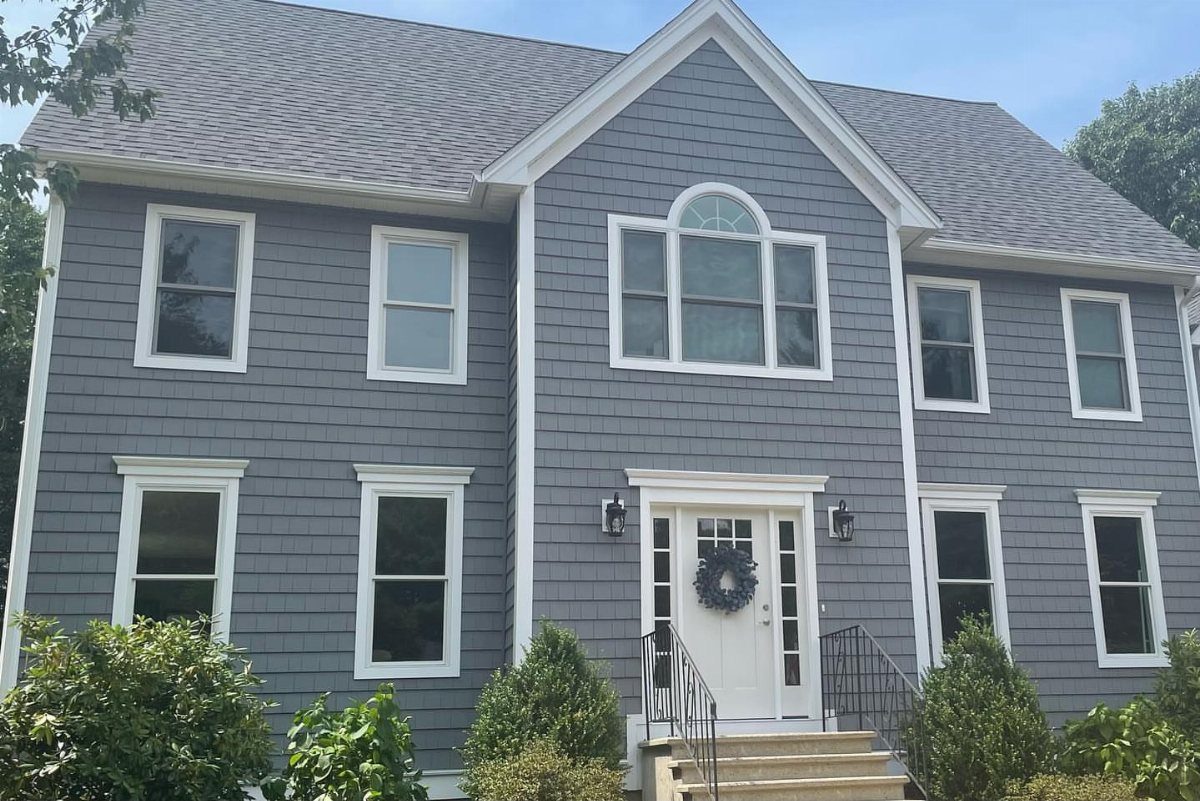
Charcoal siding with white trim reads as deliberate rather than safe, the gray dark enough to hold weight against sky and pavement.
Wood or metal accents keep it from feeling flat; matte black door hardware or a raw cedar planter box push the modern side further.
I would check the charcoal in afternoon light before committing, since grays this deep can shift toward purple or green depending on the manufacturer.
For urban lots or any house with clean rooflines, this pairing hides dirt better than true black and still photographs well for resale.

Tru-Lock state-of-the-art locking system, Random seams

CEDAR SHAKE SIDING PANELS – Realistic cedar shake shingle texture in Pacifica in a composite exterior wall panel. Get the look of real cedar shakes without painting, staining, oiling or replacing damaged shingles.

Patented PanelThermometer for precise installation True Texture finish technology
2. Black Siding
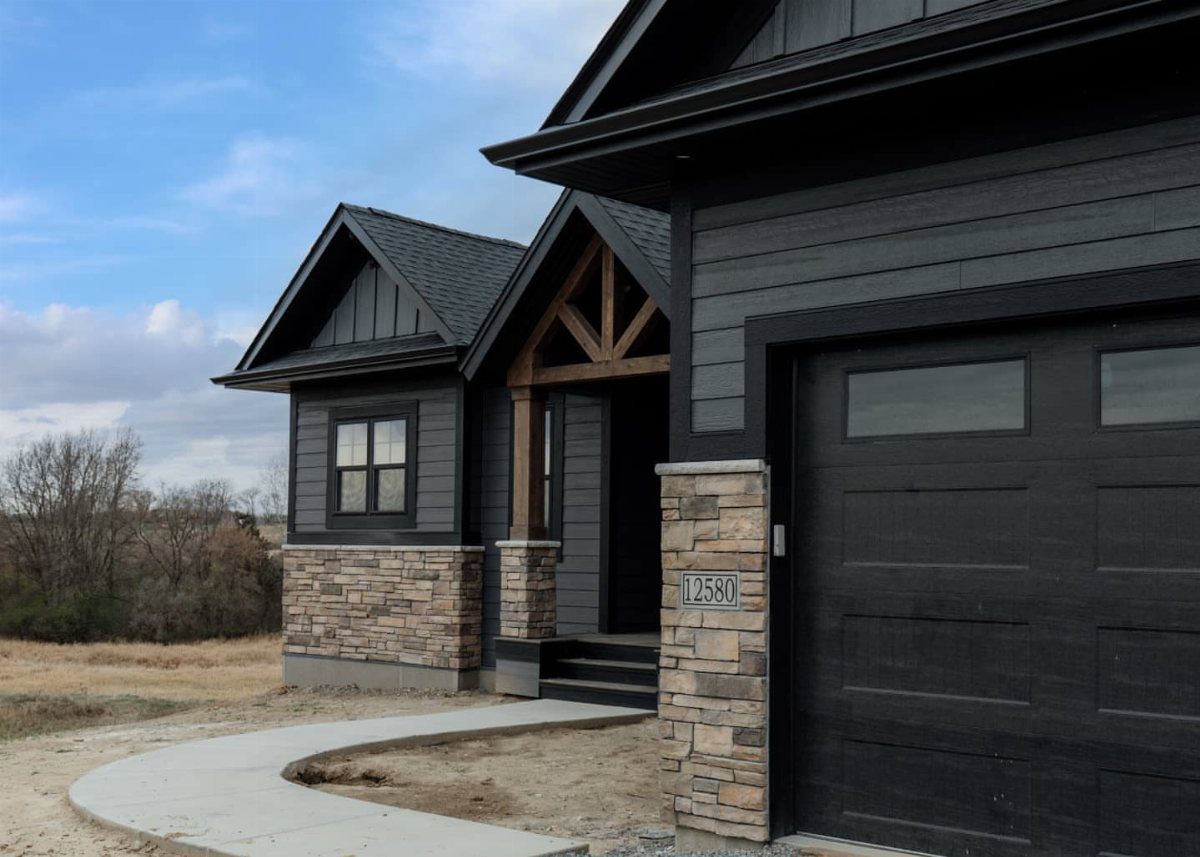
A house in full black siding risks reading as a box unless you break it with texture, which is what the stone veneer and timber entry do here.
Lighter accents are not optional with this much dark surface; they create the depth that keeps the facade from flattening into a silhouette. Stone wainscoting, pale concrete steps, or even galvanized house numbers would serve the same purpose.
I would budget for higher-grade paint or engineered siding on this one, since cheap black fades to chalky gray within a few seasons of direct sun. The boldness is real, but the maintenance cost is too.

Bulk Pack Advantage: Our package includes a generous quantity of 18 vinyl shutter fasteners ensuring you won't run out in the middle of your project. These fasteners can be applied for installing any type of vinyl shutter on a variety of siding materials such as wood, aluminum, vinyl, stucco, brick, masonry, or cardboard

Item Description: 12"W x 35"H Lifetime Vinyl, Standard Two Equal Panels, Raised Panel Shutters, w/Installation Shutter-Lok's & Matching Screws (Per Pair), Black
Item Description: 14 3/4"W x 43"H Lifetime Vinyl, Standard Two Equal Panels, Raised Panel Shutters, w/Installation Shutter-Lok's & Matching Screws (Per Pair), Black
3. Natural Wood Look
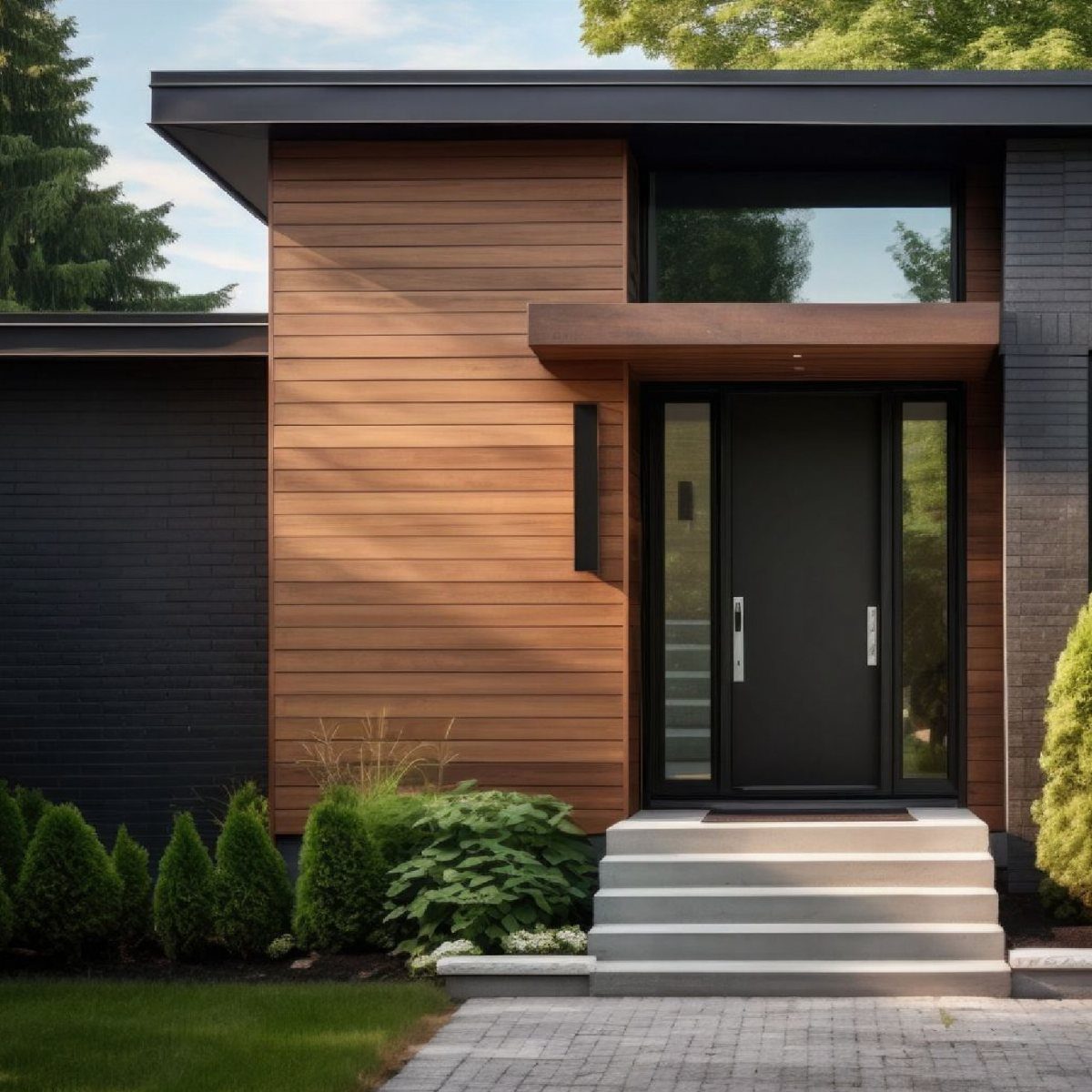
Horizontal wood-look siding in a warm tone gives the curb appeal of cedar without the every-few-years sealing cycle that actual cedar demands.
Engineered options or vinyl with a convincing grain print have improved to where the difference reads only up close and in direct comparison.
The black door and dark brick beside it show how to anchor the warmth so it does not drift toward cabin territory.
I would choose a mid-tone brown over something too golden; the yellower wood-look products age poorly and start feeling dated faster. Occasional washing keeps the grain visible, which is why you choose this over flat color.

Class 1(A) fire rating, PermaColor Fade Protection

10 INDIVIDUAL red cedar wood panels for creating a fresh aromatic cedar scent in closets

✅ #1 ROYALS GRADE – PREMIUM APPEARANCE QUALITY Royals grade shingles offer a high‑quality appearance with fewer imperfections, making them ideal for visible exterior siding and architectural projects.
4. Classic White
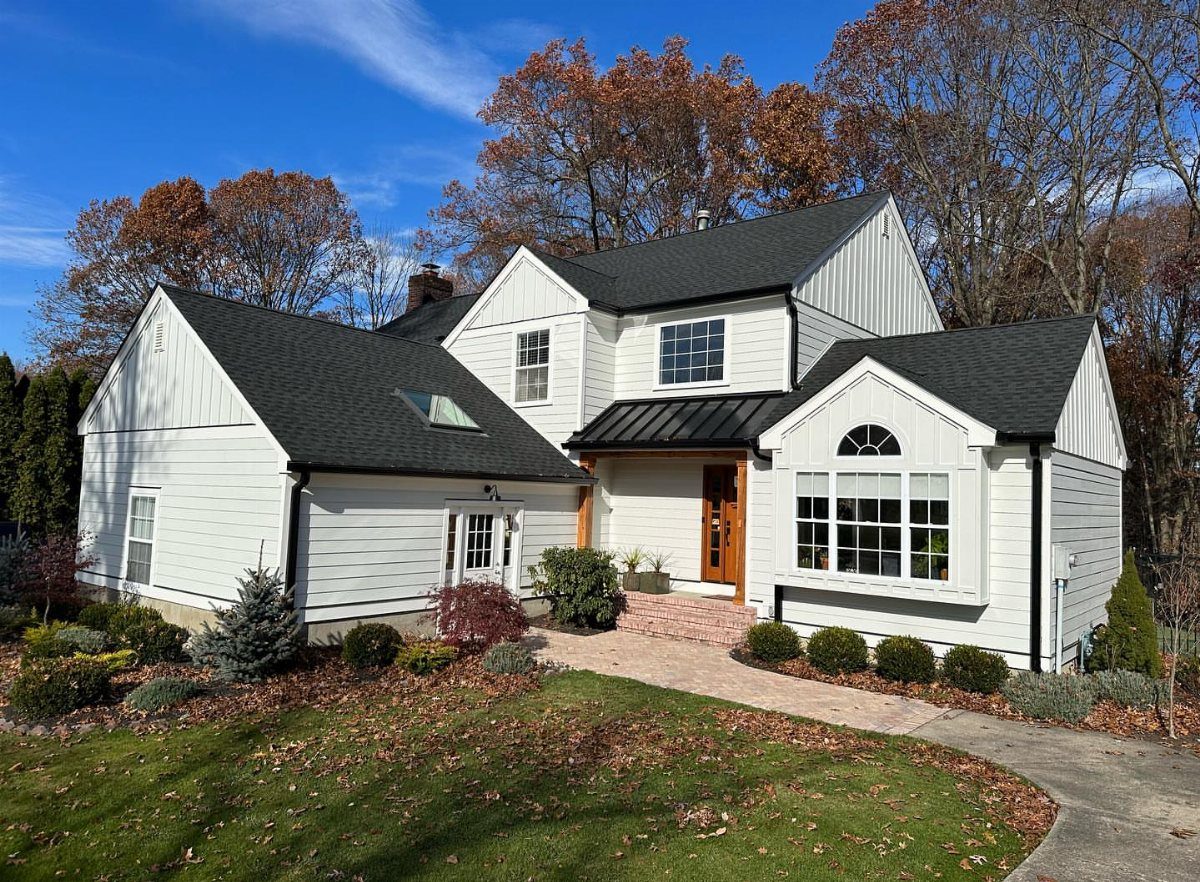
White siding reflects heat, which matters more than I expected before I painted my own south-facing garage door dark gray and watched the surface temperature climb.
The horizontal and vertical mix visible here adds shadow lines that keep a large house from looking like a blank envelope.
Black gutters and roofing pull the eye upward and define the roofline; natural wood at the entry adds the one warm note that keeps it from feeling sterile.
Almost any trim color works, though I would avoid matching the roof too closely, since a single dark mass overhead flattens the whole composition.

Octagonal Design: Are You Also Worried About Installing Outdoor Lighting Fixtures on Vertical Siding? This Vertical Siding Light Mounting Kit, Octagonal Design Can be Easily and Quickly Installed on Vinyl Siding, with a Built-in Box, Designed to Facilitate Your Outdoor Lighting Installation, Except for the Drainage Hole at the Bottom to Prevent Water From Seeping into the Electrical Box

✅【Versatile Use】—Guardian of the Family. Provides smooth, vinyl siding mounting block for exterior accessories such as light fixtures, cameras, national flag, and fixture doorbells on all wall plate types including T-111, HardieLank lap wall plates and flat surfaces.

【Premium Quality】With textured surface, this siding mounting kit is made of solid and sturdy plastic material. You may also paint the fixture to finish with your desired colors to match the color with your vinyl siding or just fine left with its natural color. 【Note】: ONLY snug fit on the Vinyl Siding with 1/2 inch width vertical lap siding surface.
5. Deep Blue and Navy
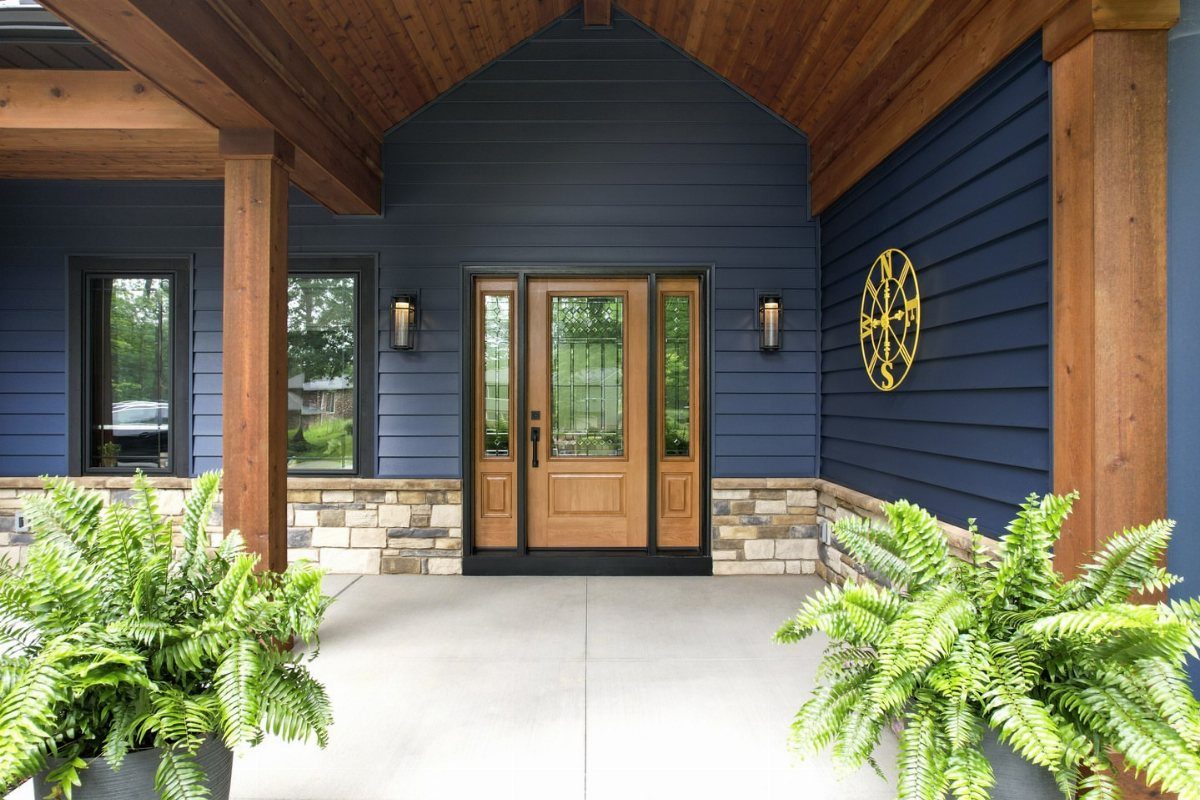
Deep blue siding carries more weight than gray without the harshness of black, and it improves with greenery in front of it in a way neutrals do not.
Wood trim around the porch keeps the blue from feeling like a uniform; the warmth against the deep color is what makes this pairing work. Stone wainscoting at the base, visible here, grounds the color so it does not float.
Light gray roofing works if white trim feels too coastal for your street. I would test a sample board against your actual lawn and mature trees, since the same navy reads very different against Kentucky bluegrass versus southern pines.

Item Description: 14 3/4"W x 59"H Lifetime Vinyl, Standard Two Equal Panels, Raised Panel Shutters, w/Installation Shutter-Lok's & Matching Screws (Per Pair), Burgundy Red
Item Description: 14 3/4"W x 47"H Lifetime Vinyl, Standard Two Equal Panels, Raised Panel Shutters, w/Installation Shutter-Lok's & Matching Screws (Per Pair), Burgundy Red

Item Description: 14"W x 63"H Lifetime Vinyl, Standard Four Board Joined, Board-n-Batten Shutters, w/Installation Shutter-Lok's & Matching Screws (Per Pair), Burgundy Red
6. Burgundy Red
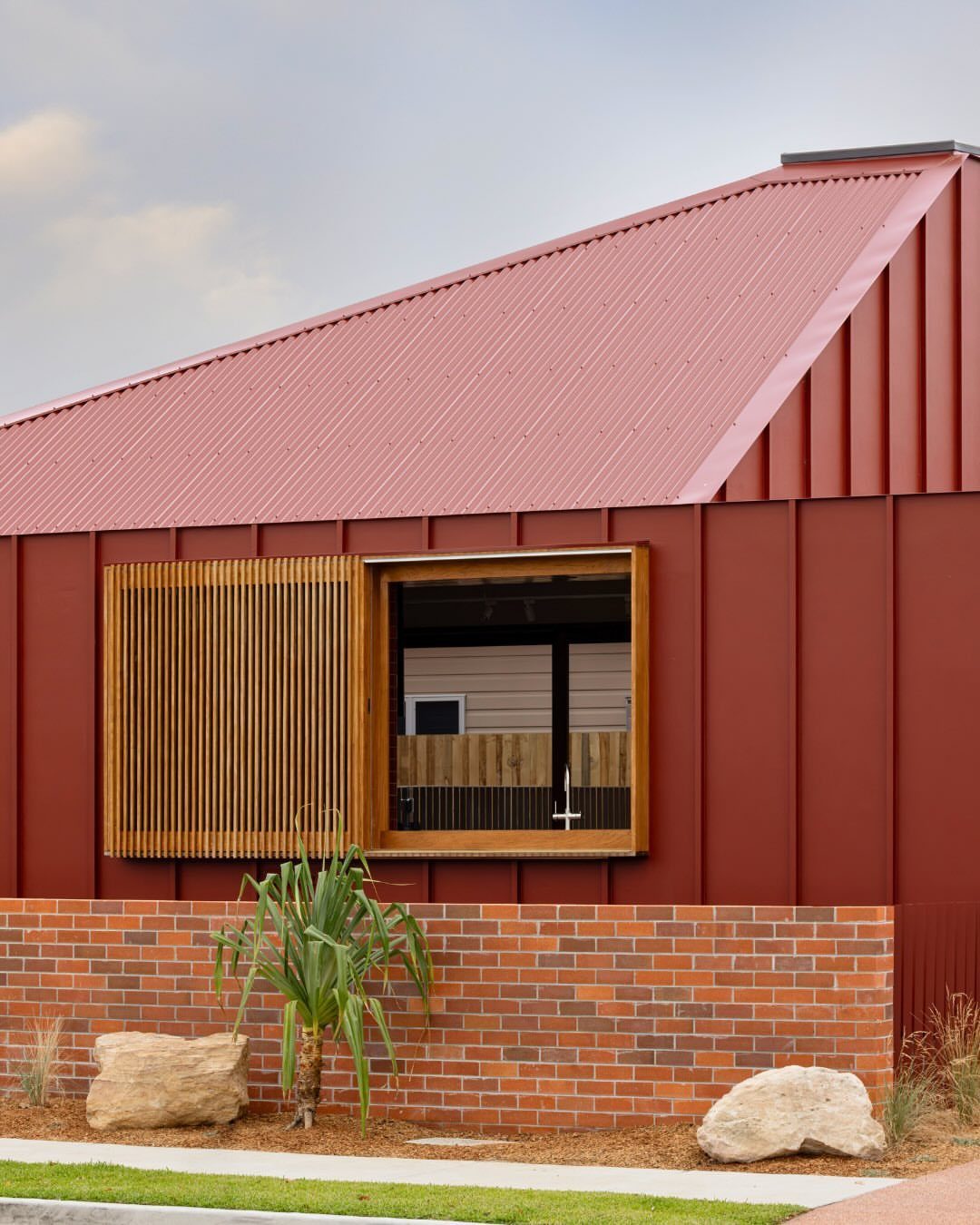
Vertical metal siding in burgundy reads as confident, the kind of choice that works only when the rest of the design commits to the same level of intention.
The corrugated roof and timber-framed window here match that energy; half-measures would make the red feel like a mistake. Brick at the base ties it to traditional materials so the metal does not scan as industrial shed.
This color shows every dent and scratch, so I would walk the panels before final installation and keep a touch-up match on hand.
For a buyer, it signals that the structure was built to last, which is not nothing in a market full of beige compromise.

Tru-Lock state-of-the-art locking system Random seams Textured from dozens of real cedar shakes Low maintenance 10 pieces per box (50 sq. ft.), Linear ft. per box: 480 ft.,...
7. Gray Clouds
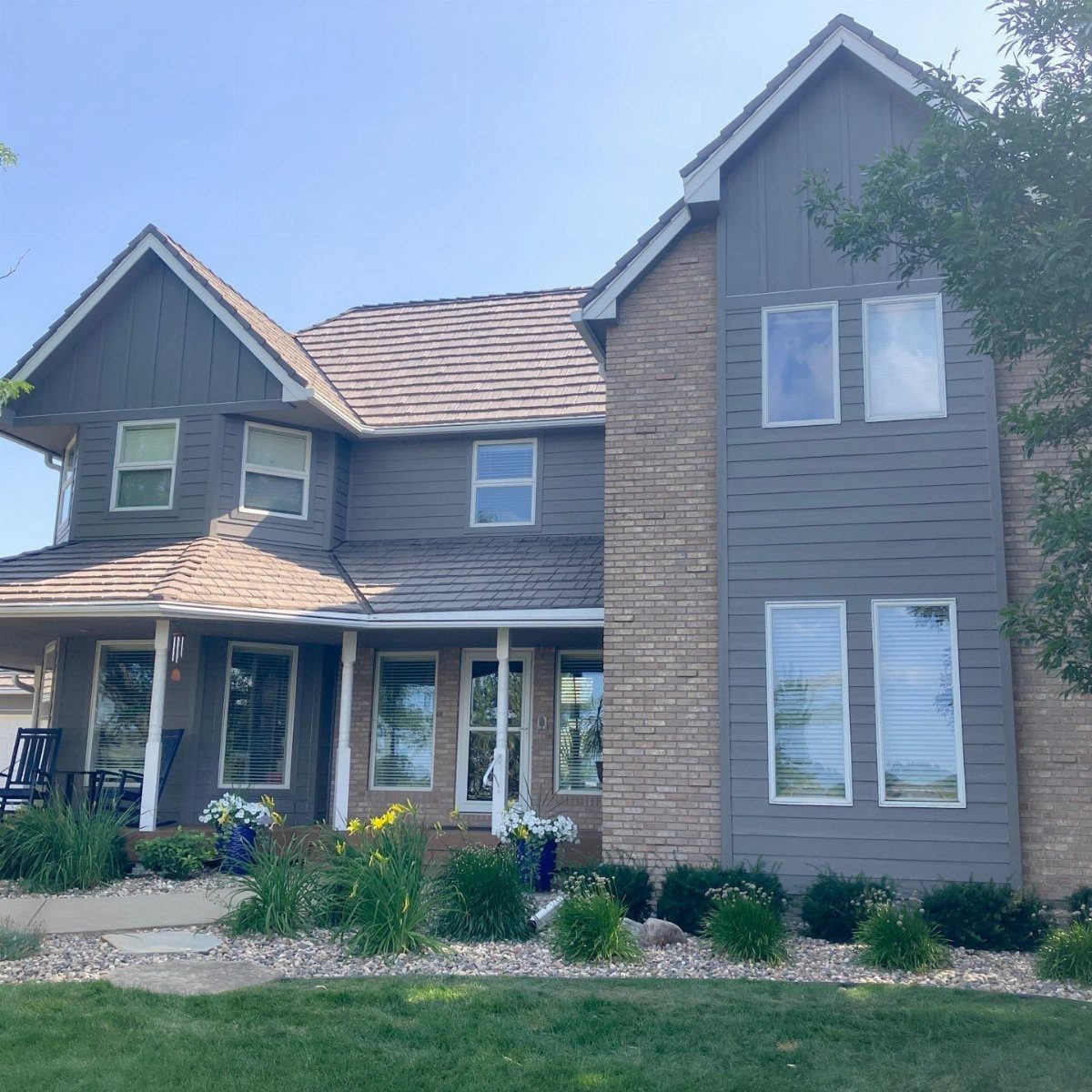
Dark gray siding sits in the useful middle of the value scale, dark enough to read as intentional but not so dark that every scuff announces itself.
The light brick sections here do the heavy lifting of contrast, which means you can get away with less trim detail than a darker scheme demands.
I would watch how the gray reads against a northern sky in winter, where it can go flat and lifeless; a house with mature landscaping or some evergreen structure in front fares better.
On a suburban street, this color reads as updated without chasing a trend, and it holds up longer than the bolder choices around it.

Fade-Resistant Color Technology: Color-through process resists fading and hides scratches for long-lasting appearance
Fade-Resistant Color Technology: Color-through process resists fading and hides scratches for long-lasting appearance

"King of the Vinyl Siding Installers" gives a vinyl siding installer a proud statement about exterior renovation skills.
8. Dark Sage Green Siding
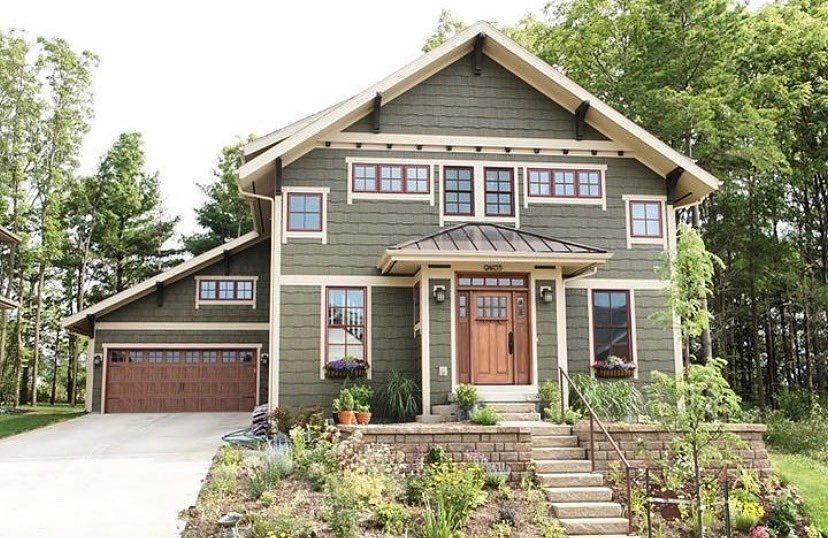
Dark sage green siding carries the calm of forest-adjacent houses into ordinary neighborhoods without requiring actual trees to complete the effect.
Cream trim warms the whole facade in a way white would not; a wooden door adds a third natural material that keeps the palette from feeling selected from a single paint deck.
Brown or tan roofing extends the earthy range rather than cutting against it. I would check this color at dusk, when greens can shift toward gray and lose the depth that justifies the choice.
For craftsman or traditional builds surrounded by lawn rather than canopy, this is the green that reads as settled rather than novelty.

Class 1(A) fire rating, PermaColor Fade Protection
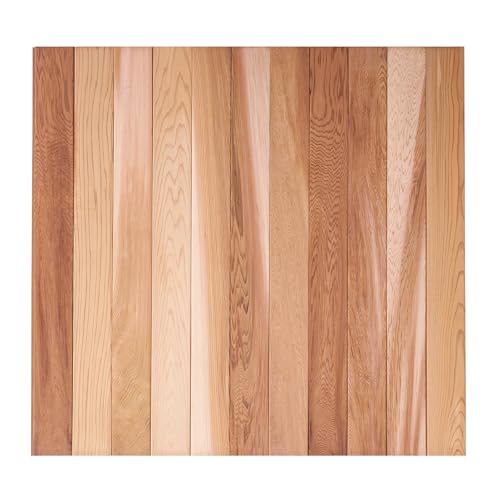
½" SOLID CEDAR — 50% THICKER THAN STANDARD WALL PLANKS: At 12mm (nearly ½ inch), these panels are substantially thicker than the ¼" boards commonly sold online. Thicker wood resists warping and cupping in humid environments like bathrooms and saunas, holds nails, staples, and construction adhesive more securely, and delivers the solid, architectural feel of real woodwork — not a surface veneer that flexes under your hand.
9. Modern Siding Color with Contrasting Trim
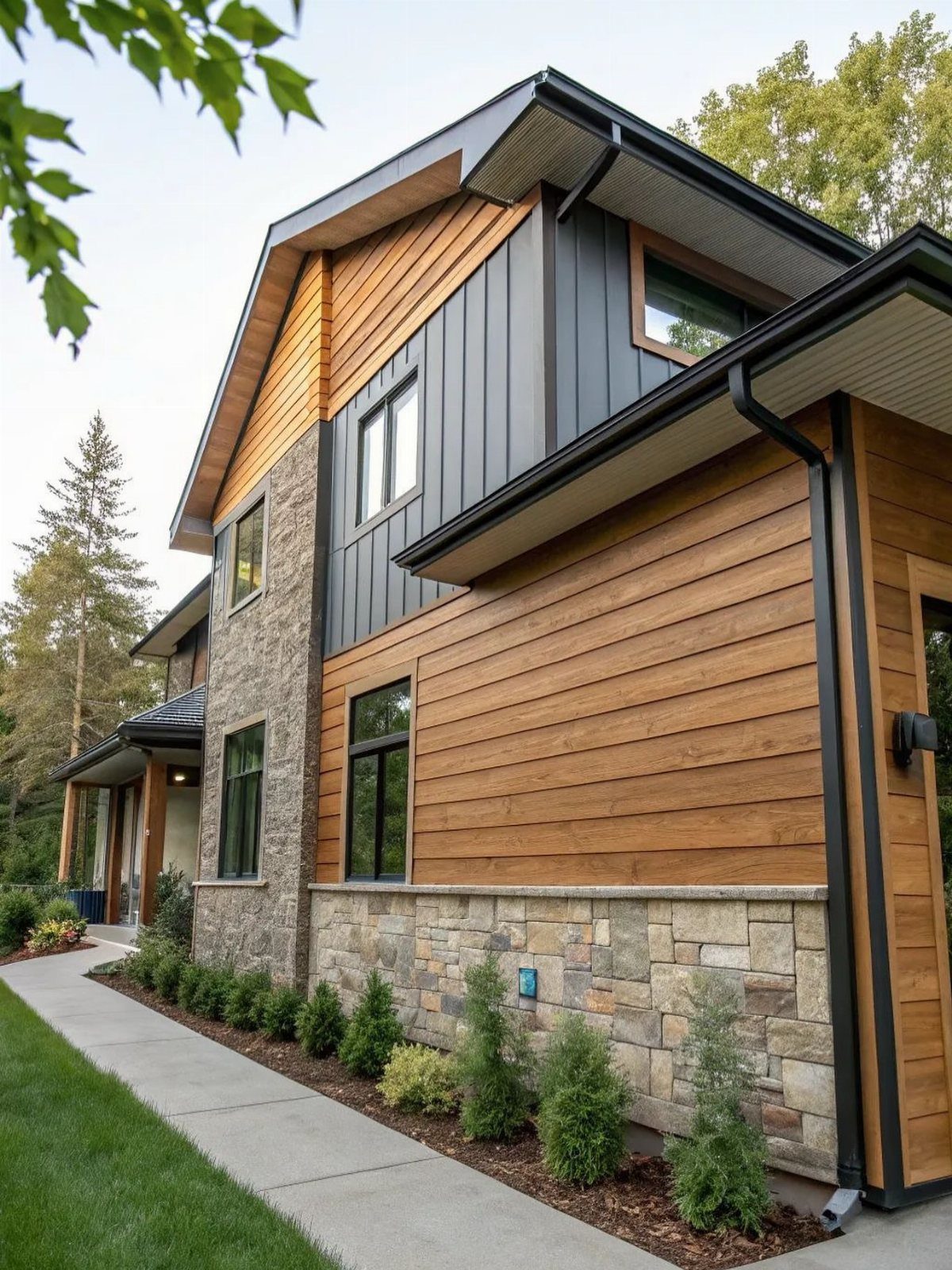
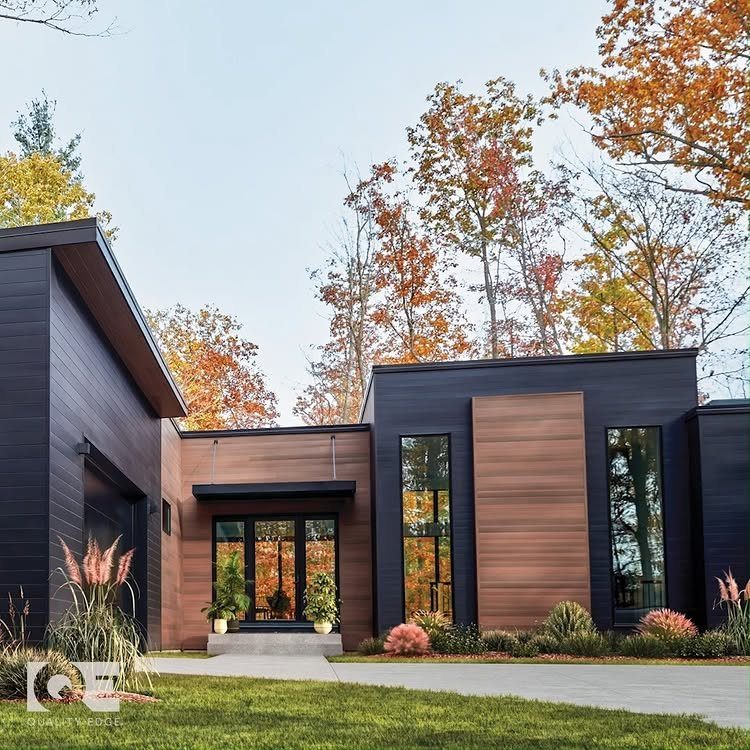
Black window frames function as punctuation, repeating often enough to read as deliberate rather than scattered. Stick to three colors total: one main siding, one trim, one bold accent.
More than that and the eye starts hunting for a focal point that is not there. Here the metal panels serve as that accent, which means the door can stay quiet rather than fighting for attention.
I would budget for the installation labor on mixed materials, since each panel type demands its own fastening pattern and trim transition; the visual effect is real, but the contractor’s estimate will reflect the complexity.
Choosing Colors
Roof color narrows the siding choices that will actually work on your house.
Gray or black roofs leave you the most room to move between cool and warm tones. If your roof has pattern or variation in its shingles, keep the siding simple; 2 busy surfaces fight each other at the curb.
The house itself matters too.
A craftsman build with exposed rafter tails carries color differently than a ranch with long, unbroken walls. I would drive your street once and note which roof colors repeat, then choose something that belongs without copying.
Item Description: 12"W x 59"H Lifetime Vinyl, Standard Two Equal Panels, Raised Panel Shutters, w/Installation Shutter-Lok's & Matching Screws (Per Pair), Burgundy Red...
Testing Colors
Morning light washes colors out; afternoon sun warms and deepens them. That charcoal from the list can shift toward purple, and the deep blue reads coastal or moody depending on the hour.
I would paint sample boards and move them to each side of the house, checking them at 8 AM, noon, and late afternoon.
Overcast days flatten everything. The gray clouds entry goes lifeless against a winter sky, which is why the notes there mention evergreen landscaping as partial rescue.
If your climate runs gray for months, factor that in more than the single sunny afternoon when you first liked the sample.
Manufacturers now make large sample panels for this exact reason. A chip under the store fluorescents tells you almost nothing.
Maintenance Considerations
Color choice drives how often you will be washing or repainting.
Black fades to chalky gray unless you pay for quality UV-resistant pigment; burgundy shows every hail dent and ladder scuff. Darker colors in general absorb more thermal stress, which matters for long-term material performance as much as for looks.
Lighter colors hide dust and pollen better than dark ones, though white itself can show mildew in shaded or humid areas. Engineered or vinyl options reduce the sealing cycle that actual cedar requires, but the surface still needs attention.
I would match the material grade to the color commitment. Bold, dark choices cost more over time in paint quality or replacement frequency.
Visualizing Options
Siding manufacturers now host visualizer tools where you upload a photo of your house and overlay colors, roof tones, and trim.
LP SmartSide has a visualizer, and James Hardie, CertainTeed, and most other big brands offer the same thing. They help narrow a palette fast, especially for testing the mixed-material ideas like contrasting trim or metal panel accents.
These tools remain imperfect.
Screen rendering skips the real effect of your specific light, your mature trees, your neighbor’s white vinyl reflecting back. I would use them to eliminate definite nos, then commit to physical samples for the final two or three choices.
Seeing them together beats imagining.
Frequently Asked Questions
What is the most popular siding color right now?
Charcoal and white is the combination I see most often on new builds and resales that photograph well.
Charcoal sits right where most homeowners land when they want something current: darker than the mid-tone grays that filled every subdivision 5 years ago, but not so far as black and its endless touch-up cycle.
White trim gives it the clean edges that read as intentional from the street.
What are the trendy exterior colors for 2026?
Dark sage green and forest green dominate the 2026 color forecasts, along with rich mahogany browns for wood-look finishes.
Warm off-whites and creams from eggshell to khaki are replacing the cooler grays of past years. Classic white stays in the mix, especially for modern farmhouse styles where it plays against landscaping.