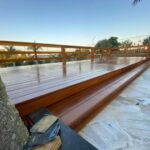
Rubber mats and interlocking tiles lift out when you move; porcelain stays put.
That single question, whether the floor travels with you, cuts the list in half before you touch a sample. Portable interlocking systems snap apart for a move; permanent tile stays with the house.
At roughly $1 to $5 per square foot for porcelain material against $8 to $15 or more for premium pro-installed finishes, the cost spread is wide enough that your timeline matters as much as your budget.
[link-whisper-related-posts]1. Rubber Flooring Tiles
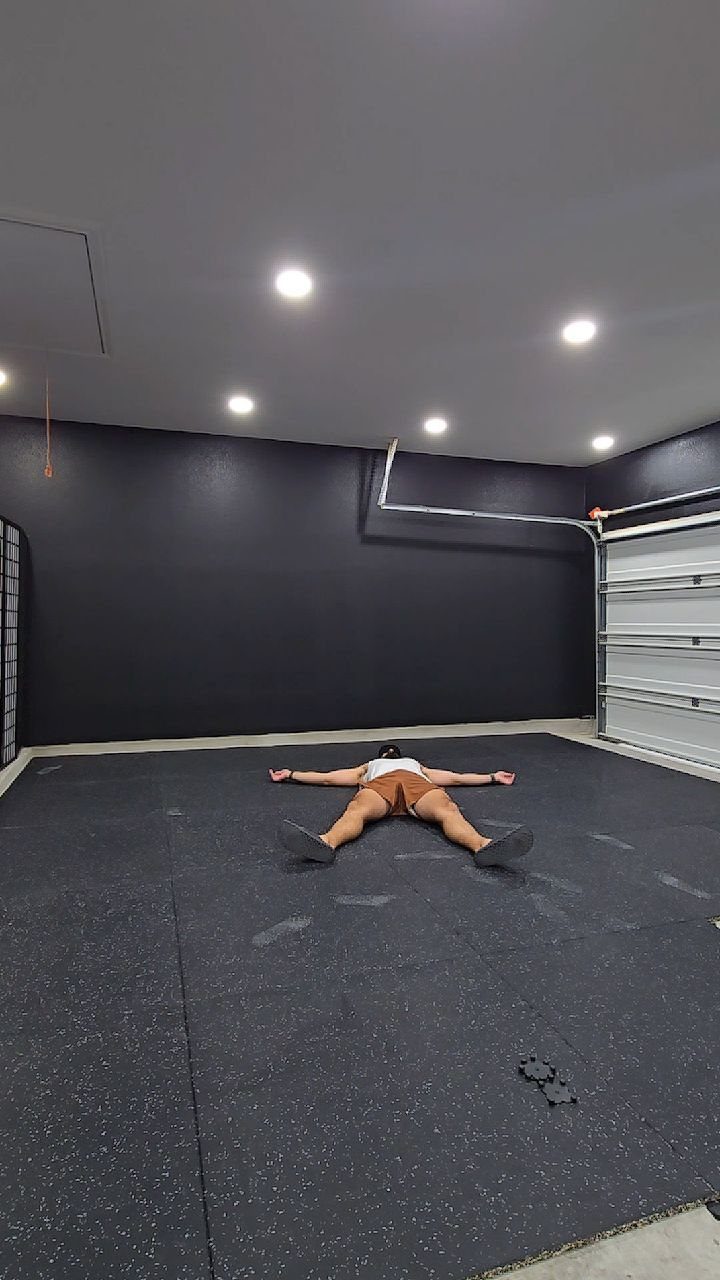
Rubber flooring tiles are large, speckled mats that lay flat over concrete without adhesive, making them one of the fastest garage upgrades a person can do alone.
The surface grips well when wet, which matters if you are pulling in with snow on your tires or tracking in rain from a storm.
Most sets interlock at the edges, though some simply butt together; either way, cleanup means lifting a single tile rather than scrubbing a coated floor. I would pick these if I wanted gym-floor resilience without committing to epoxy.

DUAL-TEXTURE DESIGN: This mat features textured top surface and textured bottom layer; dual-texture EVA foam delivers balanced comfortable touch, suitable for barefoot or shoe use
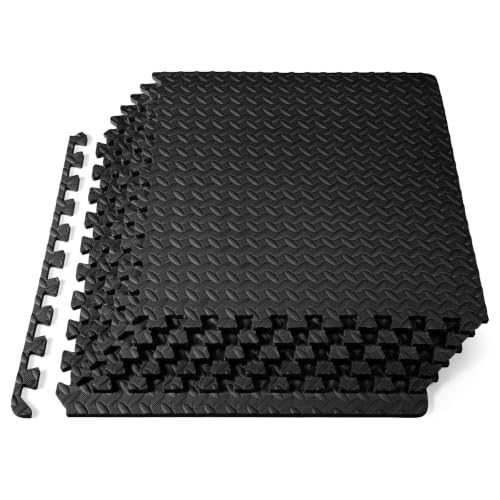
PROTECTIVE GYM FLOOR MAT: Durable, non-skid gym flooring for home gym that covers and protects your floor or carpet while creating a comfortable workout room or play mat

💪 #𝟭 𝗣𝗥𝗢𝗧𝗘𝗖𝗧𝗜𝗩𝗘 𝗙𝗟𝗢𝗢𝗥 𝗠𝗔𝗧 𝗦𝗘𝗧 𝗪𝗜𝗧𝗛 𝟭𝟴 𝗣𝗨𝗭𝗭𝗟𝗘 𝗣𝗜𝗘𝗖𝗘𝗦 + EDGE PIECES FOR PERFECT FLOOR PROTECTION - protect your floor from scratches, knocks, dents, cold, noise, sweat and other fluids with probably the best and most secure protective floor mat available on the market. Completely BPA-free for your safety and well-being.
2. Interlocking Garage Tiles
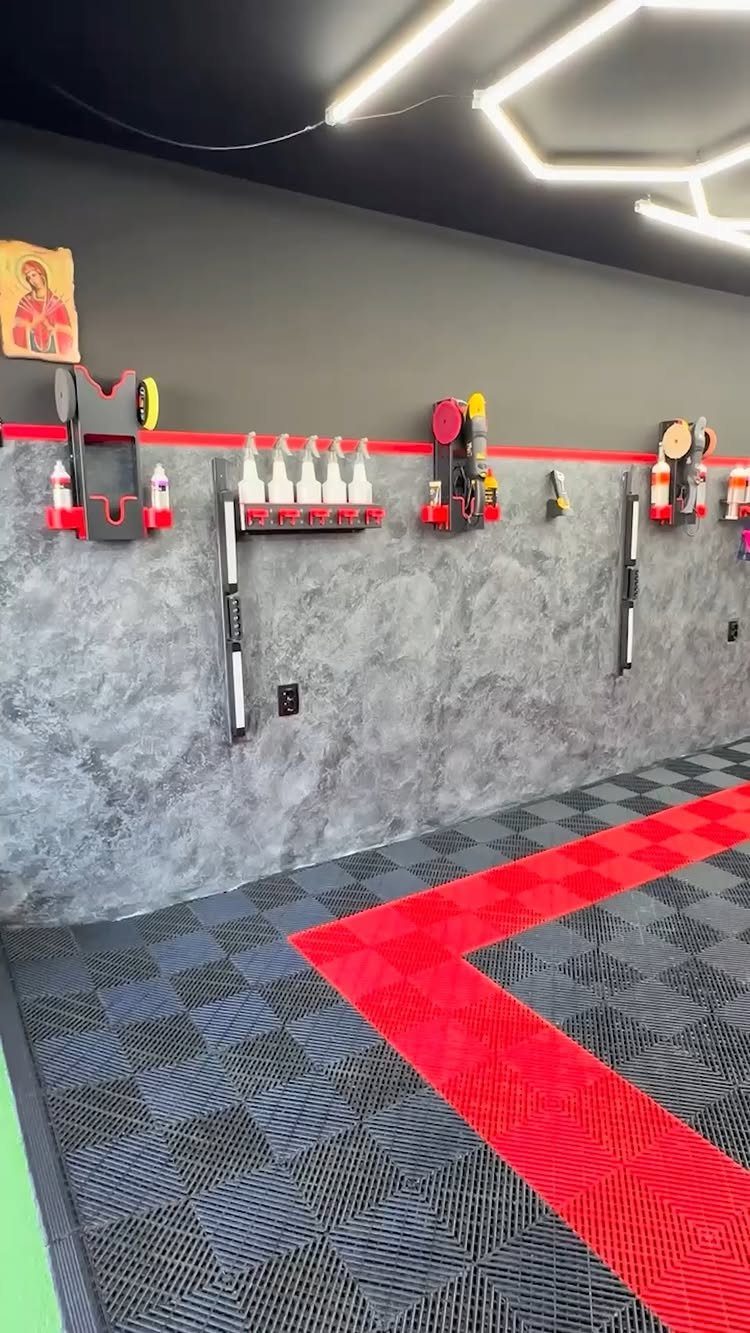
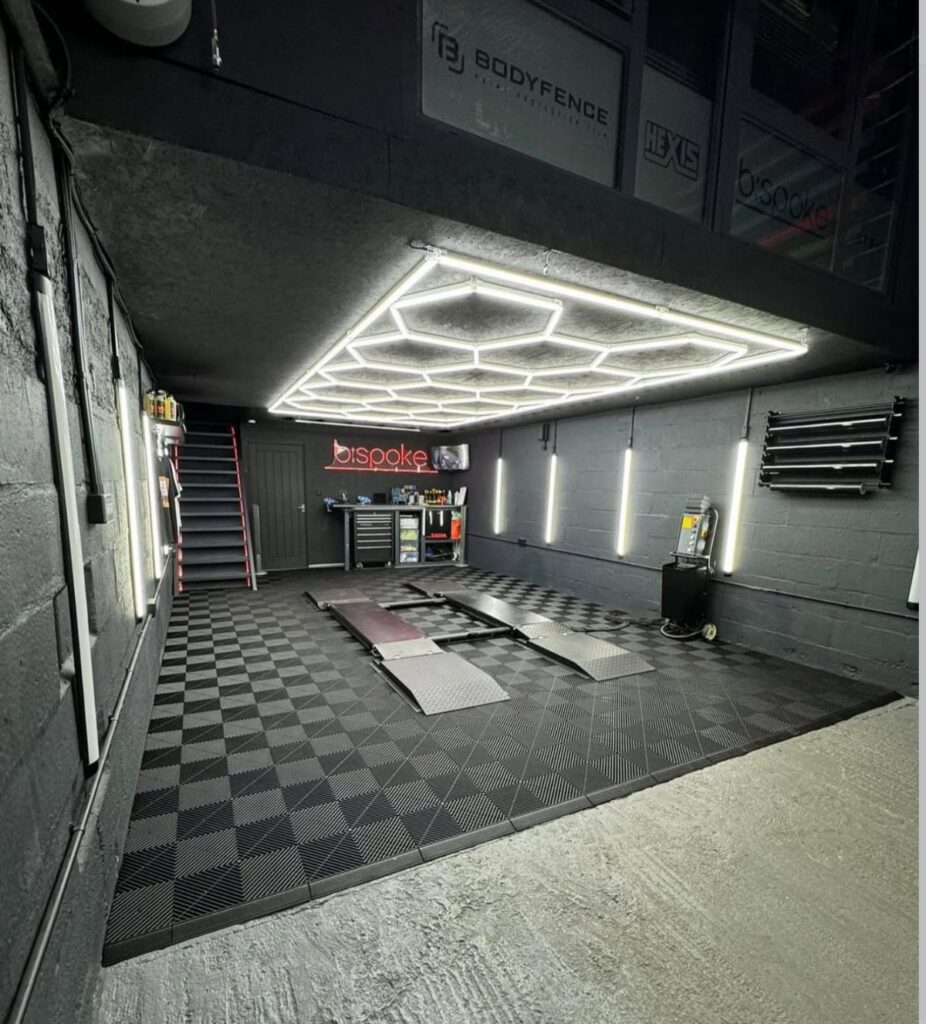
Interlocking garage tiles snap together in plastic grids that you can lift and relay if you change your mind, which is more forgiveness than any poured coating offers.
Brands like Swisstrax and RaceDeck sell them in solid colors and mixed patterns, so you can lay a checkerboard, a border, or a solid field depending on what reads as "finished" in your space.
The plastic shell keeps spills on top rather than soaking in, and a damaged square pops out for replacement.
Cost sits higher than roll-out mats, but the custom look and the ability to take it with you when you move are worth weighing.
The tiles are made with a copolymer and are rated to withstand 40,000 rolling pounds.

Interlocking Drainage Mats for Indoor and Outdoor Use: The non-slip floor tiles with holes have excellent drainage underneath and are ideal for damp and ventilated areas as the drainage tiles stop water from pooling and allow the floor to dry out on its own; perfect for walk-in showers, outdoor hot tub entrances and exits, pool areas such as pool slides and pool shower floors, basement and garage floors, camping doormats, or RV mattresses, and more

PROTECTIVE, PORTABLE FLOORING: Dense, durable tiles protect floors and withstand gym equipment and heavy use; surface compression may occur with heavy equipment

WOOD GRAIN FLOOR MAT (16 Tiles,16 Sq ft, Pine) — Provides comfort and cushion to hard floor surfaces with classic faux wood finish — Includes 16 floor mat wood grain tiles to enhance the comfort and appearance of your space
3. Porcelain Tiles
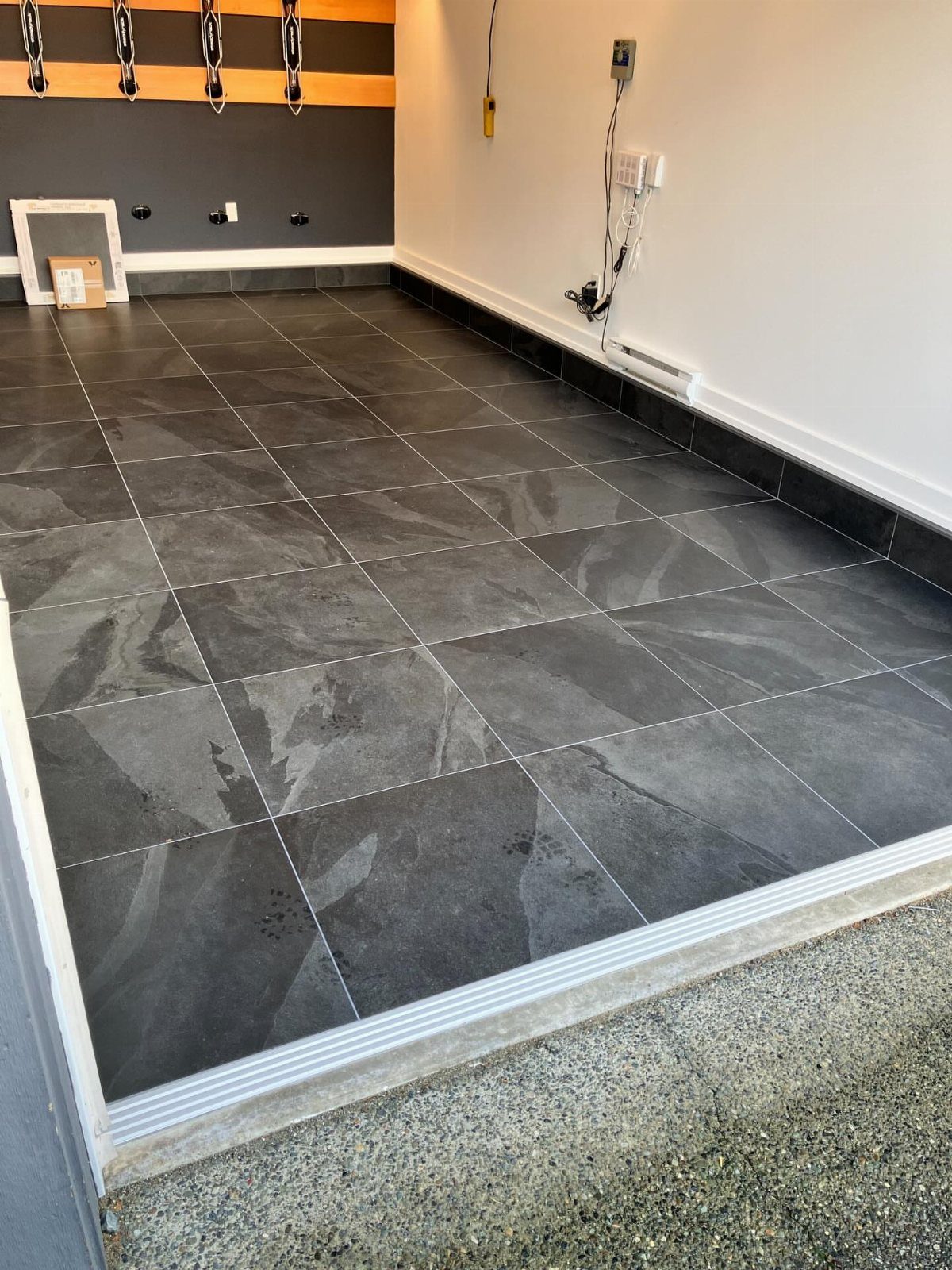
Porcelain tile brings the same material you see in high-traffic commercial lobbies into a garage, and the result reads more like a room extension than a workshop.
Clay grey textured finish gives grip under wet boots, and the large square format means fewer grout lines to collect grime.
At roughly $1 to $5 per square foot, the material cost stays reasonable, though installation demands a level subfloor, mortar, grout, and a day or two of curing before you park on it.
I would reserve this for a garage that doubles as a showroom or studio, somewhere the floor is part of the design, not just something to catch drips.

EFFORTLESS GROUT REPAIR: Pre-mixed and ready to use formula saves time and effort, allowing you to quickly fix holes and gaps in grout lines on various surfaces

EFFORTLESS GROUT REPAIR: Pre-mixed and ready to use formula saves time and effort, allowing you to quickly fix holes and gaps in grout lines on various surfaces

Efficient Grout Restoration: Say goodbye to worn-out, discolored grout lines with our Magic Chems Grout Repair Kit. Specifically formulated for grout repair and tile grout, this kit efficiently restores grout lines, rejuvenating the appearance of your bathroom tiles. Elevate your DIY game with professional results. The Magic Chems Grout Repair Kit empowers you to achieve a polished finish without the need for costly professional assistance. Enjoy a bathroom or kitchen makeover on your terms.
4. Ribbed Garage Flooring Tile
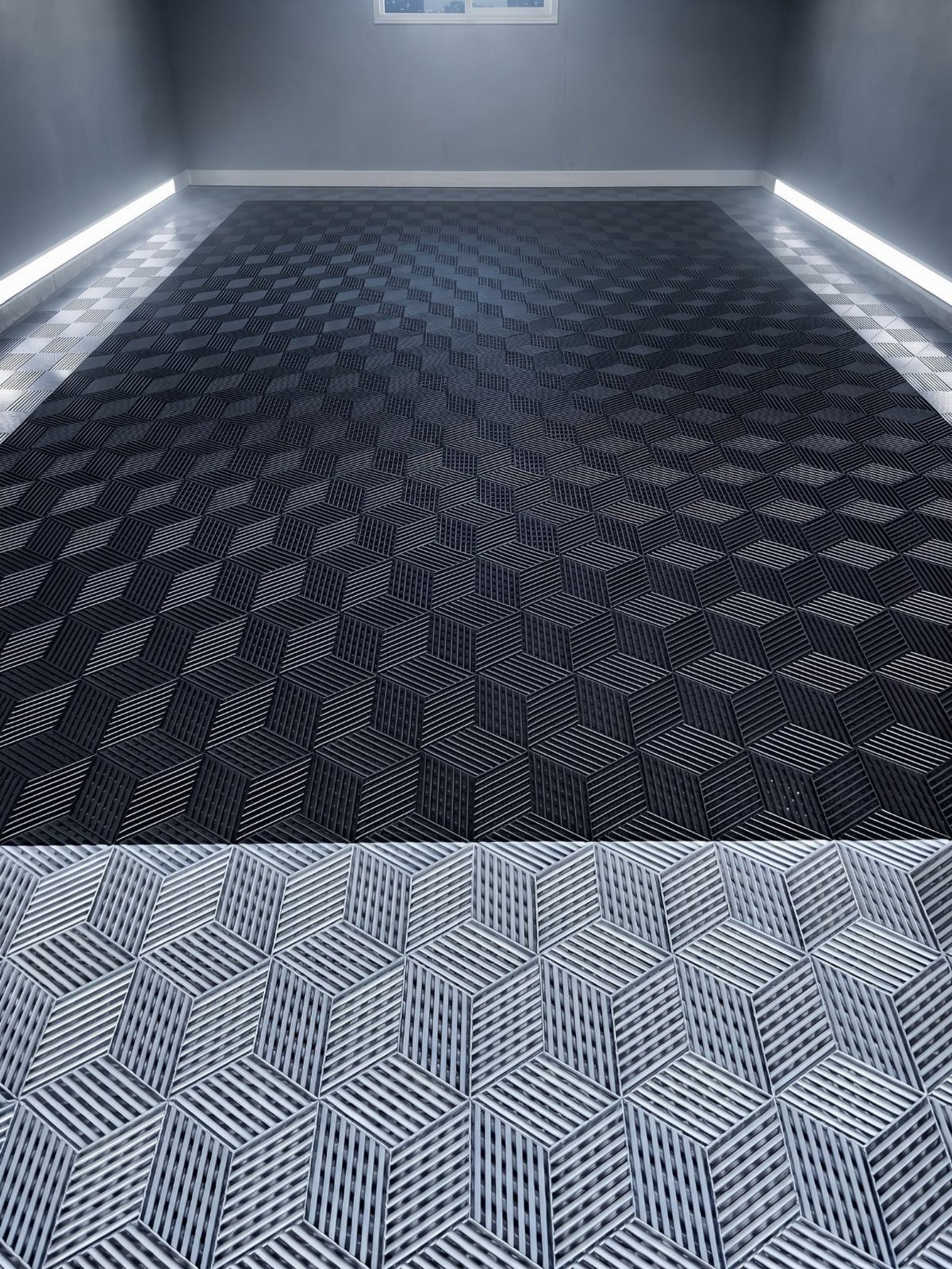
Ribbed garage tiles raise the surface on a three-dimensional grid that leaves channels open underneath, and that gap is the point: air moves through, water drains off, and the underside of the tile stays dry enough to resist mold in humid climates.
Black and grey interlocking squares read as intentional design rather than industrial afterthought. You can mix colors for borders or zones, say grey under the car and black under a workbench.
Installation is dry and tool-free, though the ribs mean small items like dropped screws can roll into the channels. These suit anyone in a wet region who wants the floor to breathe.

Efficient Drainage: Our 55 interlocking drainage mats, each measuring 12x12 inches, feature upgraded 0.6-inch (15 mm) support pins to ensure rapid water drainage. Say goodbye to bothersome surface water buildup and enjoy a fresher, odor-free environment. These waterproof drainage floor tiles provide a non-slip surface for added safety.

【Easy Assemble & Secure】- Jocoevol interlocking floor tiles incredibly simple to install-no glue or tools required! Just align the edges and press them down. The interlocking design features square and thick tabs, ensuring they stay in place and resist deformation even under heavy impact

High-Strength PP: This drainage mat is made from durable PP material, making it ideal for garages where it withstands frequent vehicle traffic without losing shape. Compared to traditional hard plastics, PP offers added durability, ensuring stability under heavy loads and extending its lifespan.
Choosing the Right Flooring
Start with what actually happens in that space.
A workshop or gym needs grip underfoot and some give to the surface; rubber or interlocking tiles both do that. Heavy trucks and regular spills mean stain resistance matters more than anything else.
The concrete underneath needs prep and protection no matter what goes on top.
Cracks, moisture, and uneven spots will telegraph through or weaken the install. Roll-out mats and snap-together systems come up when you move, which matters for renters or anyone who expects to relocate.
Permanent coatings stay with the house. That split, portable versus fixed, probably decides more garage floors than price does.

High-Strength PP: This drainage mat is made from durable PP material, making it ideal for garages where it withstands frequent vehicle traffic without losing shape. Compared to traditional hard plastics, PP offers added durability, ensuring stability under heavy loads and extending its lifespan.

High-Strength PP: This drainage mat is made from durable PP material, making it ideal for garages where it withstands frequent vehicle traffic without losing shape. Compared to traditional hard plastics, PP offers added durability, ensuring stability under heavy loads and extending its lifespan.

High-Strength PP: This drainage mat is made from durable PP material, making it ideal for garages where it withstands frequent vehicle traffic without losing shape. Compared to traditional hard plastics, PP offers added durability, ensuring stability under heavy loads and extending its lifespan.
Installation Ease
Interlocking tiles, roll-out vinyl, rubber flooring, and floor mats all lay directly over concrete without adhesive. That makes them the most approachable DIY options.
For the floating options, a straight edge, measuring tape, and utility knife handle most of the cuts.
No special tools, no waiting on cure times. Anything loose-laid can shift under heavy braking or sharp turns, so edging strips or perimeter walls matter more than the install videos suggest.

FOAM FLOOR TILES 6-PACK - These EVA foam floor mats provide 24-square-feet of protective coverage for flooring in your home gym, garage, or family room. Create a comfortable space for fitness routines and workout equipment or a safe play area for kids.

【Fast Drain, No Puddles】modular interlocking cushion drainage tiles with drain holes and raised feet channel water away fast, helping keep shower floor tile and pool areas drier, fresher, and slip-safe.

【0.4’’ Thicken Floor Mats】Upgrade to 0.4'' thickness! More durable and tougher. A high-density EVA foam base combined with a sturdy EPDM rubber top. This construction can support heavy exercise equipment, ensuring it won’t tear easily due to weight or vigorous movements, guaranteeing long-lasting durability.
Cost Considerations
Budget runs from paint on the low end to polyaspartic coatings, porcelain tile, and polished concrete at the top. Premium finishes sit at $8 to $15 or more per square foot, and they almost always mean hiring a pro.
Stamped concrete adds decorative patterns.
These turn a garage into a finished room, but they also anchor you to the house. For anyone keeping options open, the portable systems cost less now and leave with you later.
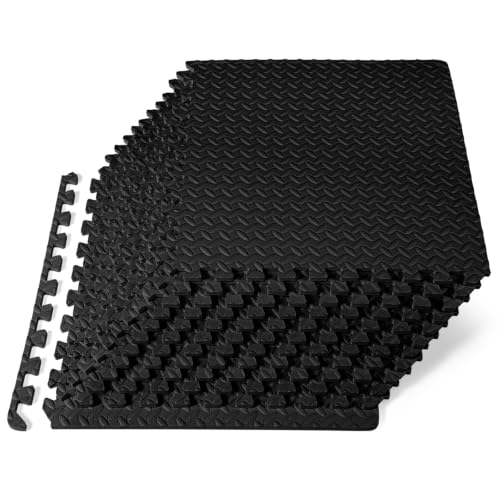
PROTECTIVE GYM FLOOR MAT: Durable, non-skid gym flooring for home gym that covers and protects your floor or carpet while creating a comfortable workout room or play mat HIGH...
Maintenance Tips
Regular sweeping, vacuuming, and occasional mopping extend the life of any garage floor. Spills left sitting stain even sealed surfaces, so speed matters more than product choice.
Polished concrete offers additional stain resistance over bare concrete, though it still needs the same basic care.
Rubber tiles and interlocking systems require little beyond the usual cleanup, and their real advantage is modularity: a damaged or heavily stained square lifts out for replacement instead of needing a full refinishing.
The channels under ribbed tiles collect debris, so a shop vacuum with a narrow attachment reaches where a broom will not.
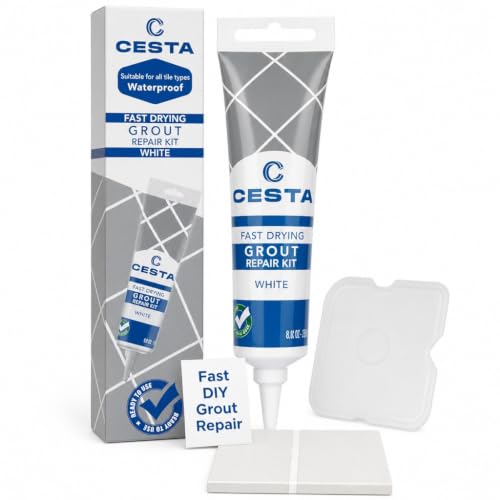
ADVANCED GROUT REPAIR FORMULA: CESTA Grout Repair Kit features a squeezable grout filler formula that transforms into a durable grout-like finish as it dries. Designed to restore, renew, and protect damaged grout lines while providing a clean, long-lasting appearance for your tile surfaces.

400ml Epoxy Grout, Easy to apply, no hurry and no mess. Advanced dual tube design, No need for a mixer to premix, just need a dual-tubes epoxy gun to do the job. !!!NOTE: The dual-tubes caulking gun and tools are NOT included!!!

EASY TO USE SQUEEZABLE TUBE & PRECISION APPLICATION: Hemway grout repair has waterproof and fast-drying features, and it also restores and protects. The ready mixed grout reviver is designed to color and cover stained, dirty, or old grout.
Frequently Asked Questions
What is the best tile for a garage?
Interlocking tiles and rubber flooring both rank high for most people because they install in an afternoon without curing time or hired help.
Rubber gives gym-floor resilience and grips when wet, while interlocking plastic grids let you customize the pattern and pack them up when you move.
How to cover a garage floor cheaply?
A gallon of garage floor paint or basic epoxy kit covers roughly 250 square feet and usually lands between $30 and $50 total, which works out to well under a dollar per square foot if the concrete is clean enough to take it.
Peel-and-stick tiles and roll-out mats sit slightly above that price but still beat interlocking systems or coatings. They will not last as long, but they get you a cleaner surface in a single day with almost no prep.