These ideas run from a weekend of sketching with a garden hose to multi-season planting that fills out over time, and the one that belongs in your yard depends on whether you are starting from bare soil or editing an existing bed.
A path laid with crushed limestone and leftover patio stone can go down in a single Saturday and still leave budget for the lavender that will line it.
[link-whisper-related-posts]1. Layer Your Design
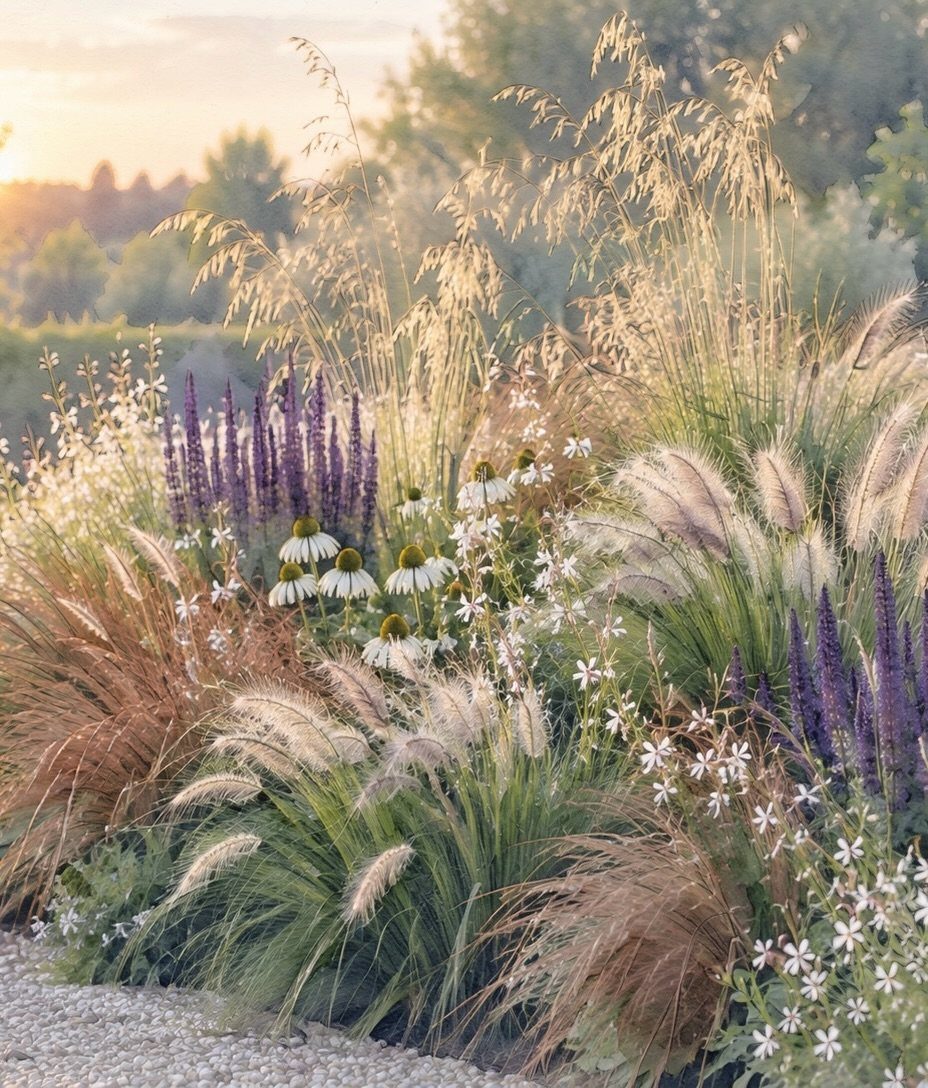
Layering plants by height builds a border that reads as one mass instead of scattered dots.
Groundcovers like creeping thyme or sedum spread low, then mid-height perennials such as salvia or coneflowers fill the middle band, and tall grasses or delphiniums anchor the back.
Grasses at the rear, purple salvia and white coneflowers in the middle, and lower growth threading underneath gives you a full border without everything blooming at once.
I have had the best luck planting the tallest layer first and working forward, since it is easier to read the remaining space than to squeeze something tall between established mid-height plants.
This approach suits a weekend project built in stages as budget allows; most of the cost is the plants themselves, and you can add layers over a season or two.


This flower is very easy to grow, and will attract lots of butterflies to your garden.

High Germination Rate: These non-GMO bellflower seeds boast up to 90% sprout success in ideal conditions. Perfect for zones 3–8, these garden seeds add vibrant purple perennial flowers.
2. Mixed Perennials
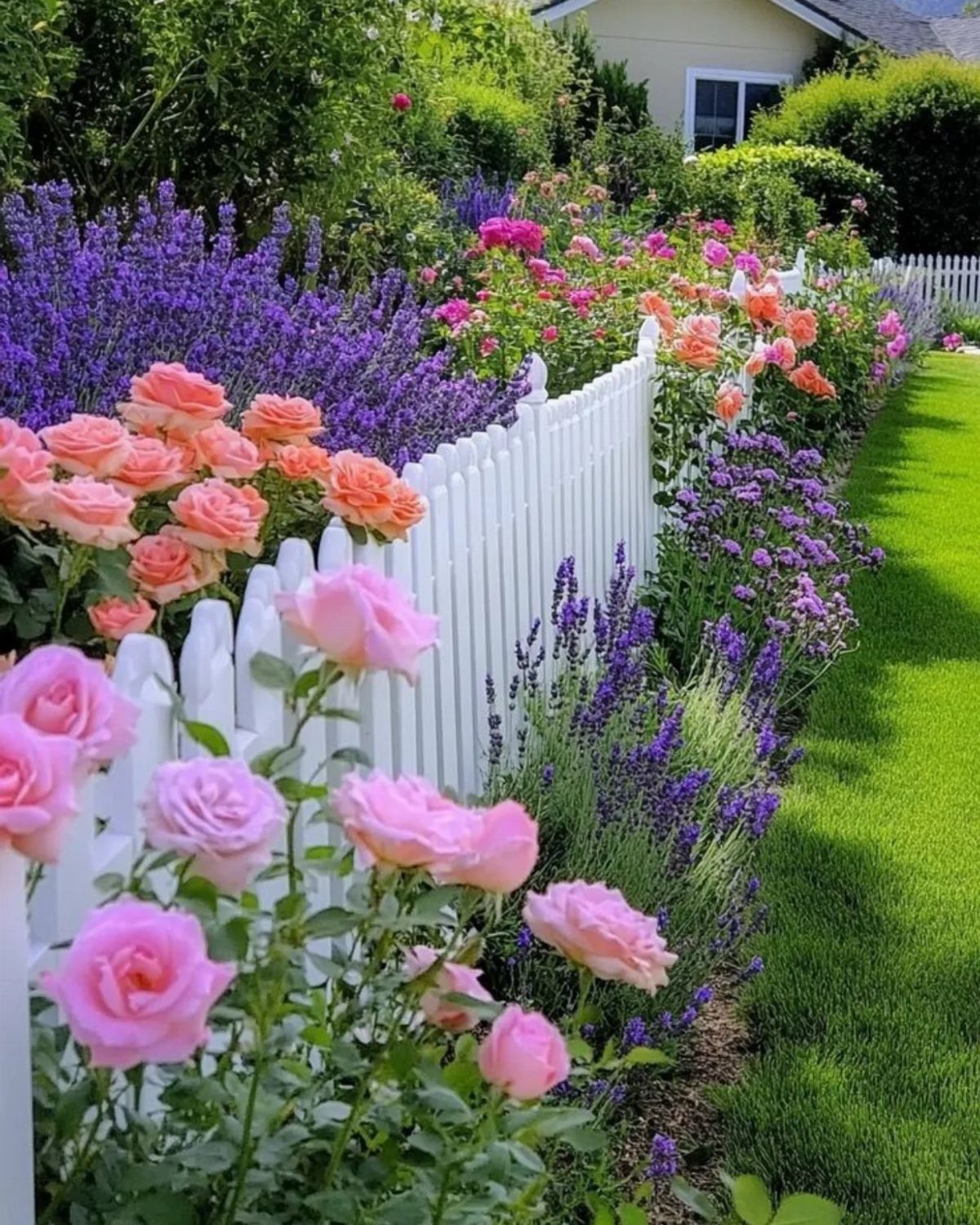
Mixed perennials that return each year cut both the workload and the replanting budget.
Roses for height and repeat bloom paired with lavender for gray-green foliage and pollinator traffic is a combination that carries a fence line from spring through fall.
What matters more than the exact mix is choosing plants rated for your USDA zone and your site’s sun hours.
For my own yard, I check the local extension office’s perennial list before I order anything.
Erigeron, the low daisy-like spreader visible in some cottage beds, works in zones 5–8 and threads between stones or fence lines without asking much of you.
A mixed bed like this one asks for one hard decision up front, then mostly water and the occasional cutback.

Quality Metal Material: Our galvanized garden edge is processed using high-precision CNC technology, ensuring accuracy down to every millimeter. Innovative 3D ripple design not only enhances the aesthetic appeal of the fence but also strengthens its structural integrity.

EASYFLEX DECORATIVE NO-DIG LANDSCAPE EDGING: Get a beautifully landscaped yard without all the work of a dig-in lawn edging; simple installation without trenches or shovels
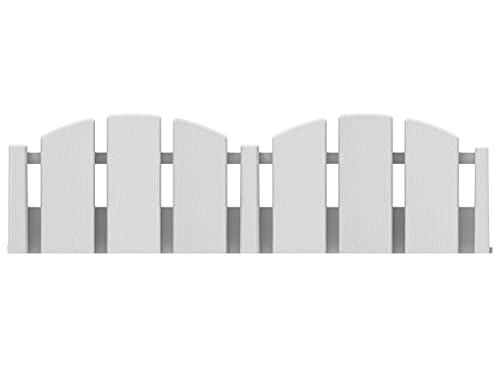
EASYFLEX DECORATIVE NO-DIG LANDSCAPE EDGING: Get a beautifully landscaped yard without all the work of a dig-in lawn edging; simple installation without trenches or shovels
3. Lighting and Seating
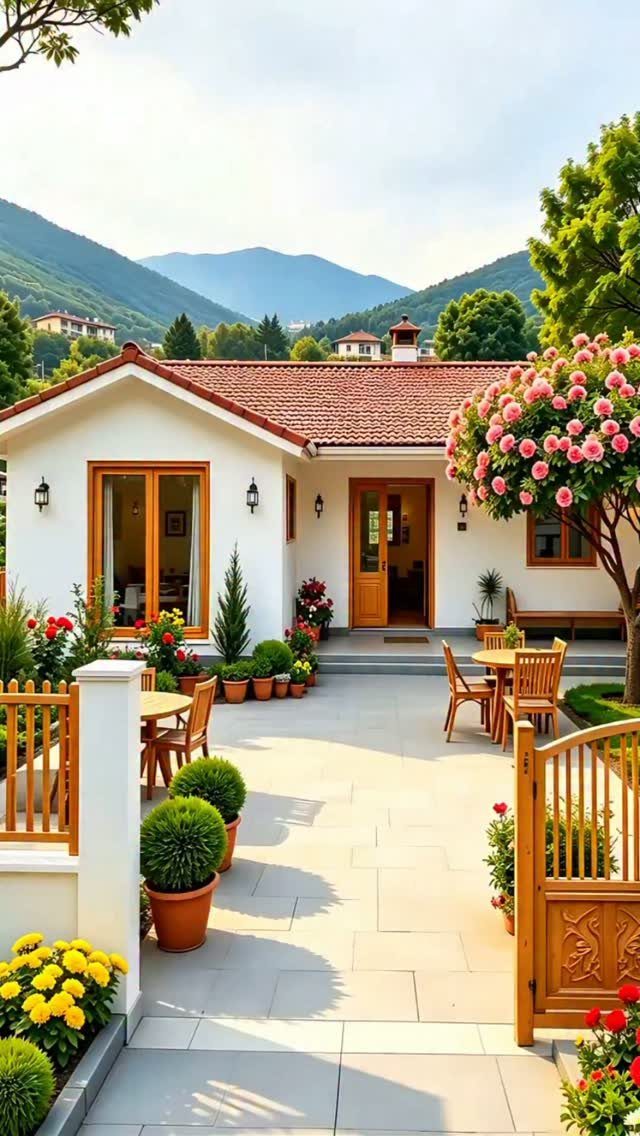
A place to sit changes how long you stay in the garden.
A wooden dining set on stone pavers works if you actually eat outside; a simpler bench tucked into a border is enough if you mostly want somewhere to set down coffee and watch bees work the lavender.
Lighting extends the usable hours without requiring wiring. I would spend the money on seating first and add lights when I had lived with the space long enough to know where I actually stopped to stand.

🌱 High Germination Ground Cover Seeds – Create a lush green carpet for paths, patios, and empty garden spaces.

Light and Covering: Never bury the seeds too deep. Simply press the seeds lightly onto the soil surface and cover them with a very thin layer of soil, or leave them uncovered entirely, as seeds need light to germinate

COVERAGE: 20,000 seeds of creeping thyme (Thymus Serpyllum) provide extensive ground coverage for gardens, pathways, and landscaping areas
4. Natural Stone
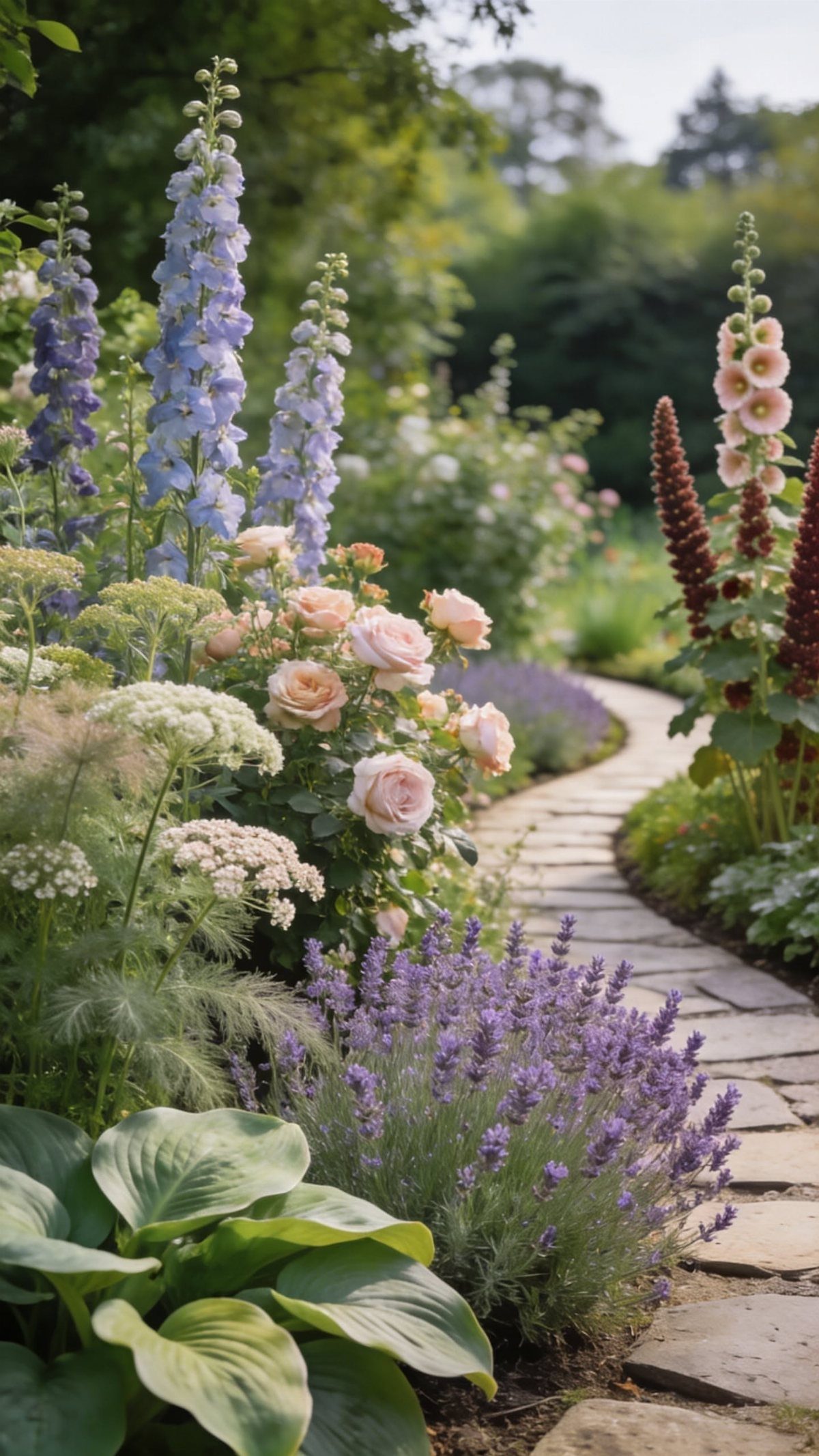
Stone goes down before plants go in, and doing it in that order saves you from cutting beds around an existing path.
A winding route that sits at grade with the soil lets water move off instead of pooling; that is the detail to watch if your yard slopes even slightly.
Local fieldstone wins for this look over quarried cut stone, and the savings are substantial enough to matter on a real budget.
The irregular edges let plants spill over without looking messy, and the gaps fill in with self-seeded campion or thyme if you let them. A solid stone base also means you are not re-edging gravel or mulch every spring.

[REAL STONE APPEARANCE] The look and heft of carved stone without the cracking, chipping, or weight of solid concrete. Cast from natural stone powder and recycled resin for authentic texture and lasting durability.

FUNCTIONAL OUTDOOR SEATING: Lightweight and durable, this fiberclay bench makes a marvelous addition to your garden, porch, patio, deck, or poolside area
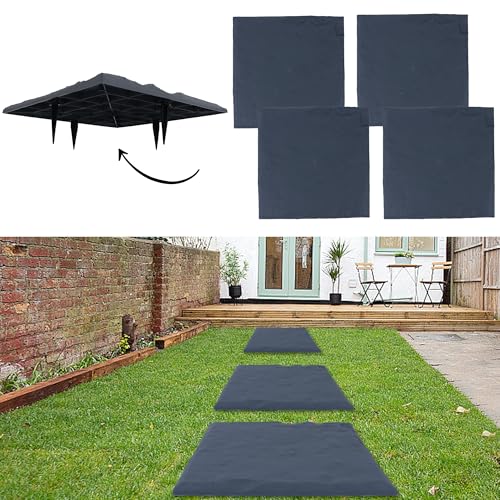
Durable & Easy: These 15.5" stepping stones are made of weatherproof resin, so they can withstand rain, hail, UV rays, and cold temperatures. They also feature four ground stakes for secure installation, making them perfect for patios, walkways, and gardens.
5. Cottage Garden Layout Ideas
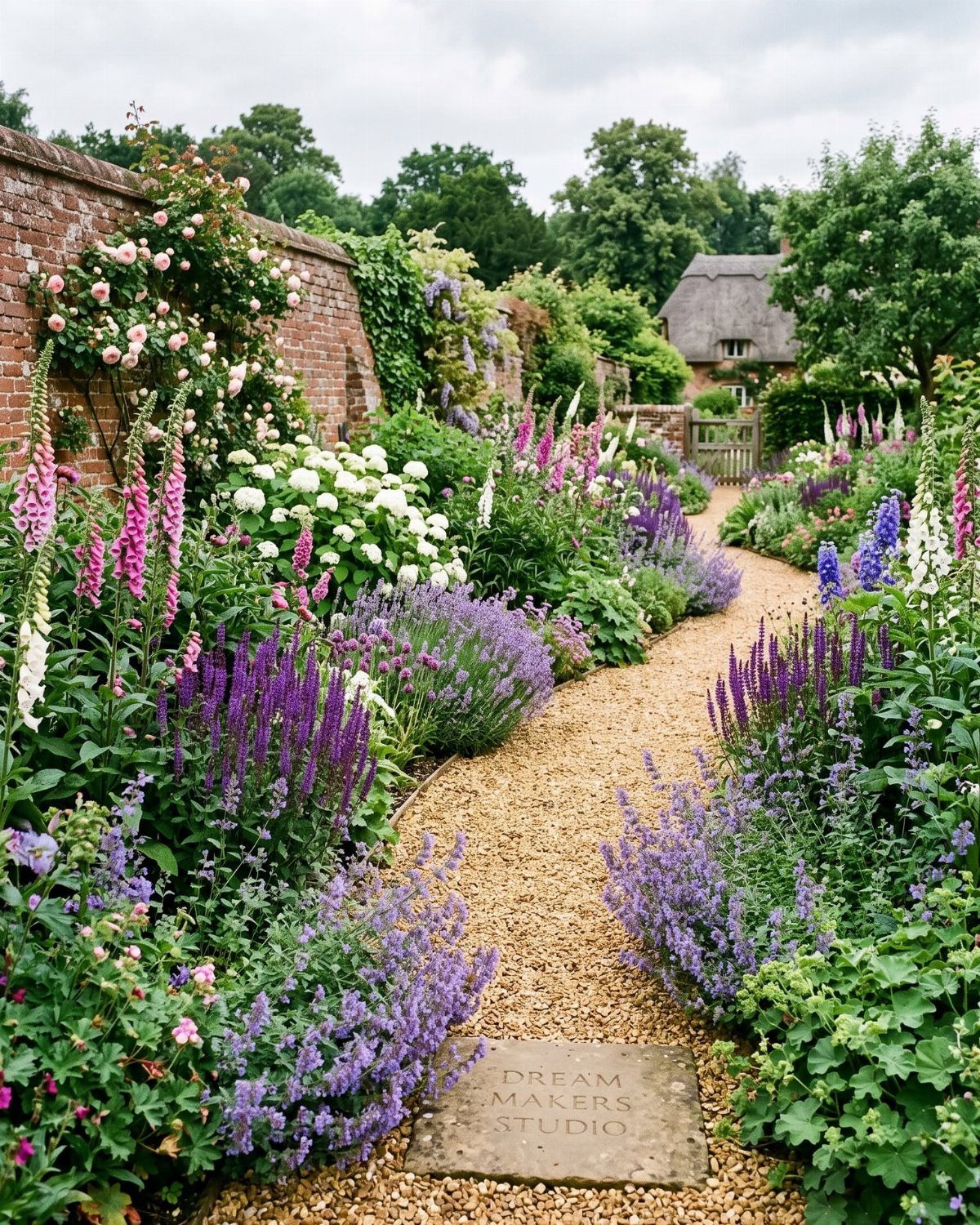
Flowing paths and mixed beds beat symmetry for a cottage garden because the style is meant to look grown, not drawn.
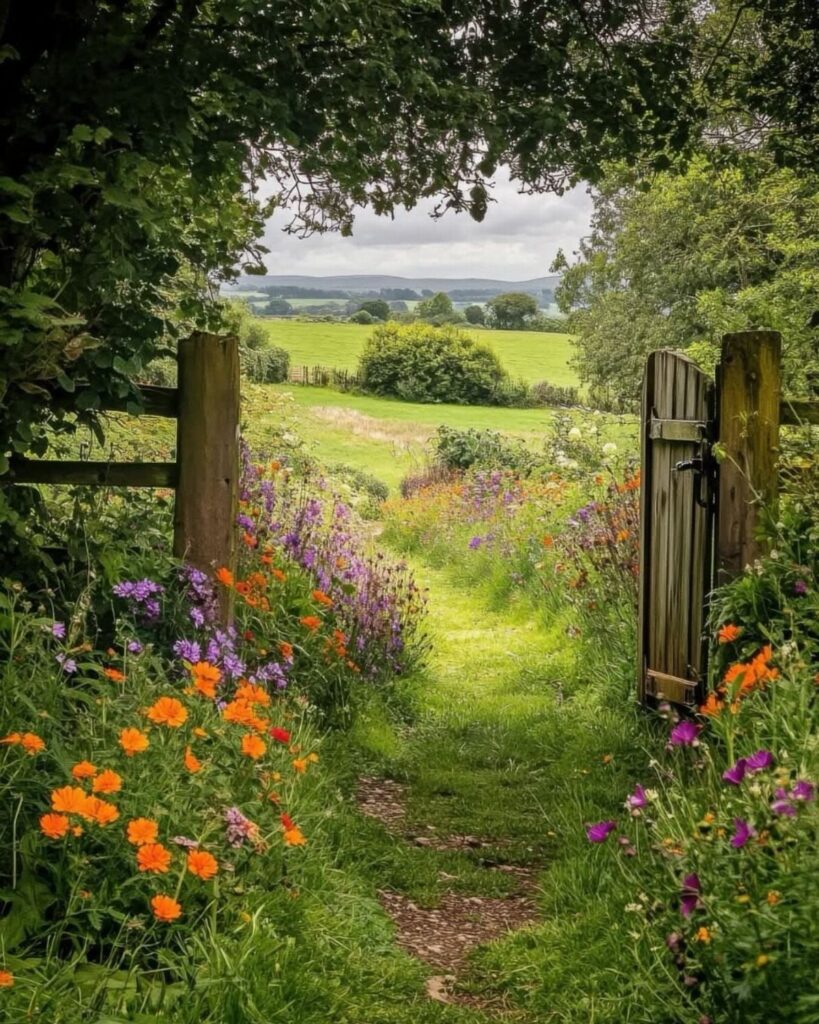
A gravel curve that leads to a gate without a straight line in sight works because the flower mix changes as you walk; no section needs to mirror another.
For a small lot, this is forgiving: a curved path reads longer than a straight one, and a single deep bed along a wall or fence gives more planting space than two narrow borders with a path between.
I would sketch the route with a hose first and live with it for a week before cutting anything.
A stamped paver with a name or date is a nice touch, but a plain path works the same; add the detail if you have a stone or a stamp you want to use, not because the layout requires it.


CURATED MOON GARDEN COLLECTION – More than a white flower mix, this 6-variety perennial seed set is designed for a layered planting of white blooms, silvery foliage, and soft evening contrast.
6. Gravel Walkways
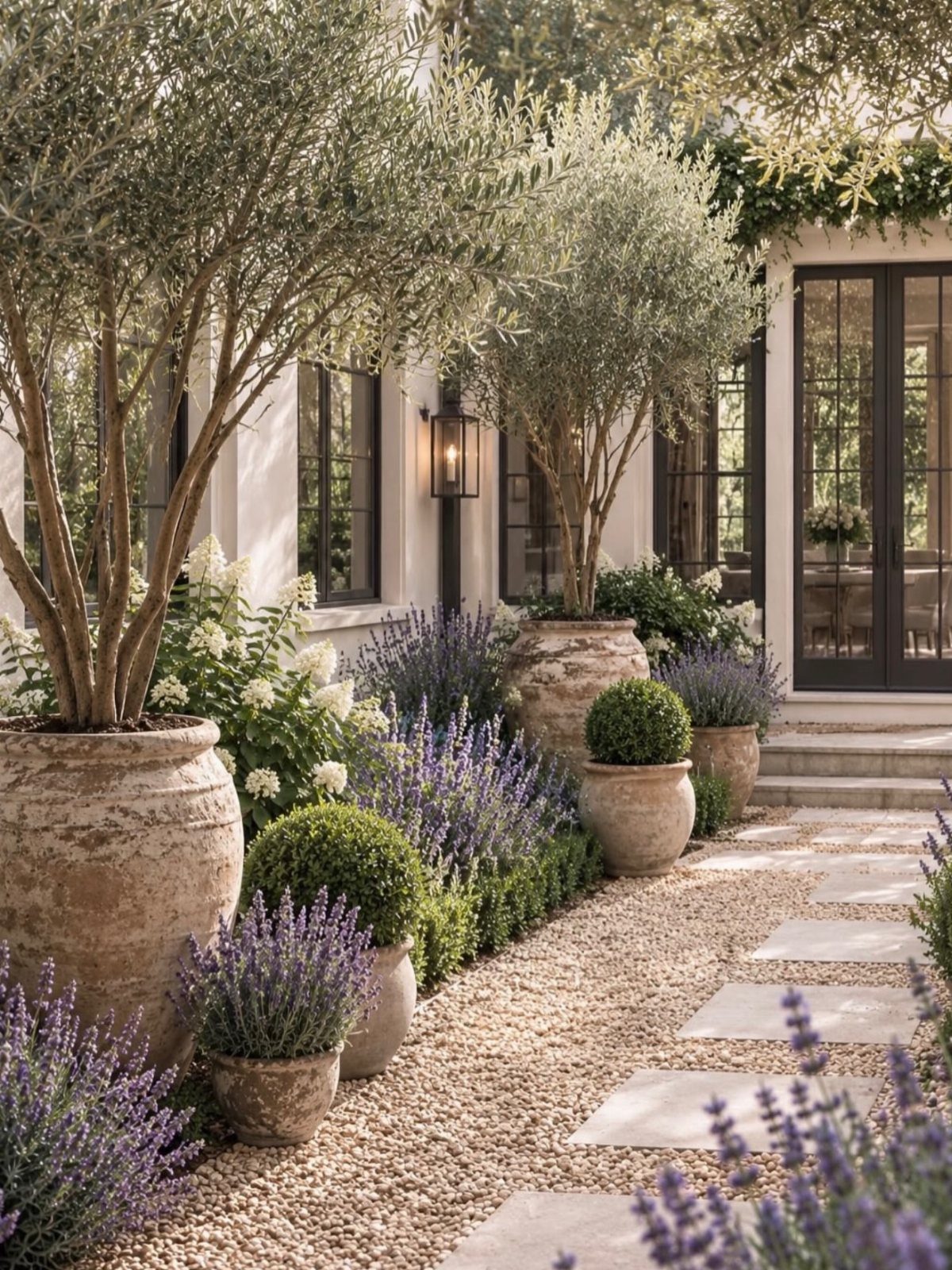
Gravel paths connect beds and seating areas without the cost or labor of solid paving.
Stone steppers set into gravel keep feet out of the loose stuff and give the eye something to follow through the border. Lavender and boxwood line the edges, and the terracotta urns with olive trees mark a threshold.
I laid a similar path last spring using crushed limestone in the smaller grade, which locks together underfoot better than pea gravel and does not roll like marbles.
The steppers were leftover patio stone cut to a comfortable stride length; anything in that range works if it sits flush with the gravel surface.
Line the path with something low and structural, like the lavender here, so the gravel does not migrate into the beds with every rain.
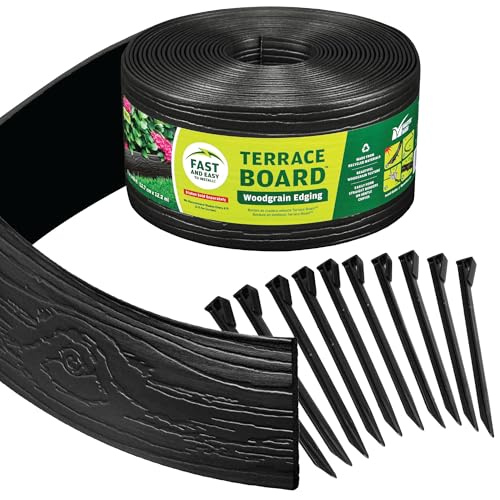
CREATE A CAPTIVATING SPACE – Unlike many other options, Master Mark Terrace Board Edging provides a textured, wood grained look to your landscape edging making borders around planting beds and walking paths and creating raised layers of mulch, rock or soil. This edging creates depth and elegance for your perfect yard.
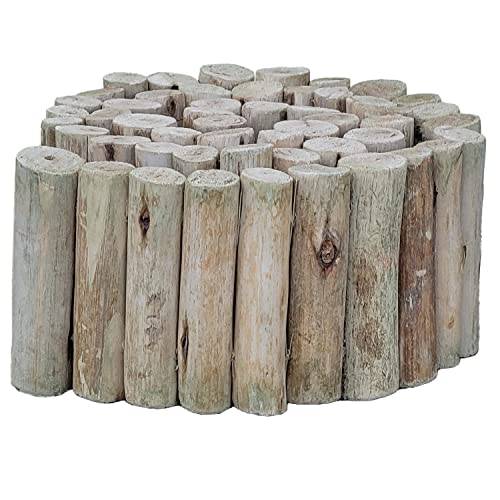
DECORATIVE GARDEN BORDERS: Create a beautiful floral display in your garden and enhance your landscape curb appeal with Eucalyptus wood flower bed borders

EASYFLEX DECORATIVE NO-DIG LANDSCAPE EDGING: Get a beautifully landscaped yard without all the work of a dig-in lawn edging; simple installation without trenches or shovels; color may vary due to the unique manufacturing process.
7. Climbing Plants
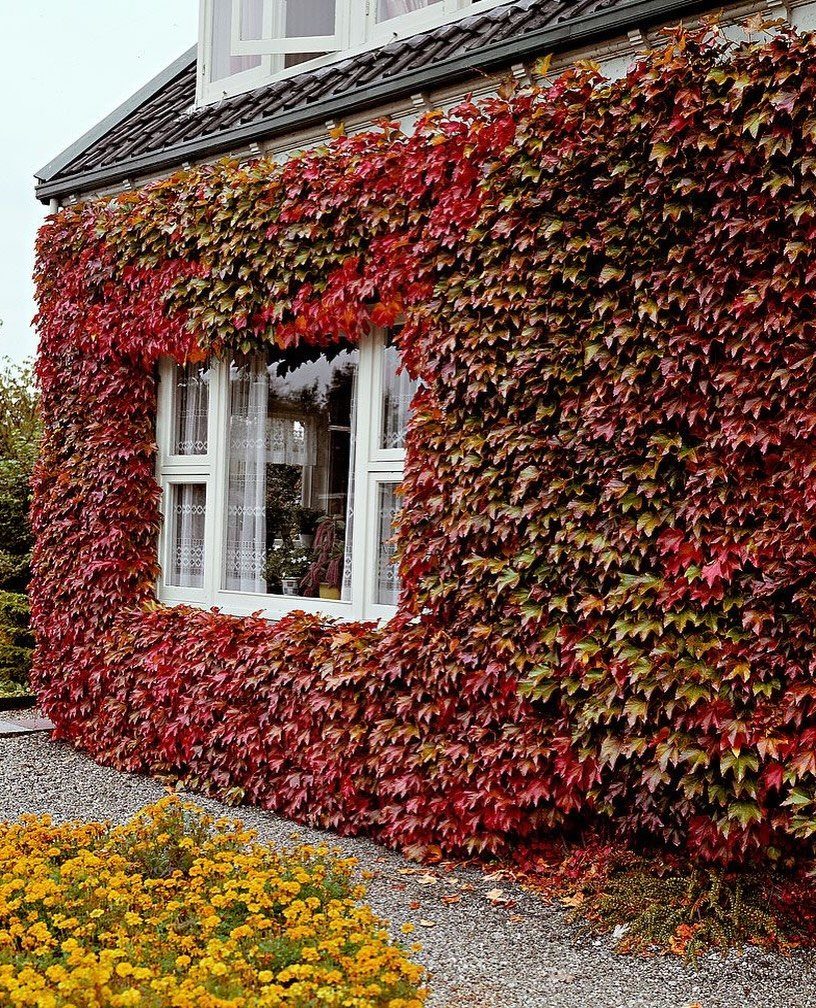
Vertical growth turns a flat bed into a garden with rooms. Roses or ivy on a house wall, clematis on a metal arch, or grape vines over a pergola give height without taking ground space away from the border below.
A freestanding arch needs footing deep enough that it does not lean once the plant is mature and wet with rain.
I would set the base in concrete if the soil is loose, or drive rebar through the legs into firm ground if it is not.
Trellises fixed to a wall need a gap of a few inches for air circulation, which matters more for wood longevity than for the plant.
Wisteria is beautiful on a pergola but will pull down light framing; match the structure to the weight the vine will reach.

Includes 20000+ creeping thyme seeds for planting outdoor ground cover areas, garden borders, path gaps, rock gardens, and open soil spots.


Strong fragrance: Creeping thyme has a unique and strong aroma, with a minty cool fragrance, mixed with a hint of sweetness, a rich flavor, and the aroma of broken leaves after being trampled also has the effect of repelling mosquitoes
8. Native Plants and Repurposed Materials
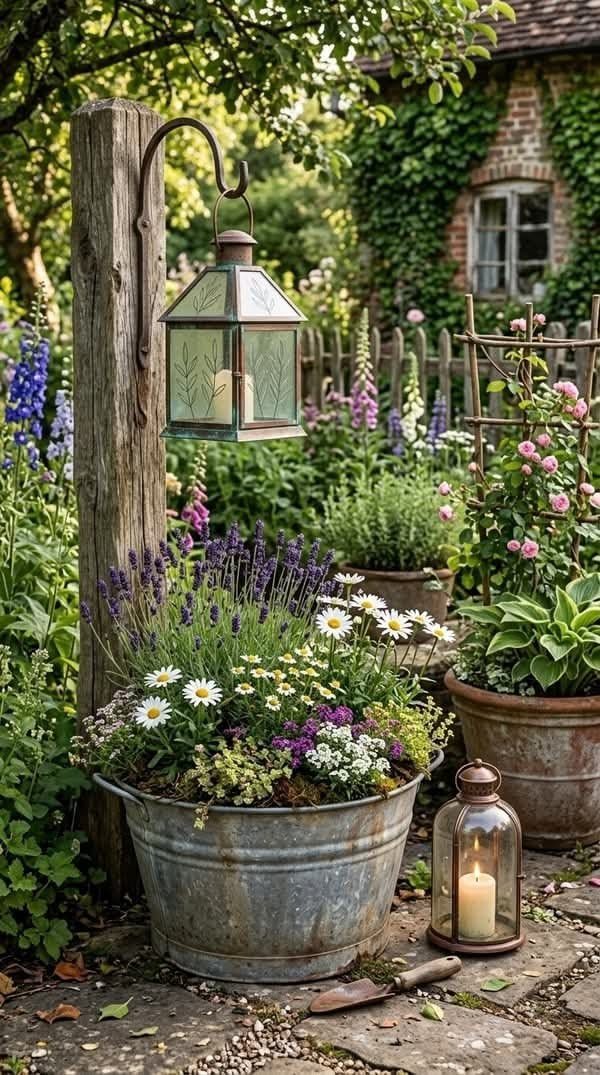
A galvanized tub planted with lavender and daisies, a wooden post holding a lantern, stone pavers salvaged from another job: cottage style has always been about using what is at hand.
Native perennials fit the same ethic, since they ask less of you once they are in.
The practical limit is drainage.
A tub with no holes rots roots; drill or punch them before you fill it. For repurposed wood, paint or seal anything that will sit in soil contact, or it will be punky in 2 seasons.
Native plants from a local nursery are already conditioned to your rainfall pattern, which cuts the watering that mixed beds of European imports need through their first summer.
The look is looser than a designed border, and that is the point.
9. Informal Design
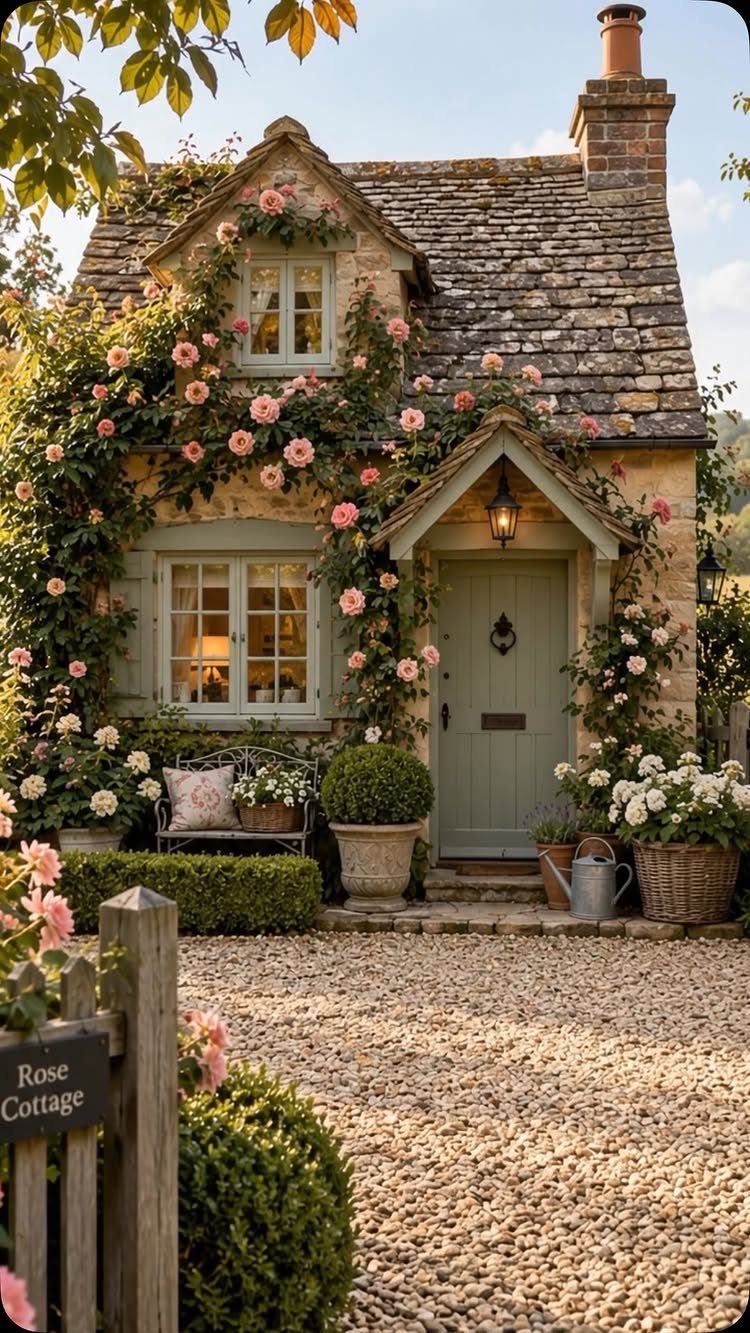
Plants that spill over path edges and mix at the margins give a cottage garden its particular ease.
Climbing pink roses up a stone wall, potted flowers on the step, and a bench tucked nearby read as one relaxed scene from a few steps back, even where the mix is half a dozen sources.
The discipline is in the first-year spacing. I plant closer than the tag says, knowing some will not survive and the survivors will fill gaps.
What looks self-seeded in year three is usually editing in year two: pulling the thug, adding the shy bloomer, letting the campion reseed where it wants.
A gravel path holds this together because it forgives the plant that leans across it; a crisp edge of brick or concrete would fight the mood.
Cottage Garden Characteristics
Romantic plantings and informal design are the signatures of this style, not byproducts of poor planning. The abundance reads as charming because the mix is intentional, not because everything grows everywhere.
Entrance gardens suit this treatment well; the same dense, layered planting that frames a doorway works at property edges where you want to slow someone down and invite them in.
Harmonious plant combinations matter more than matching pairs, and the hardscape needs to respect how people actually move through the space.
The style adapts to most climates, though the specific plants will shift.
What reads as cottage in Maine or Arizona shares the same looseness, not the same species. Water needs sit at moderate, which in practice means enough to establish, then letting the tougher plants carry the look through dry spells.
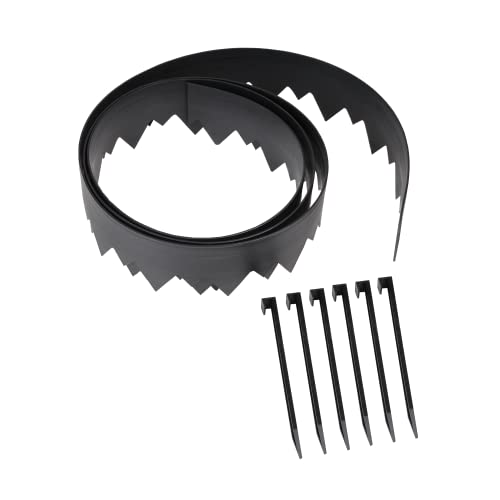
Pound‑In Lawn Edging – Create clean, defined garden borders without hiring a professional; installs with minimal ground preparation.
Plant Selection
Year-round interest in a cottage garden comes from pairing bloom times with evergreen structure, not from forcing every plant to perform in every month. Something should be happening, but not everything.
Mixed perennials and native choices work best when you stagger bloom times so something is always doing its thing.
Spring bulbs, summer daisies, autumn asters, and a few shrubs that hold their leaves give you the skeleton. Fill between them with the perennials that suit your zone and sun hours.
I check bloom charts against my own calendar before ordering.
A plant that flowers in June in zone 6 may wait until July in zone 4, and a border that peaks all at once in August is a border that disappoints the rest of the year.
Evergreen structure carries the garden through the months when flowers are sparse; without it, the informal layout looks merely unkempt.
Design Principles
Depth comes from height variation, but the principle behind it is simpler: the eye needs a place to travel. A flat bed reads as sparse even when crowded; a layered one reads full even with gaps.
Groundcovers, mid-height perennials, and tall anchors each need their own spot in the plan or the bed turns into a scramble. What it does not say is that the back layer also functions as backdrop, not just height.
Dark foliage or a solid fence behind tall flowers makes the colors advance; open sky or pale siding flattens them. Plan for what sits behind your tallest plants, not just their height.
The path is structure; the planting is atmosphere.
Get the route wrong and the abundance becomes obstacle. Sketch it, walk it, revise before you cut bed edges.
Maintenance Considerations
Moderate maintenance means seasonal attention, not weekend slavery. The tasks cluster: early spring for cutting back and dividing, late spring for the first round of staking, summer for deadheading and editing, fall for clearing what will not winter well.
Year 2 is when editing starts, pulling thugs and adding shy bloomers that got crowded out. That is the rhythm.
First year is establishment and some loss; second year is judgment. What self-seeded too aggressively, what never filled its space, where did the gravel migrate.
Year-round structure from evergreens and woody shrubs reduces the spring panic.
A garden that depends entirely on herbaceous perennials goes from full to bare overnight; mixed planting softens the transition. Plan for the garden you will see in March, not just the one in July.
Frequently Asked Questions
What are the basic principles of a cottage garden?
Layered planting, informal design, and romantic abundance are the core principles.
Paths stay soft when plants flop over their edges, and the beds stay interesting when a low mat of something creeps under knee-high blooms while a hollyhock or 2 pushes up behind them.
A straight line and a matching pair of anything looks wrong here; a path that curves where it needs to and beds that bleed into each other read like they happened on their own.
What plants work best in a cottage garden?
Perennials that come back on their own mean less digging and less spending each spring.
A fence line of roses with lavender at their feet gives color from May to October, and fleabane will seed itself between pavers through most of the middle country.
Zone rating and sun match matter more than any specific plant list; layer the bloom times so the garden never fully clocks out.
How much maintenance does a cottage garden require?
It is not a no-care setup, but the work comes in seasonal rushes rather than a weekly beatdown.
Can I create a cottage garden in any climate?
Yes, the style adapts to most climates, though the specific plants will shift. Establishment watering is non-negotiable, but after that the look holds on the backs of plants that can take a dry week without drama.
Your county extension’s perennial list beats any national catalog for telling you what actually lasts where you live.
How much does it cost to design a cottage garden?
Plants eat most of the budget, which is fine because you can add a bed or a border each year instead of buying the whole thing at once.
Fieldstone picked up within 20 miles of your house costs a fraction of cut bluestone, and the difference is hundreds of dollars on a path that size.
Gravel walkways connect beds without the cost of solid paving, and repurposed materials like galvanized tubs or salvaged pavers fit the same ethic.