These back porch patio ideas run from a string-light curtain you hang in an evening to a full screened porch with ceiling fan and concrete slab, with most landing in a weekend and a budget you can carry in your wallet.
The right one depends on whether you need shade, privacy, a place to eat, or just a reason to stay outside after sunset.
A slatted wood privacy wall with built-in planters, anchored to deck framing, can give you herbs or flowers that take no ground space and need no fence permit.
[link-whisper-related-posts]1. Pick a Style for DIY Back Porch
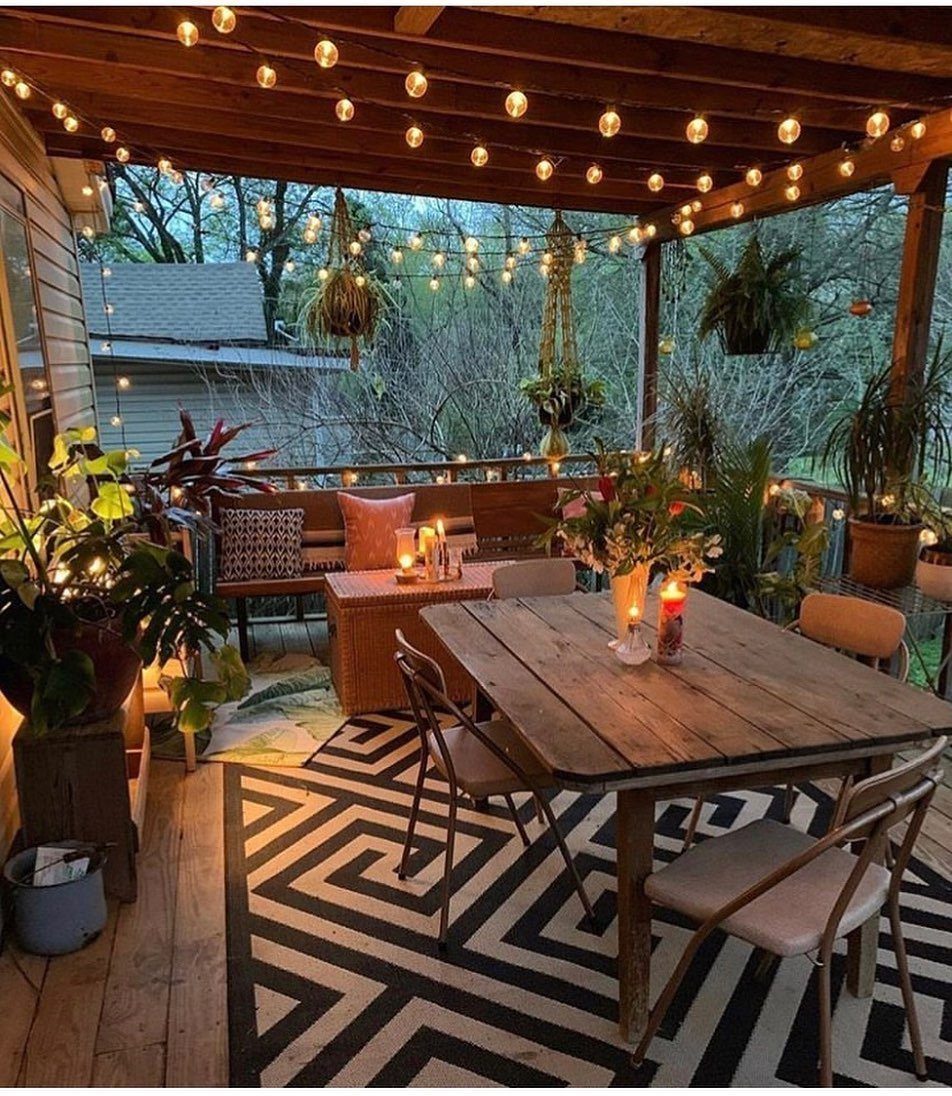
A covered back porch works best when it commits to one mood rather than mixing three.
I like starting with what the inside of the house already does: a modern living room wants clean lines and pale wood outside, while a cottage interior leans into painted rockers and climbing roses.
Boho-modern works best when you keep the furniture neutral, add one strong color, and let the plants do the visual lifting.
That last part is free, and it fills the gap between budget and finished look faster than any store-bought item.
If the front of your house reads traditional and the back reads free spirit, the shift can feel like 2 different homes. Walking the property line once helps me decide whether to match or contrast.

8 MODES SETTINGS: This fairy curtain lights offer a range of adjustable settings to suit your desired atmosphere. Choose from combination, in waves, sequential, slogs,...
2. Make Your Space Functional
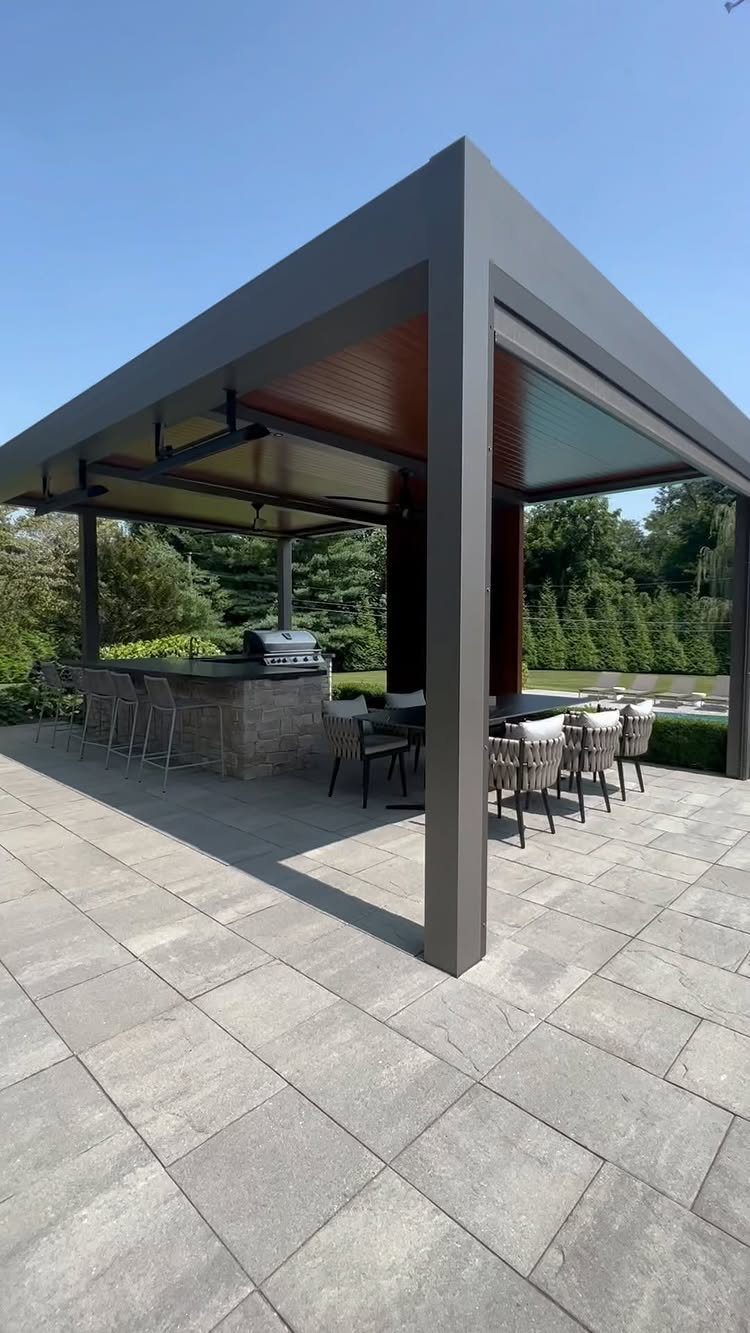
Stone countertops and a built-in grill turn a patio into a kitchen that happens to have sky for a ceiling.
Permanence is the real cost: you are pouring concrete or laying pavers around appliances that need gas lines run before the stone goes down, and those appliances are not moving once the hardscape sets.
I would map the cooking zone, the eating zone, and the path between them before calling any contractor.
Shade matters as much as square footage.
An existing roof buys you the most hours of usable day; without one, a pergola or a good sail shade buys time until the sun drops. Trees work too, though they take years and drop leaves on your prep surface.
A dark pergola defines the space without walling it off, which is the balance I look for when the lot backs up to a fence or a neighbor’s window.
3. Outdoor Furniture Chairs
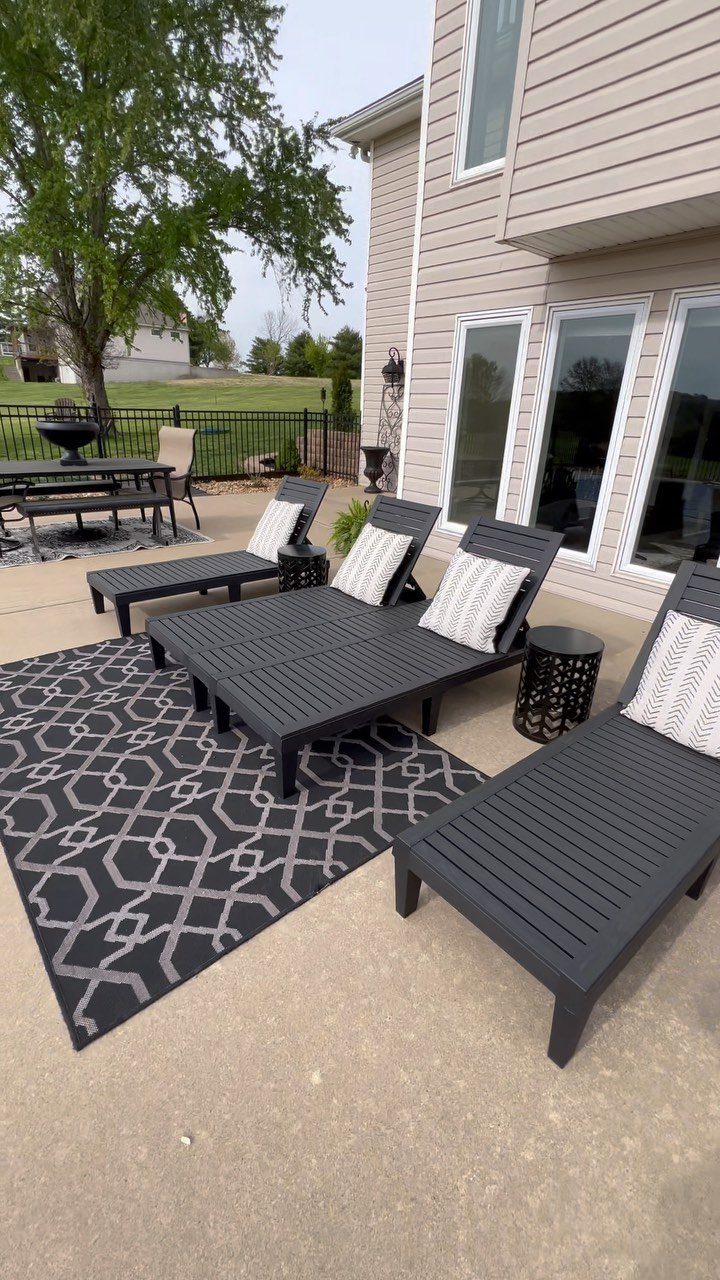
Chaise lounges read poolside by default, but four of them on a concrete patio with side tables and a dining set behind them turn the whole yard into a slow afternoon.
Slatted black frames keep the look modern without going sterile; patterned pillows and a rug do the color work, which means the chairs can stay neutral and outlast whatever trend the textiles are riding.
I have left teak out through New England winters for 30 years with nothing but a spring wash, though it is finally giving up.
Polywood is the replacement I am considering: heavier to move, indifferent to rain, and no cushions to store.
For anyone who wants softness, the deep-seat sectionals coming up in entry 6 are the better fit; these chairs suit someone who wants to sit up, read, and not sink in.
4. Pillows and Throws

A bench with nothing on it is a plank; add pillows and it becomes a place to stay. A warm, slightly faded autumn palette works because it picks up the season outside the window rather than fighting it.
I swap mine twice a year, spring and fall, which costs less than one new piece of furniture and reads like a full reset.
Outdoor fabric has to be the real thing, solution-dyed and labeled for exterior use, or the sun turns it chalky in one season.
Target and most big-box stores stock it now; the hand is stiffer than indoor cloth, but it softens with use and survives a rainstorm without molding.
A throw folded over the back arm is the finishing move, there for temperature drops that come after sunset.
5. Potted Flowers and Hanging Baskets
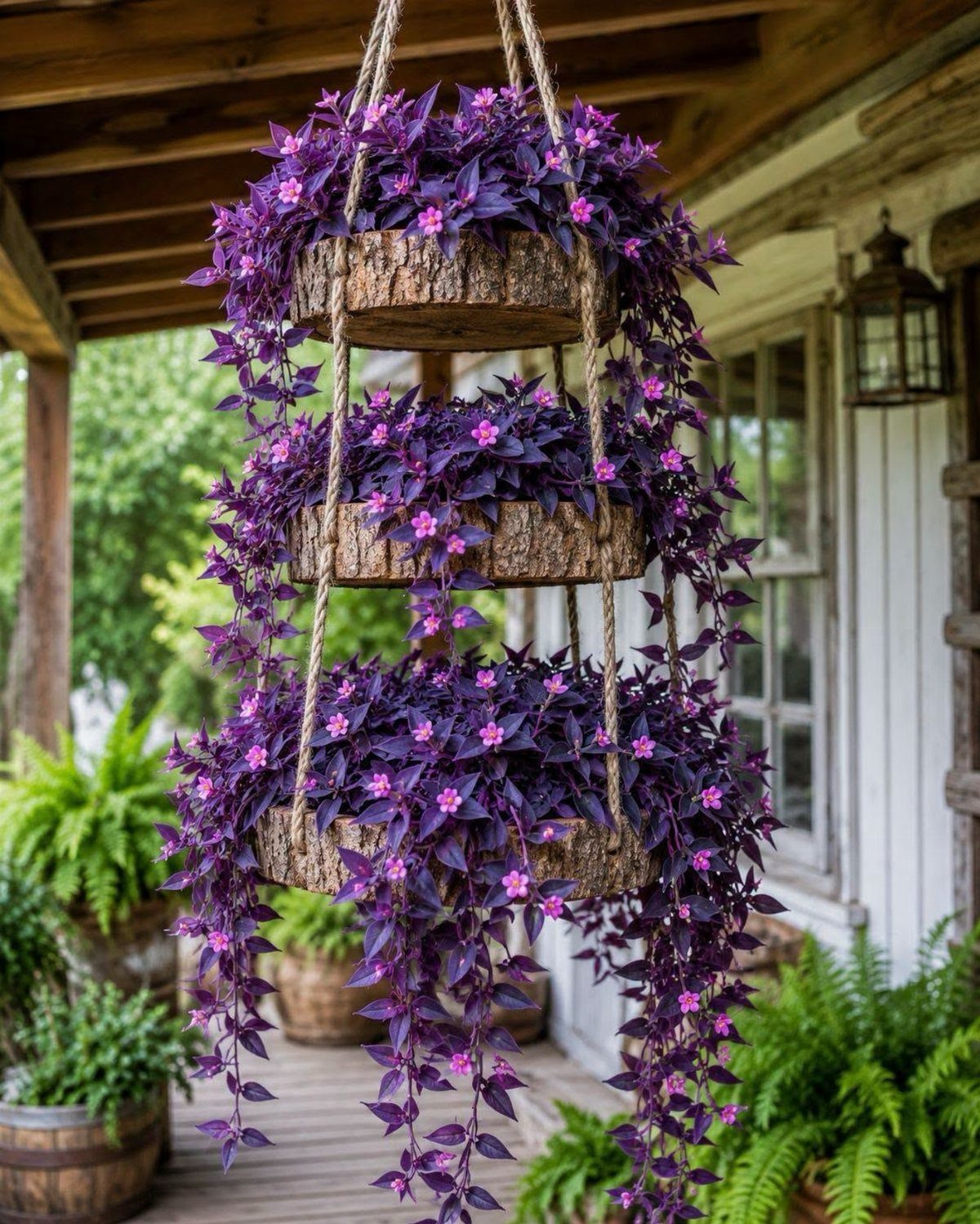
3 hanging baskets at staggered heights do what a single planter cannot: they draw the eye up and across, turning a flat porch ceiling into a garden with architecture.
Wood slices rough enough to read rustic without looking unfinished let the purple vines trail down and close the gap between the baskets and the ferns sitting on the rail behind them.
I mix real and fake without apology.
Potted flowers on the floor get swapped when they fade; hanging baskets, especially high ones, are a pain to water and replace, so a good faux vine there saves me a ladder and a guilt trip.
Varying heights is the only rule I follow rigidly: all at one level reads grocery-store parking lot, staggered reads designed.
6. Sectional
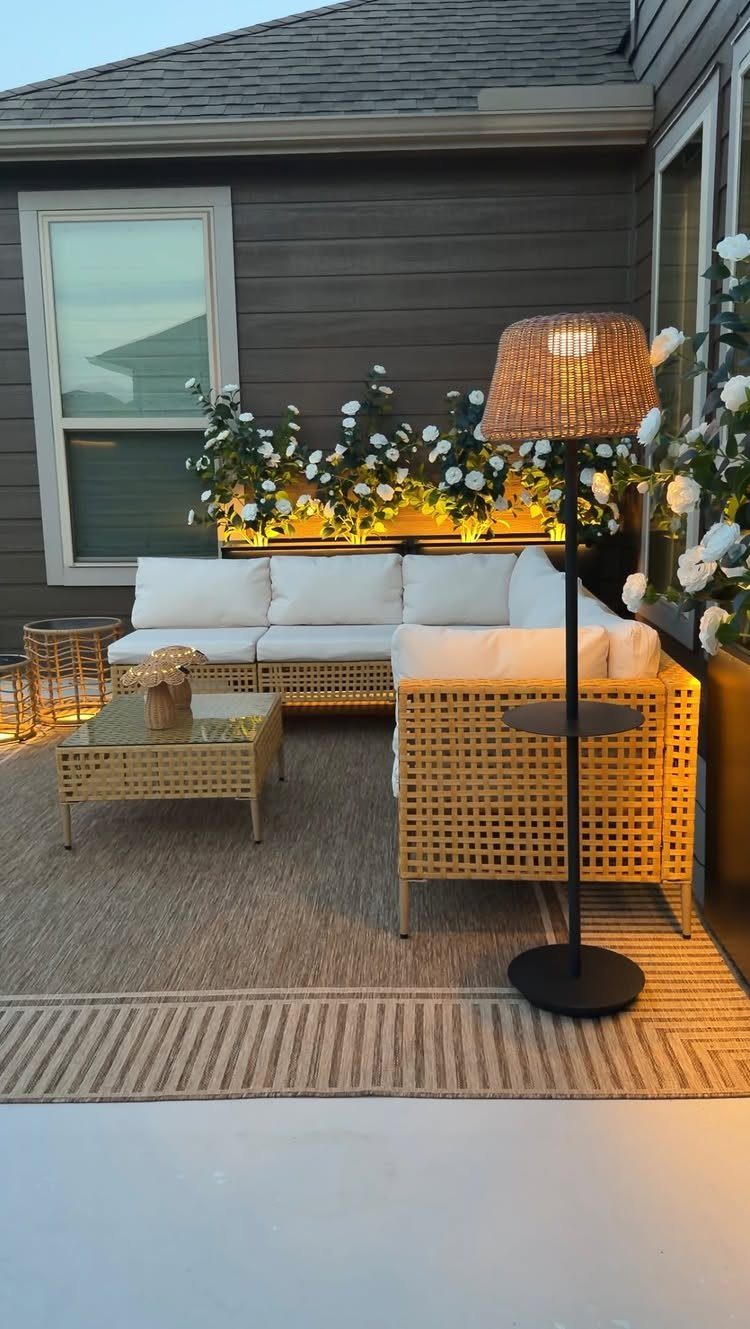
Deep seating is the detail that separates porch furniture from patio furniture, and this sectional commits to it: the cushions are thick enough that your knees bend at a real angle, not the perched posture of a café chair.
The wicker wraps every surface except the legs, which gives the frame visual weight without actual weight; the metal underneath handles the structure.
White cushions are a choice I make eyes-open. They show pollen, they show the rust from a forgotten can of soda, and they need a cover or a storage bin before the first frost.
Against dark wicker and house siding, light cushions read crisp, intentional, slightly coastal. For anyone who cannot commit to the maintenance, the same frame with charcoal or forest cushions sacrifices none of the comfort and half the vigilance.
7. Fire Pit
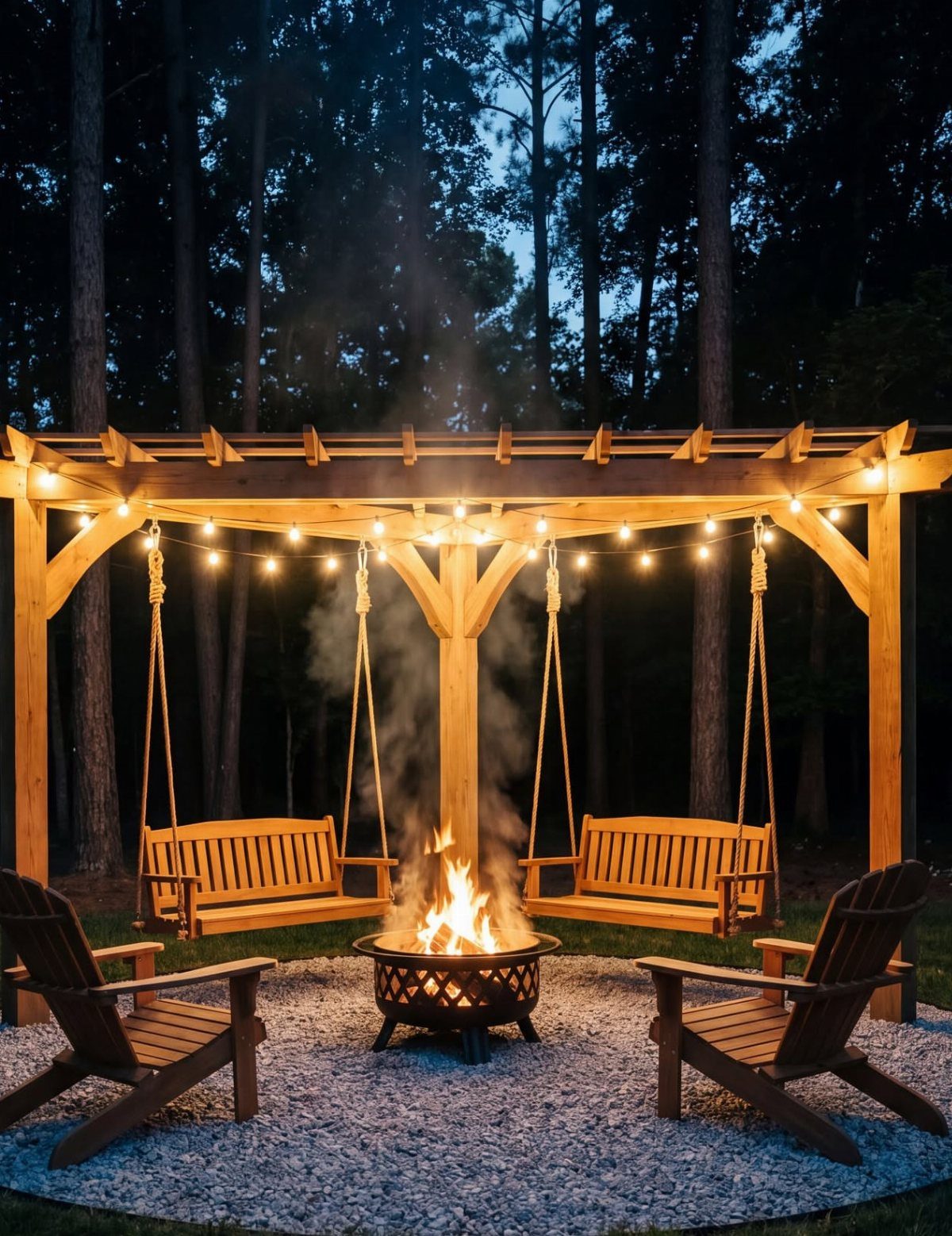
A fire pit turns a gravel patio into a room that happens to have no walls. The circle of stone or metal gives everyone a direction to face, which is the social geometry most patios lack.
I would build the gravel base wider than the pit’s lip on every side, or embers land on bare ground and weeds follow.
String lights overhead extend the evening once the fire dies to coals; threading them through a pergola is the detail that keeps the space from going dark when the party outlasts the flames.
Wood swings nearby are a second sitting option for guests who want motion without leaving the warmth.
8. Water Feature
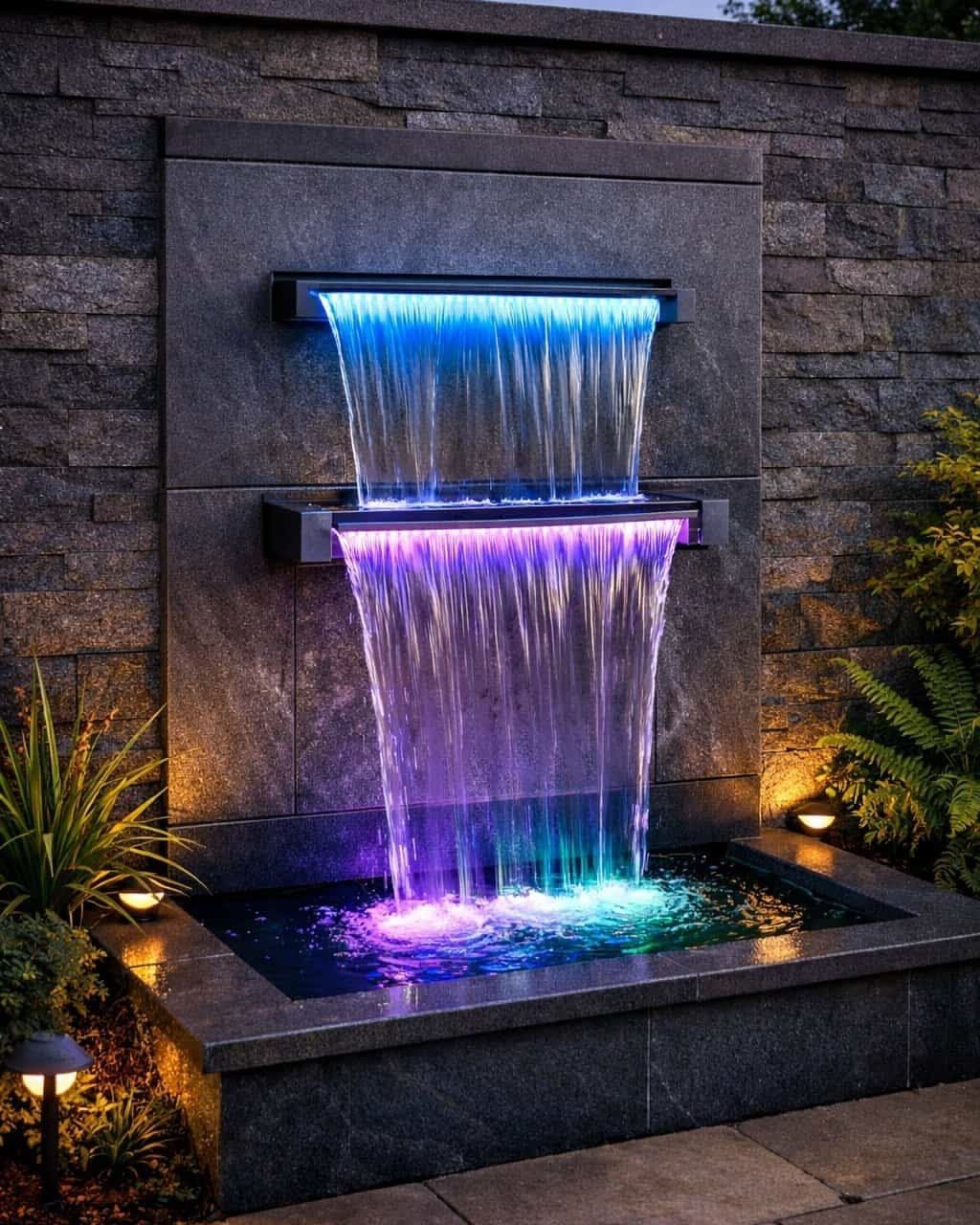
The sound of moving water covers traffic noise better than any speaker system, and it does not take a pond to get it.
A wall fountain against stone sends water down 2 tiers, which multiplies the sound without multiplying the space or the maintenance.
LED lighting in the basin turns the water itself into the feature after sunset, which matters when most people are home to enjoy it.
The pump runs on standard outdoor current; plan an outlet or a buried line before setting the stone, because extension cords across a patio are a trip hazard and an eyesore.
Frost is the real enemy in northern zones: either drain and cover before hard freeze, or size the basin deep enough that ice expansion does not crack it.
9. Screened Porch
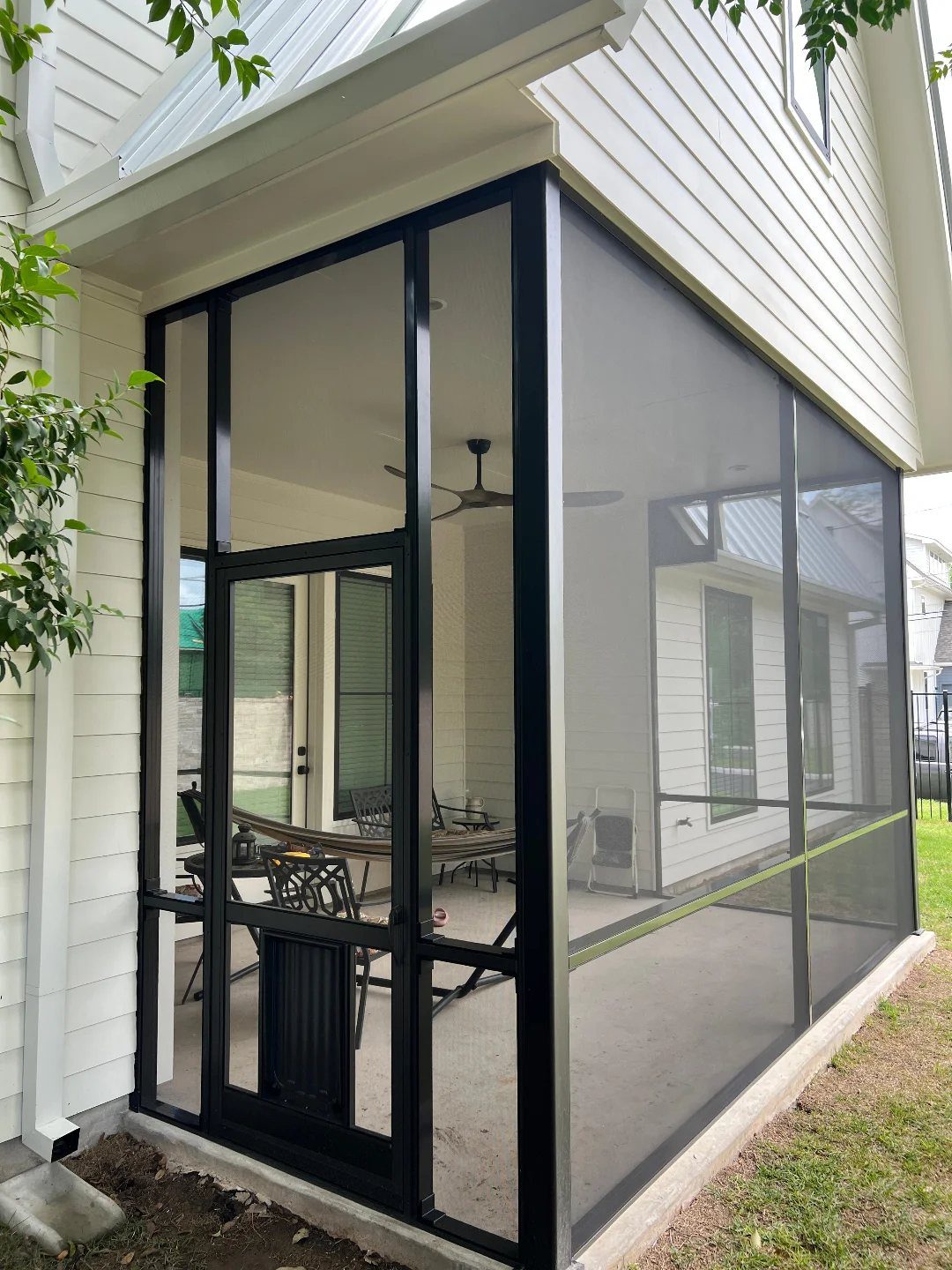
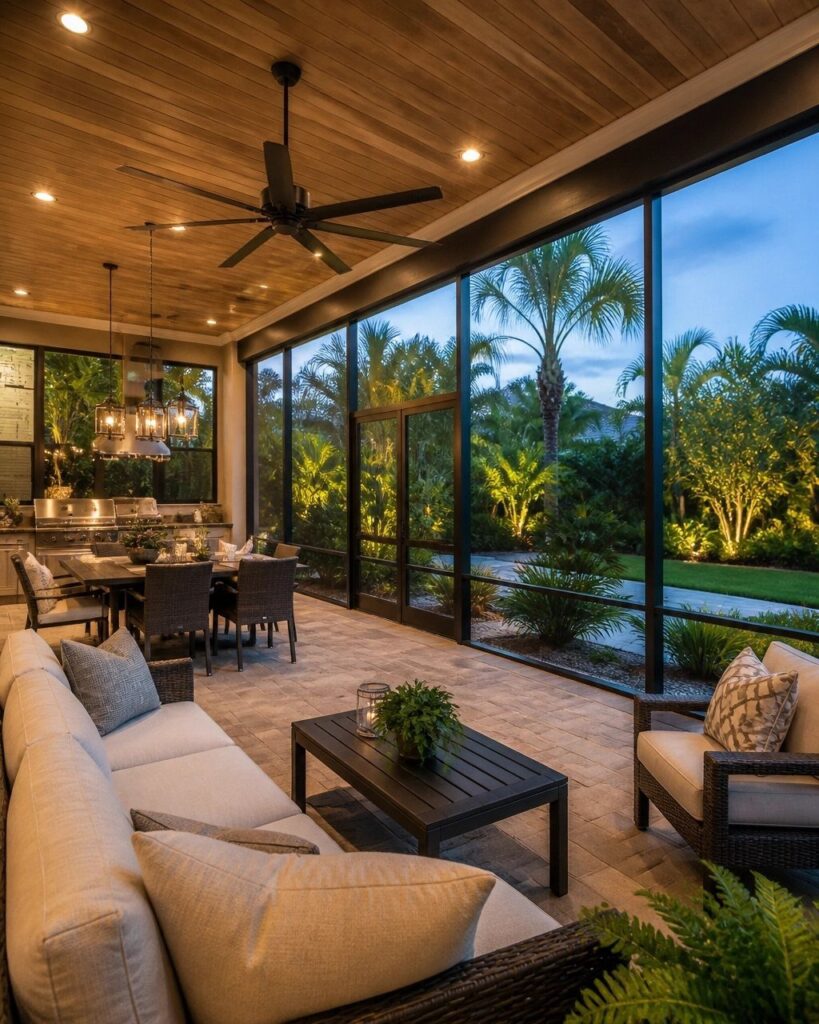
Black aluminum framing on white siding reads modern without trying too hard, and the screen itself disappears at a distance.
What you actually gain is hours: the porch becomes usable at dusk, in light rain, and in June when mosquitoes own the yard.
A ceiling fan is not decorative here; moving air through screens keeps the space noticeably cooler and moves biting insects along before they settle.
The pet flap in the door is a detail that only makes sense if you have one, but it signals the larger point: screen tight enough to stop bugs is screen tight enough to stop a cat, so plan access or plan to get up.
Concrete slab flooring is practical for hosing off mud and pollen; wood would rot where the screen traps humidity.

10. Outdoor Dining Area
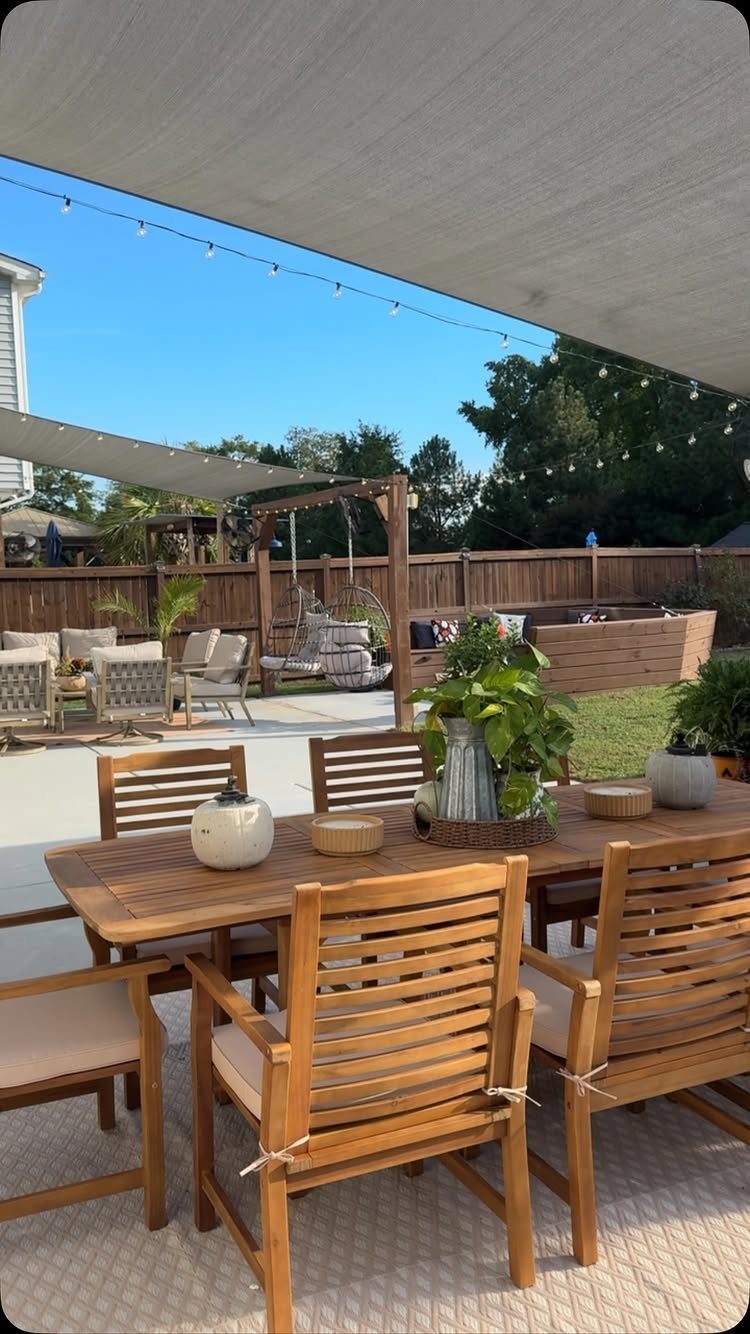
A wooden dining table on a patio needs to be large enough that chairs do not hang off the edge, which sounds obvious until you measure with chairs pulled out.
A dining table in its own zone, separate from lounge and swing seating behind it, keeps dinner from feeling like a picnic in someone else’s living room.
Shade sails are worth considering if your table sits where afternoon sun hits; a meal in full glare is a meal rushed.
String lights overhead extend usable hours, though I would wire them to a switch at the door, because no one wants to walk back out to unplug after dark.
11. Hanging Porch Swing
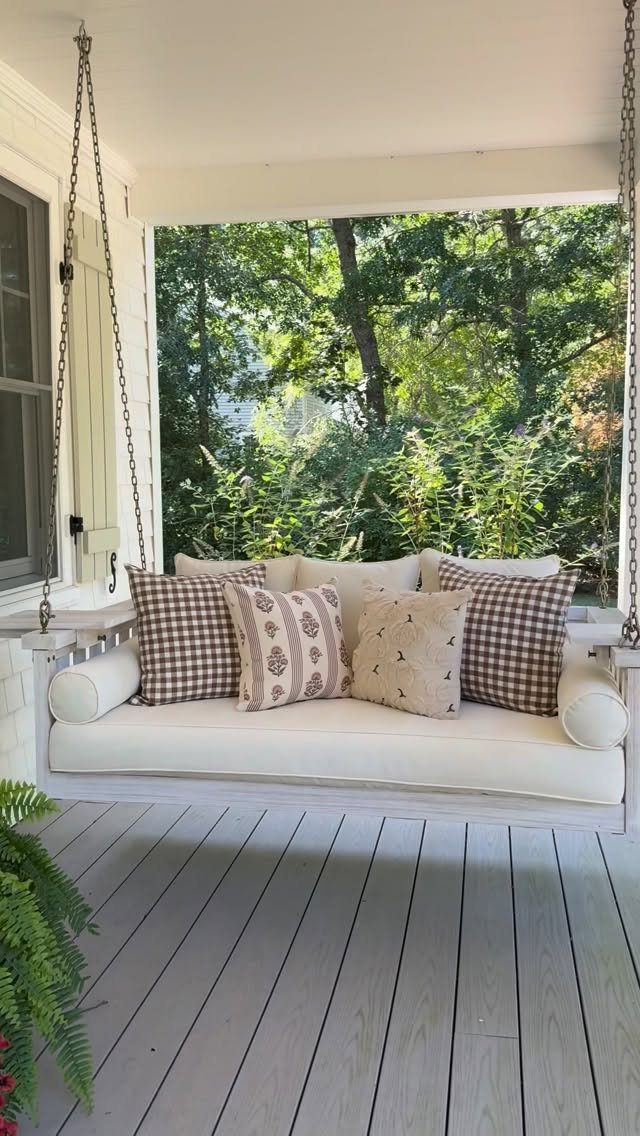
I would check the joist rating before hanging one: a standard porch ceiling might hold a person, but it will not hold a couple and a dog, which is how these get used.
White fabric shows pollen in April and leaf dust in October; I would choose a natural canvas or a stripe that hides the season.
12. Vertical Garden Privacy Wall
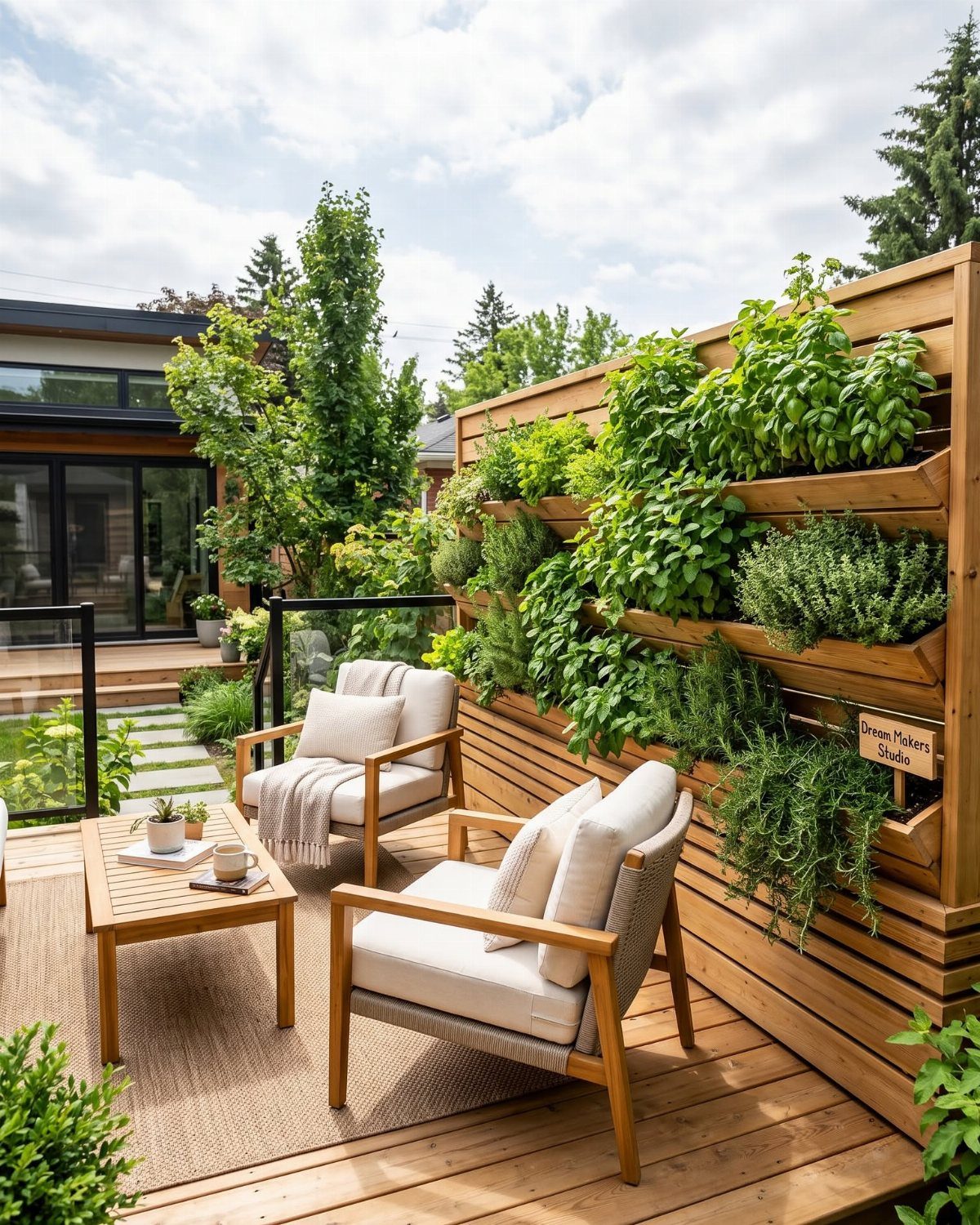
A slatted wood wall gives privacy without a fence permit, and the built-in planters turn it into a garden that takes no ground space.
The slat spacing is the detail that matters: tight enough for visual screening, open enough that wind does not push the whole structure like a sail.
I would anchor the base to the deck framing, not rely on weight alone, especially in a climate with sudden storms.
2 armchairs and a coffee table in front give the wall its reason: without seating facing it, the planting is just a green fence.
13. Vertical Curtain String Lights
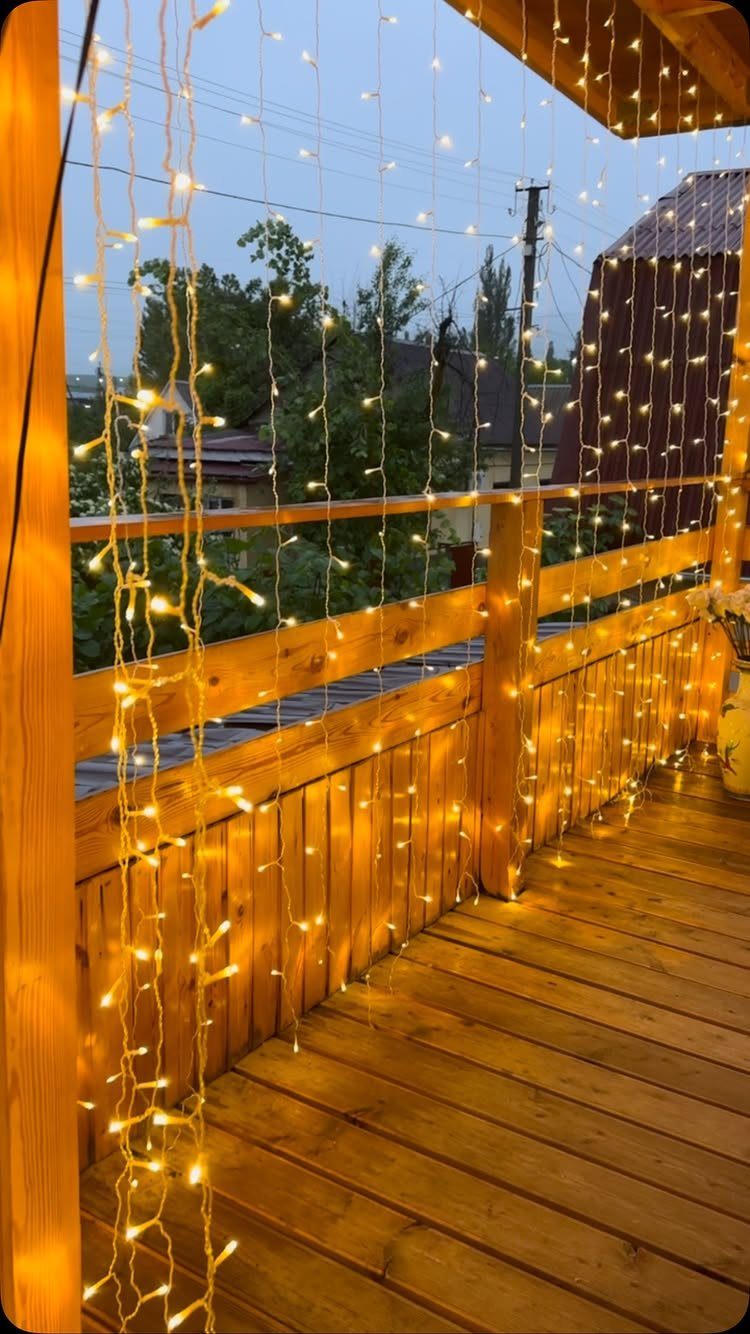
Vertical strands of warm white fairy lights turn a covered porch railing into a soft curtain after dark. The glow is low enough that it does not compete with conversation, bright enough that guests stop asking where the switch is.
I would check the spacing before buying: strands too far apart read sparse, too close and they tangle in wind. Most sets run 100 lights per 30 feet, which covers a standard 6-foot post section with room to drape.
Plug-in models give steadier light than solar in shaded spots, so map your outlet before you drill any hooks. Battery boxes work for short runs where no cord reaches, though I would plan to swap cells twice a season.
14. Vine-Covered Pergola
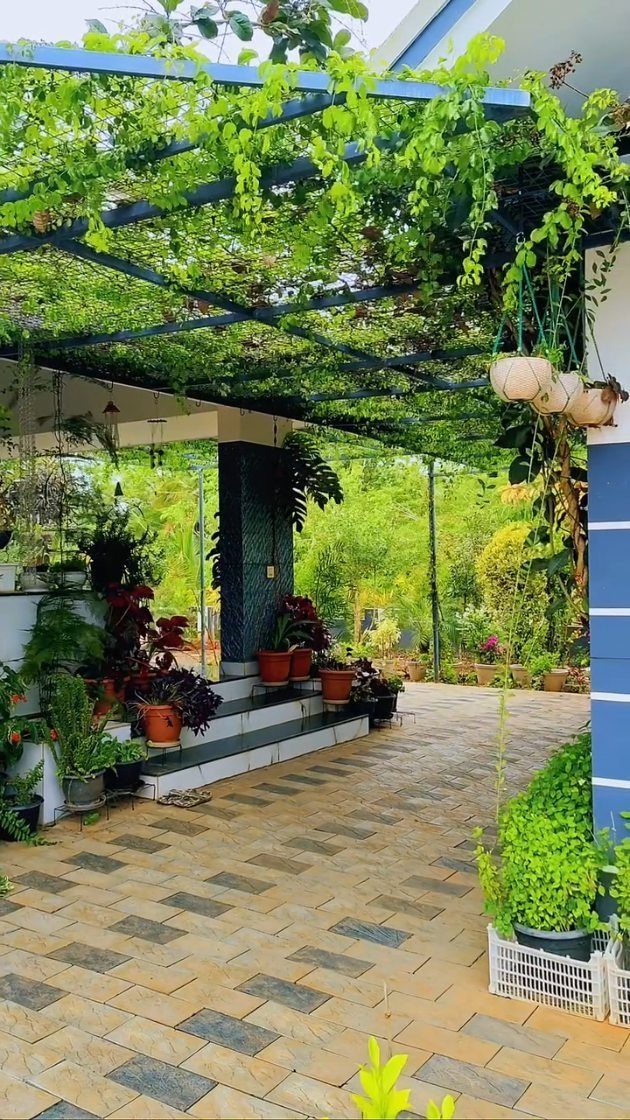
A metal pergola covered in climbing vines gives a patio the ceiling it is missing, green and alive and shifting with the season.
The structure stands on pavers, freestanding, which means no attachment to the house and no permit in most municipalities.
Wisteria and clematis both climb, though wisteria wants decades and will warp light framing; Boston ivy fills faster and weighs less.
Powder-coated metal frames hold up better than bare steel at the welds, where rust likes to start first. Potted plants at the base ease the transition from hardscape to vine, and they move with you if the layout changes.
Full coverage takes two to three growing seasons in zone 6 and up; until then, the pergola reads as architecture waiting for its finish.
Creating a Usable Outdoor Space
A usable back porch starts with what you actually do out there. I map the path between door and grill before I buy anything, because squeezing past a chair with a hot plate ends the evening faster than rain.
I separate the cooking zone from the eating zone by at least the length of a pulled-out chair, or dinner feels like a picnic in a walkway.
Concrete or paver flooring under the table lets me hose off pollen and spilled sauce without thinking about rot. Wood would not survive the moisture where screens trap humidity against the boards.
Plan the outlet before the stone goes down.
Running extension cords to the back porch means remembering where they lie every time you carry a tray outside, and the pump for even a small fountain or a full run of café lights pulls more than a battery pack wants to give.
Frequently Asked Questions
What are some design ideas for a back porch?
A back porch can echo what is happening inside the house or deliberately break from it; a sleek interior pairs well with slim railings and pale decking, while a cozy one calls for painted rockers and pots of something trailing.
Boho-modern needs little more than a neutral sofa, one saturated color somewhere, and enough greenery to soften every corner.
The back of the house should look like it belongs to the front, or the whole place reads like 2 projects that never met.
What are common patio mistakes?
Sketch the route from the door to the grill before you buy a single chair; otherwise you will be threading hot plates through a maze of legs.
Give the cooking area and the eating area at least the space of a pulled-out chair between them; anything closer and someone is always in the way. Skipping shade planning means you get glare instead of usable hours.
What is the cheapest way to build a backyard patio?
Let plants do the visual lifting; they cost nothing and fill the gap between budget and finished look faster than any store-bought item.
For furniture, polywood survives rain with no cushions to store, and outdoor fabric from Target softens with use while outlasting cheaper alternatives. A gravel base for a fire pit and string lights overhead extend the space without building walls.
What are the latest porch trends?
Natural elements like climbing vines on metal pergolas give patios a living ceiling that shifts with the season.
Multifunctional spaces with distinct zones, cooking separate from lounging, are replacing the single open patio. Black aluminum screening, deep-seat sectionals, and warm white vertical string lights are the details that extend usable hours without adding square footage.