These 13 ideas run from a single afternoon with a rubber mallet to a slow fill-in over two or three seasons, so the deciding factor is how much patience your yard has left.
What unites them is that every one survives on rainfall once established, with no deadheading, dividing, or spraying required.
Ornamental grasses, steel or stone edging, and a two-to-three-inch mulch layer do the heavy lifting so the plants do not have to.
[link-whisper-related-posts]1. Ornamental Grasses
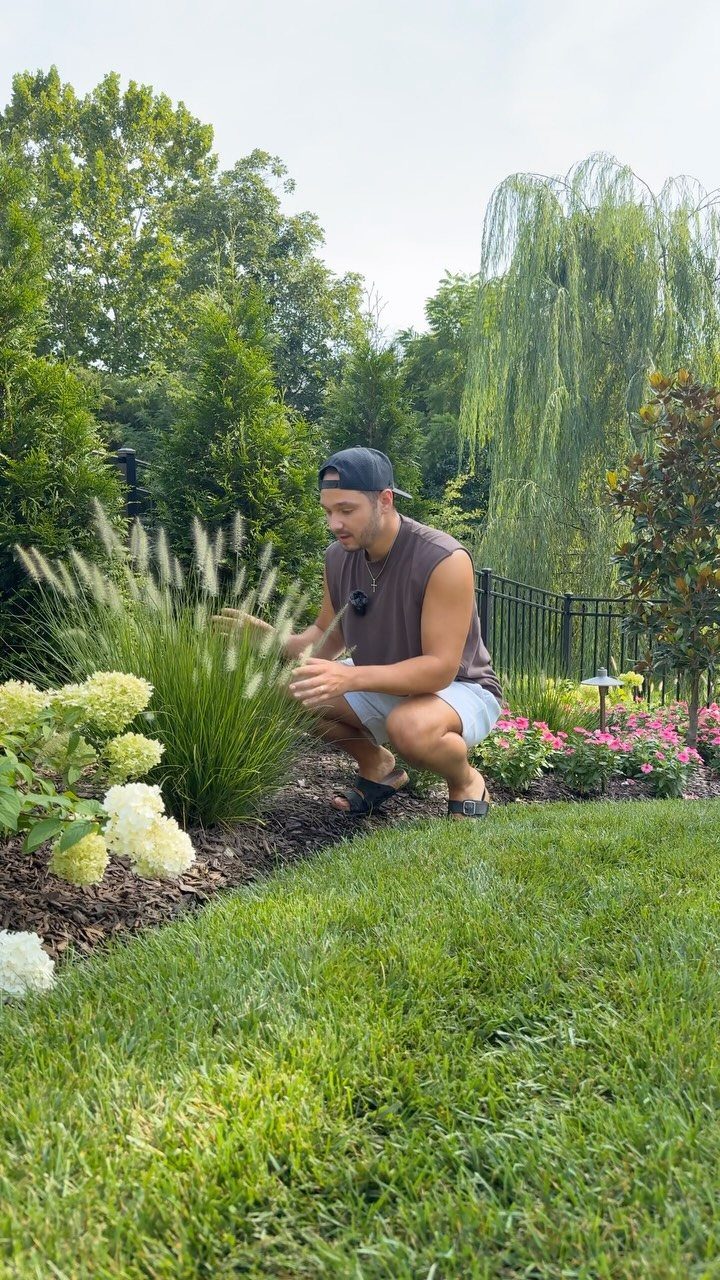
Ornamental grasses carry a border through every season without deadheading, dividing, or spraying.
Fountain grass and switchgrass hit 2-3 feet tall and spread 1-2 feet, so one clump fills real space. I plant them where summer perennials burn out by August; the plumes take over just as coneflowers go to seed.
A 2-3 inch mulch layer around the base suppresses weeds and holds moisture through dry spells. Grasses need shearing once, in late winter, before new growth starts.
2. Install Edging
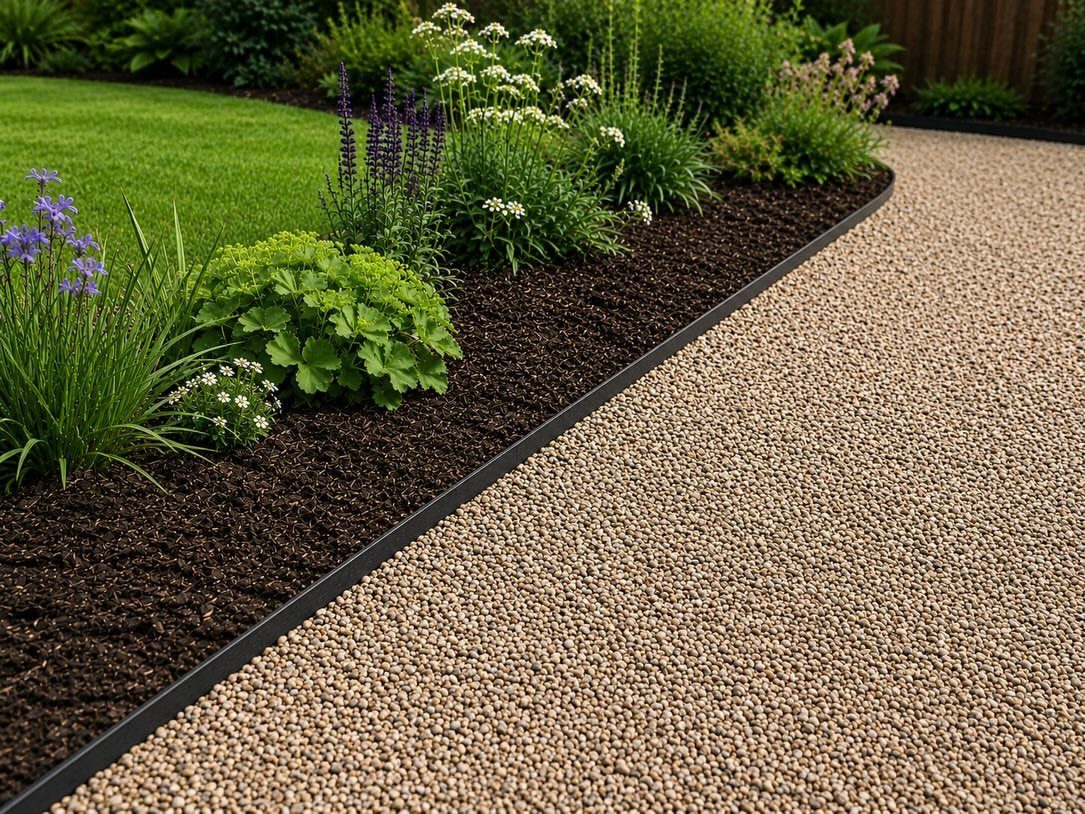
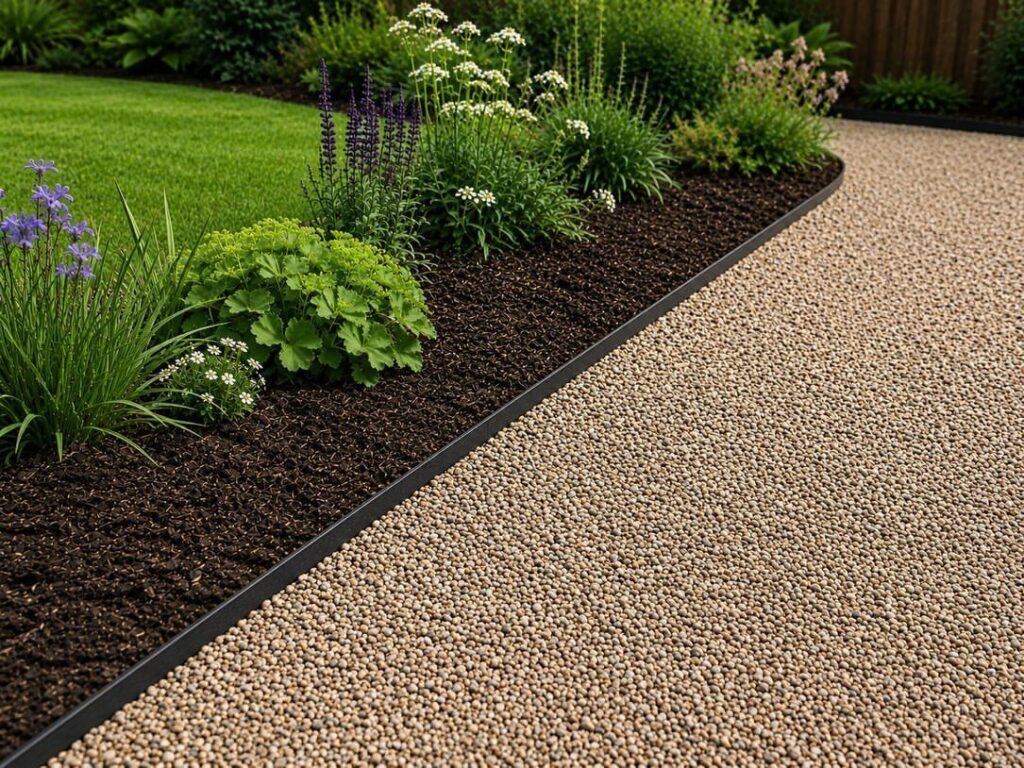
Steel edging bought me a clean line between my gravel path and the bed without the heave and rot of wood. The strips go in with a rubber mallet; the hardest part is keeping the top level as you work.
Stone or brick costs more up front but settles in for decades. Either way, the edge itself does half the weeding by stopping lawn runners from crossing in.
I back every edged bed with 2-3 inches of shredded mulch, or shredded leaves if the budget is tight that year. Skipping mulch turns low-maintenance into high-maintenance fast.

Quality Metal Material: Our galvanized garden edge is processed using high-precision CNC technology, ensuring accuracy down to every millimeter. Innovative 3D ripple design not only enhances the aesthetic appeal of the fence but also strengthens its structural integrity.
3. Pollinator-friendly Flower Beds
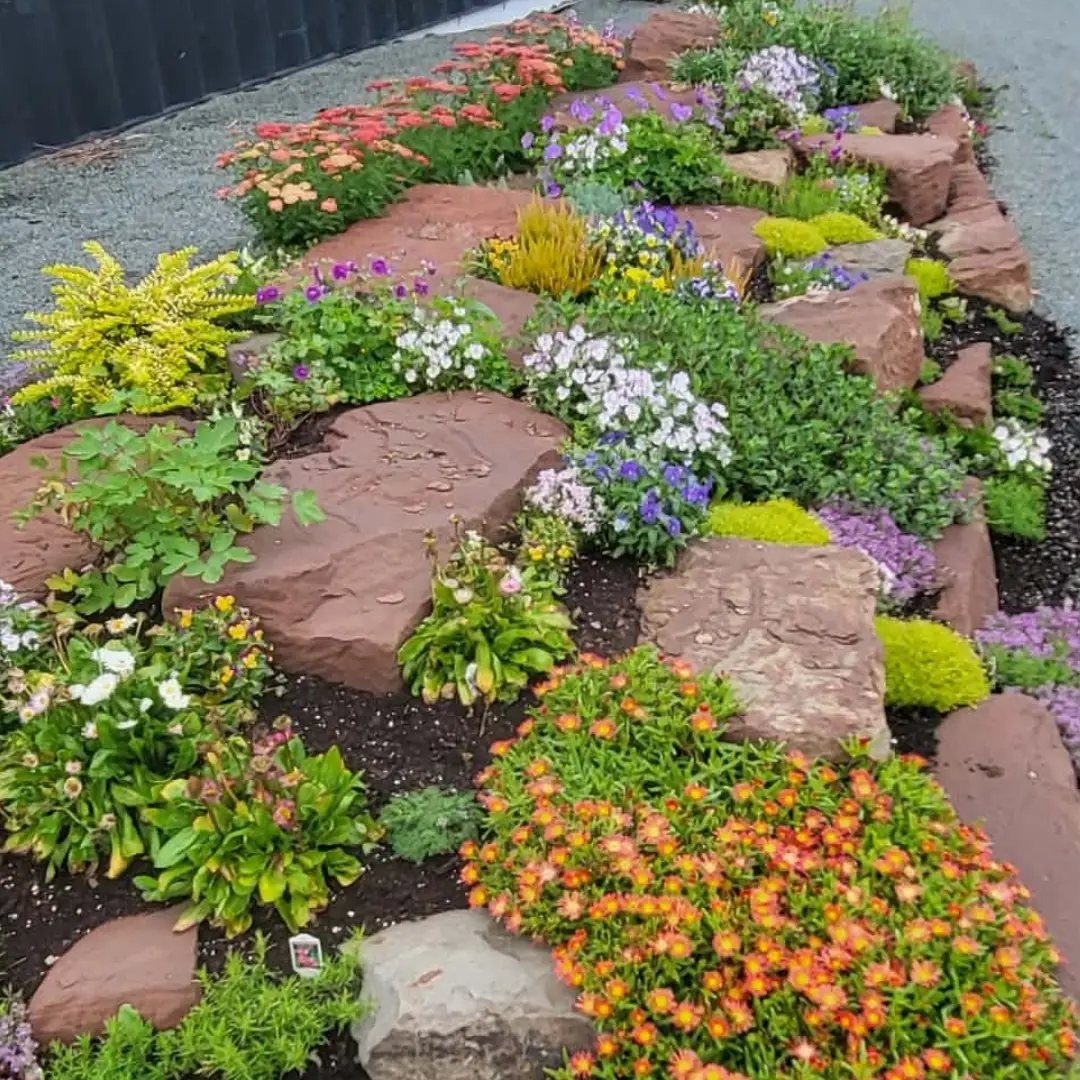
Coneflowers and bee balm pull in bees and butterflies without any feeding or deadheading on my end.
Native plants to your area work hardest; a little research on what belongs near you pays off in plants that tolerate your soil and weather without fuss.
Rock mulch saves re-mulching yearly, though it warms the soil more than bark.
For damp shade, coral bells or astilbe swap in easily. Natives take longer to spread; pollinator beds built with them fill out over two or three seasons, not one.
4. Layered Flower Beds
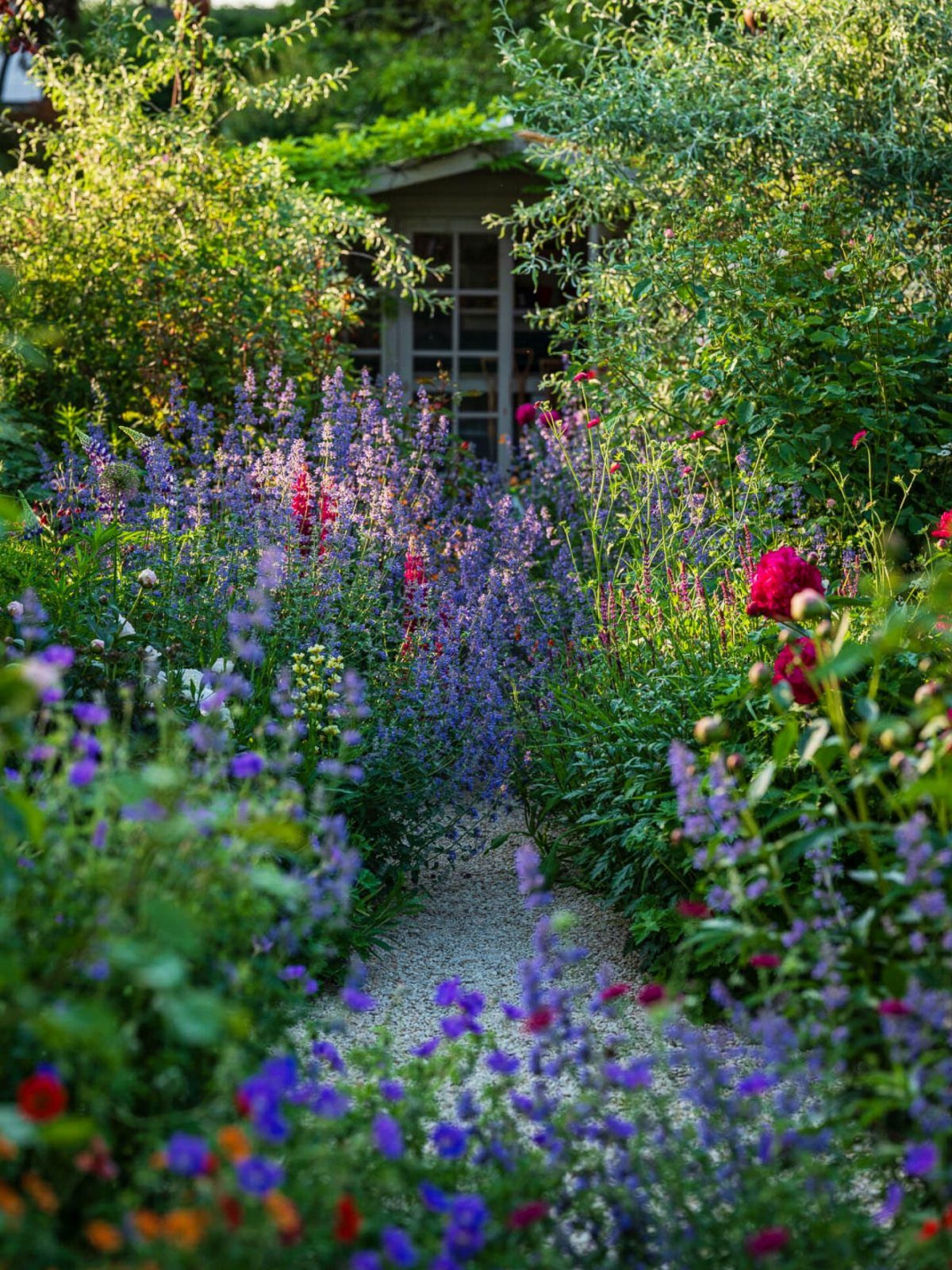
Tall salvia in back and lower peonies in front let me see every bloom from the path instead of losing the rear row.
I stick to three groupings of the same perennial, repeated, rather than one of everything; the bed reads as fuller with less actual variety to maintain.
Contrasting colors give a bold stripe, or stay in one hue for something quieter.
Either way, the layering itself does the design work. Gravel between beds keeps mud off your shoes and weeds down without annual mulch refresh.

🌱 Enhances Soil Moisture Retention: 💧 Black Mulch Cover by Gardenera helps plants conserve moisture, reducing the frequency of watering and promoting healthy root development.
5. Create a Tree Base Garden
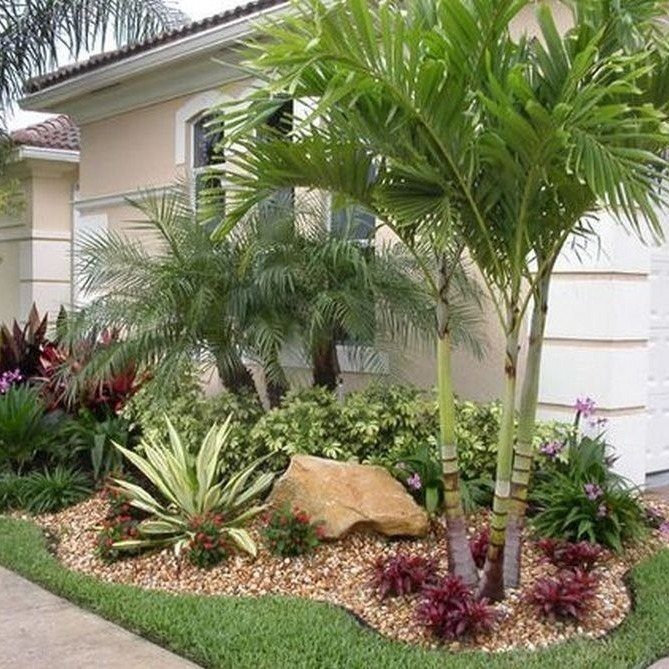
A ring around a tree trunk uses space that otherwise grows nothing but roots and bare dirt. I dig carefully; most tree feeder roots sit in the top few inches of soil, so wide and shallow beats deep and narrow.
Gravel mulch lasts years and lets water through to the tree. For a stump you cannot remove, hollow it out and fill with soil for a planter, or set a pot on top.
The photo’s agave and palms suit hot zones; in cooler areas, hostas or coral bells handle the dry shade under most deciduous trees.

VARIETY: Painted Daisy (Chrysanthemum Carinatum) seeds produce vibrant, colorful blooms with distinctive rings of various hues around the center

Used Book in Good Condition

PREMIUM VARIETY: 24 perennial wildflowers seeds; High germination rate with non-GMO wild flower seeds; Creates stunning garden flowers with bold colors and textures; Perfect for butterfly garden seeds and pollinator seed mix
6. Gravel Path Garden Bed
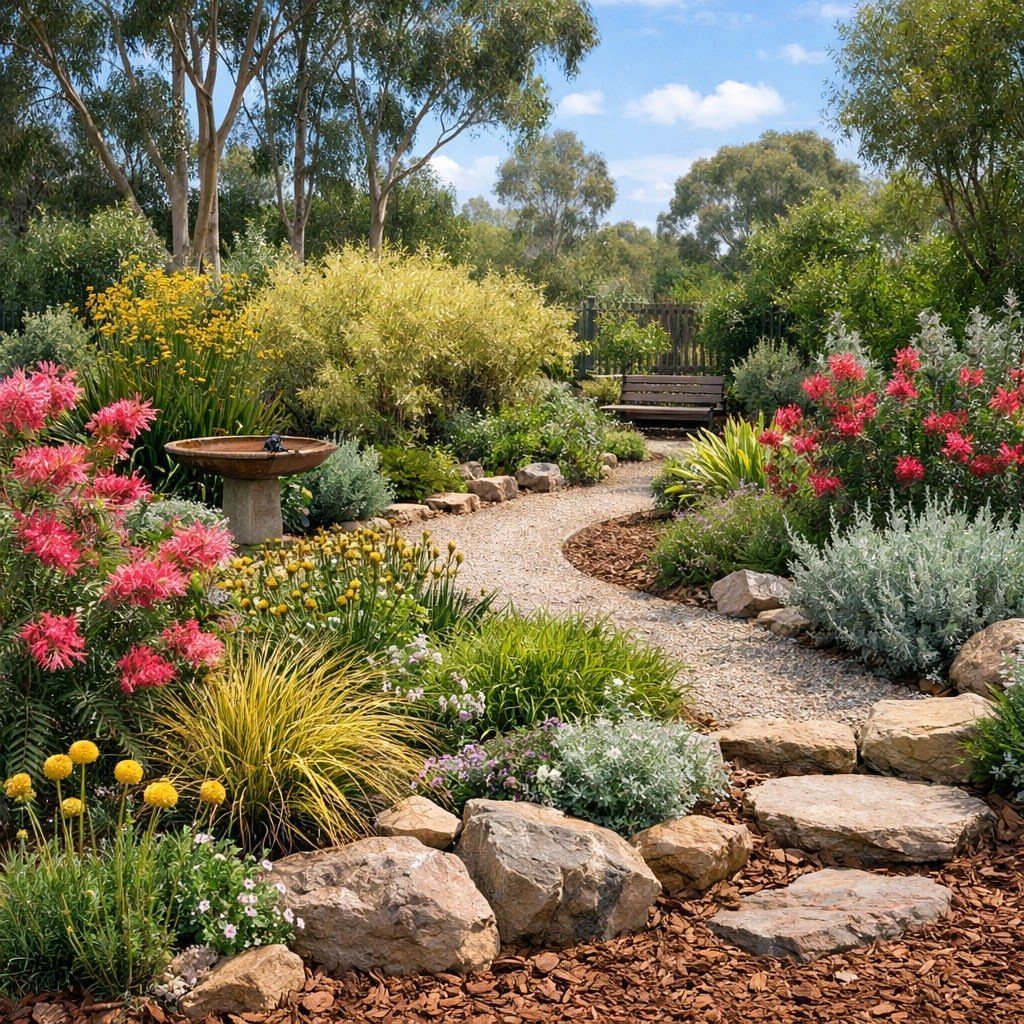
Gravel paths between beds mean no mowing strips and no muddy feet after rain. I lay landscape fabric first, then a couple inches of stone; without the fabric, weeds sprout from the soil below by year two.
The curve slows the eye and hides what is coming, which costs nothing extra in materials.
Solar lights along the edge, spaced where you actually walk, cost little for a basic set and save wiring. Wood mulch in the beds against gravel underfoot gives the contrast that makes both look intentional.

Ornamental grasses are known for their hardiness and their ease in care. They add color, texture and movement to the landscape without creating a lot of extra work!

DWARF FOUNTAIN GRASS: Hardy ornamental grass with white plumes that grows 12-18 inches tall, perfect for bedding, borders, or container gardening in zones 4-11.

Ornamental Grass Seed - Stipa Tenuissima Pony Tail
7. Hanging Basket Flowers
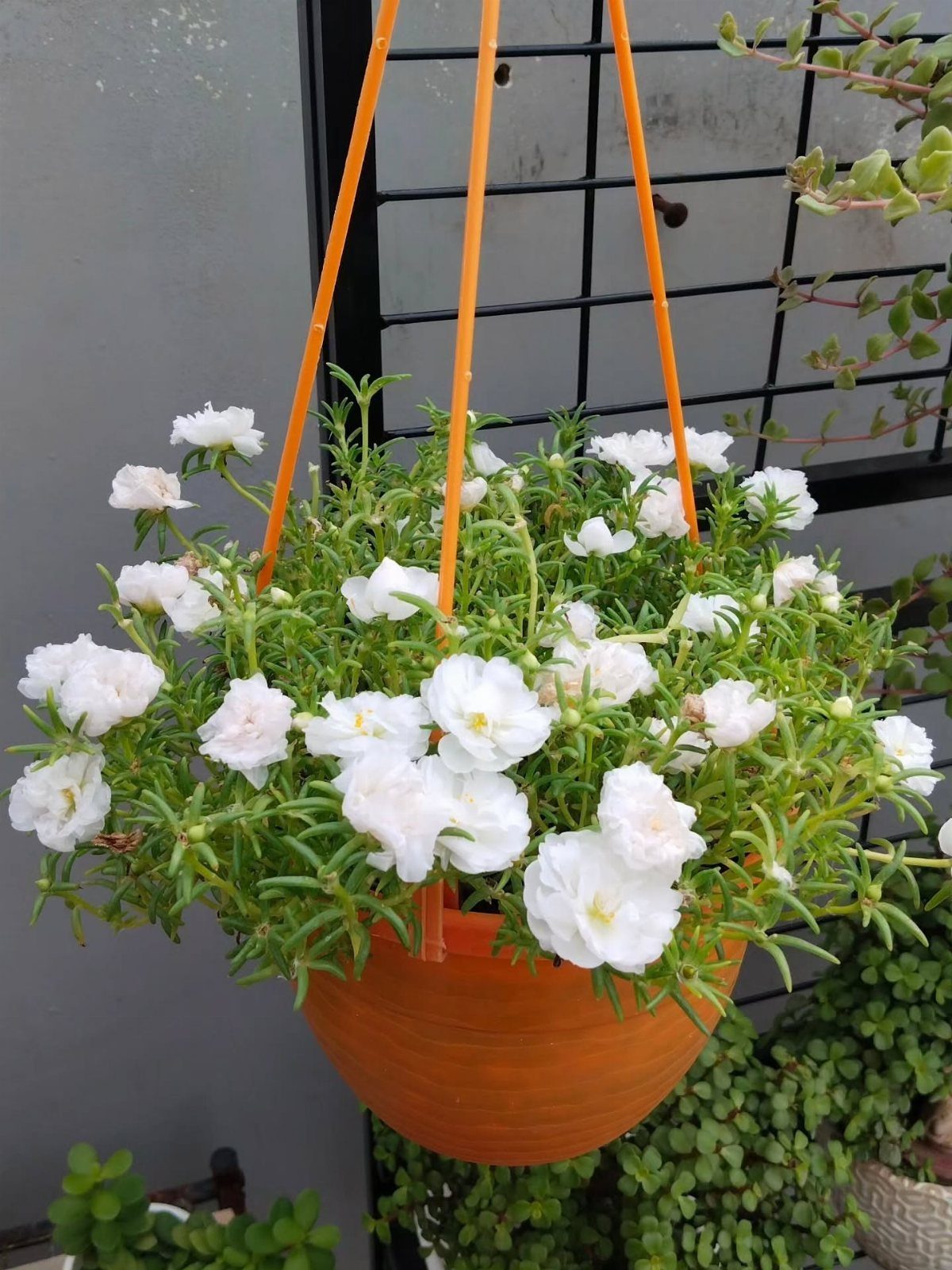
A plastic pot hung against a dark wall turns vertical space into bloom without any ground to weed. Moss rose trails soft and full, and the orange pot against grey reads clean and modern.
Check the bracket before you buy; a full basket weighs more than an empty one, and a trellis mount needs to hit a stud or use a masonry anchor.
Watering is the real chore, since wind and sun dry exposed pots fast. A drip line or a saucered liner buys back that time.

Durable Carbon Steel: This metal lawn edging uses carbon steel with a treated surface that helps resist rust, fading, and cracking. Outdoor borders stay neat and dependable through everyday weather changes

Durable & Flexible Material GTSABWAY garden edging is crafted from premium galvanized steel, ensuring superior durability and flexibility. Easily shape it into straight lines,curves, circles, or unique contours ,without cracking,Can withstand all kinds of weather conditions, ensuring long-term durability and reliability. providing reliable Garden Border solutions.

Durable & Flexible Material GTSABWAY garden edging is Made from high-quality metal, ensuring superior durability and flexibility. Easily shape it into straight lines,curves, circles, or unique contours ,without cracking,Can withstand all kinds of weather conditions, ensuring long-term durability and reliability. providing reliable Garden Border solutions.
8. Gravel Succulent Garden Bed
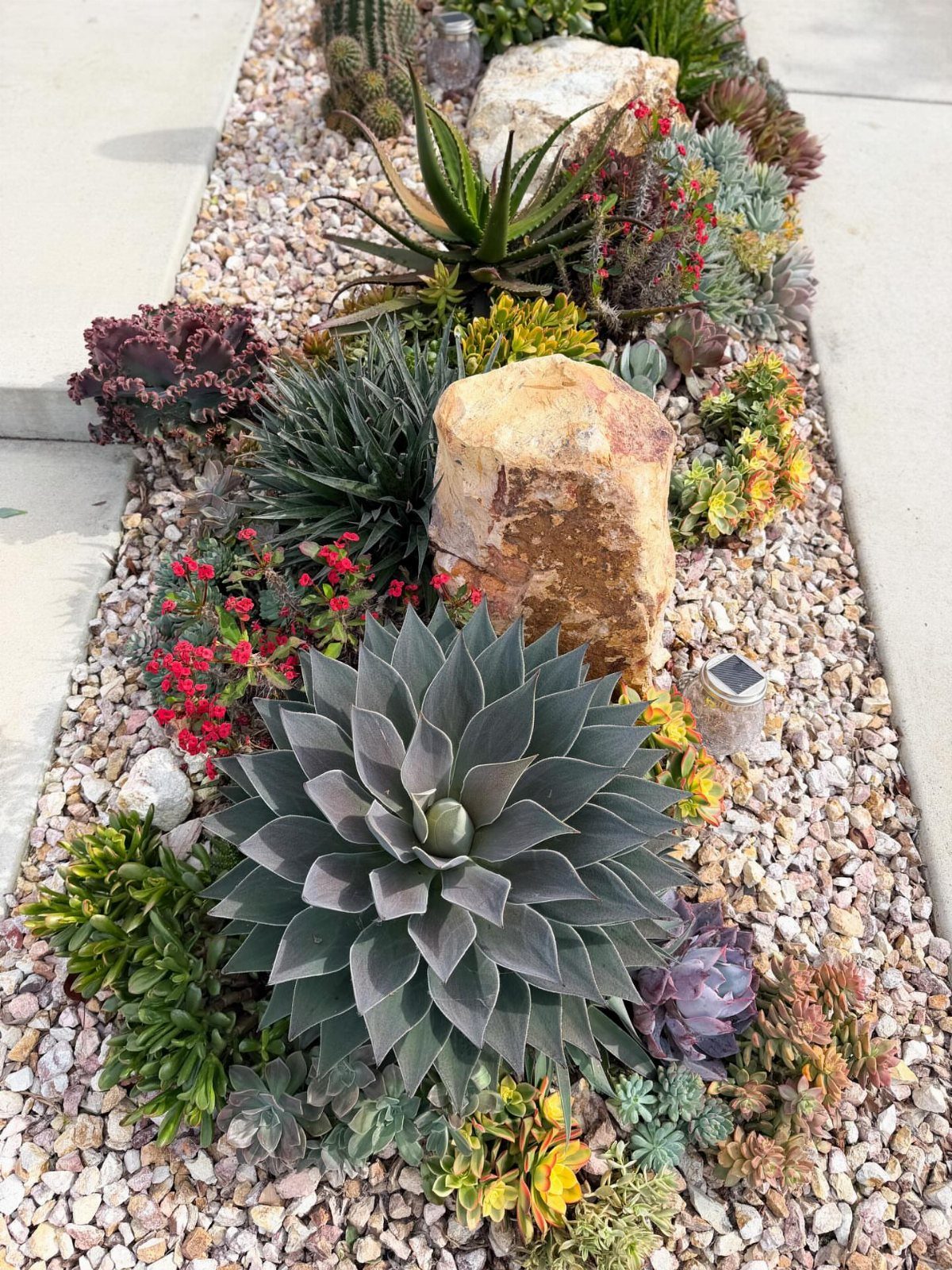
Narrow beds between walks suit succulents that hate wet feet. Light gravel drains fast and shows off the plants; large rocks break up the texture so it reads designed, not leftover.
I lay landscape fabric first, then 2 inches of gravel, cutting slits to plant. Agave and cacti need no supplemental water once established in most zones, though the first summer asks for occasional soaking.
Euphorbia flowers yellow in spring with no deadheading after. Slow growth is the only downside; this bed fills in over seasons, not months.
9. Window Box Planter
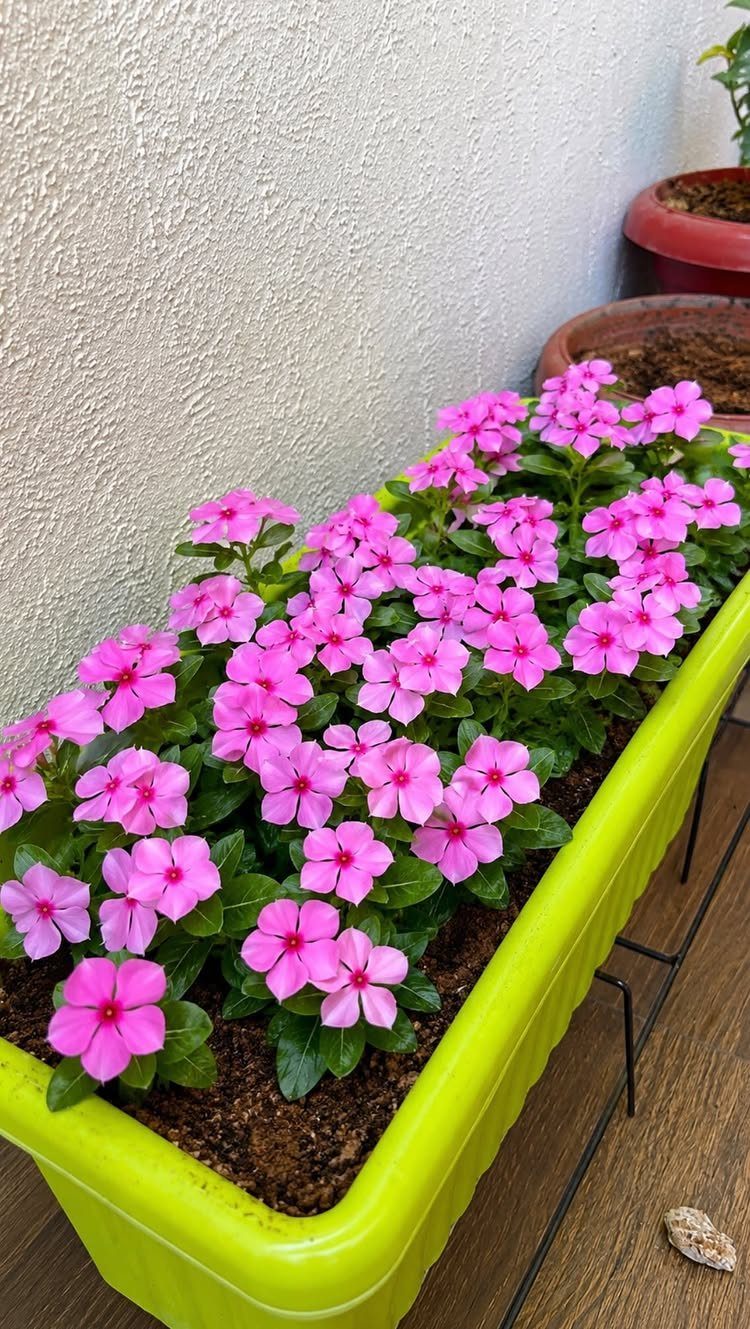
A long box on a stand brings flowers up from the patio floor without bending or kneeling. Periwinkle blooms dense and pink, and the lime-green planter picks up the color against white.
Drainage holes matter more than soil choice; standing water rots roots in a season. I drill extra if they are not there, then set the box on feet or shims so water escapes.
A liner or insert lifts out for off-season dumping. Part sun keeps periwinkle flowering longer than full blazing afternoon.
10. Slate Mulch with Potted Baskets
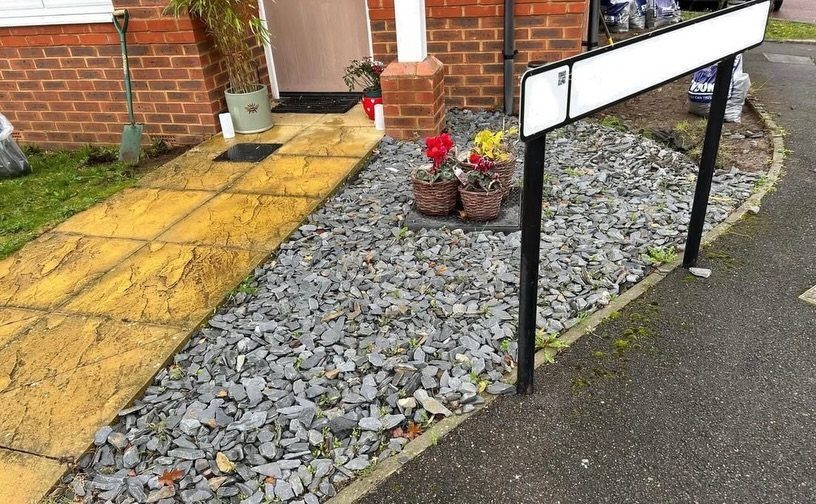
Slate chips cost more than bark but stay put for years. The grey reads calm against paving, and potted baskets drop in without any bed preparation.
The baskets sit above the slate, so water passes through to the soil below; check that the slate layer is not so thick it dams drainage.
I sink a flat stone under each basket to keep it level and stop the weave from rotting against damp ground. The pots move for color changes or frost, which fixed plantings never do.
11. Hardy Daylily Garden Bed
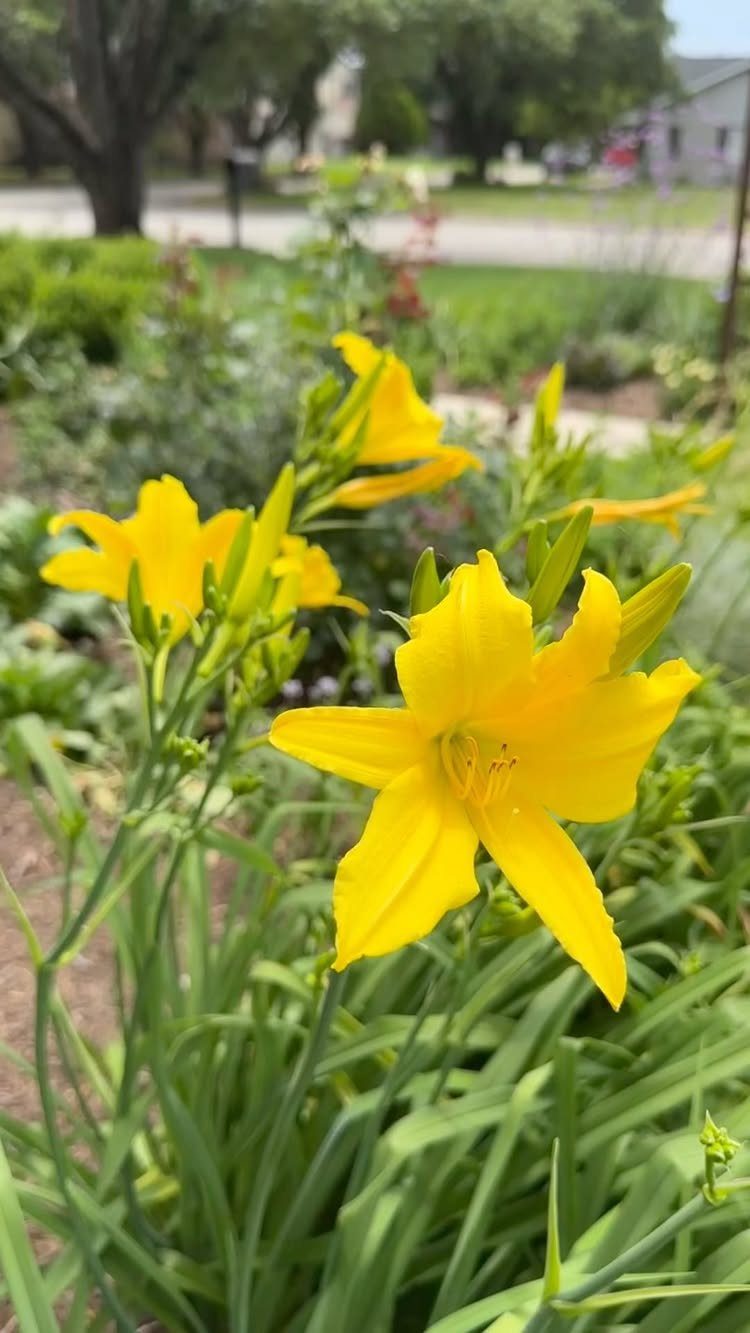
Daylilies outlast almost any perennial I have planted, and the yellow varieties light up a border for weeks. Strap foliage stays green after blooms finish, so the bed never looks bare.
Full sun and average soil suit them; the only mistake I have made is planting too deep, which stalls flowering for a season.
A thick layer of mulch suppresses the few weeds that compete, and no deadheading is needed, though snapping spent blooms keeps the border neater. Established clumps divide whenever they get crowded if you want more, or leave them be indefinitely.
12. Foliage and Flowering Shrub Border
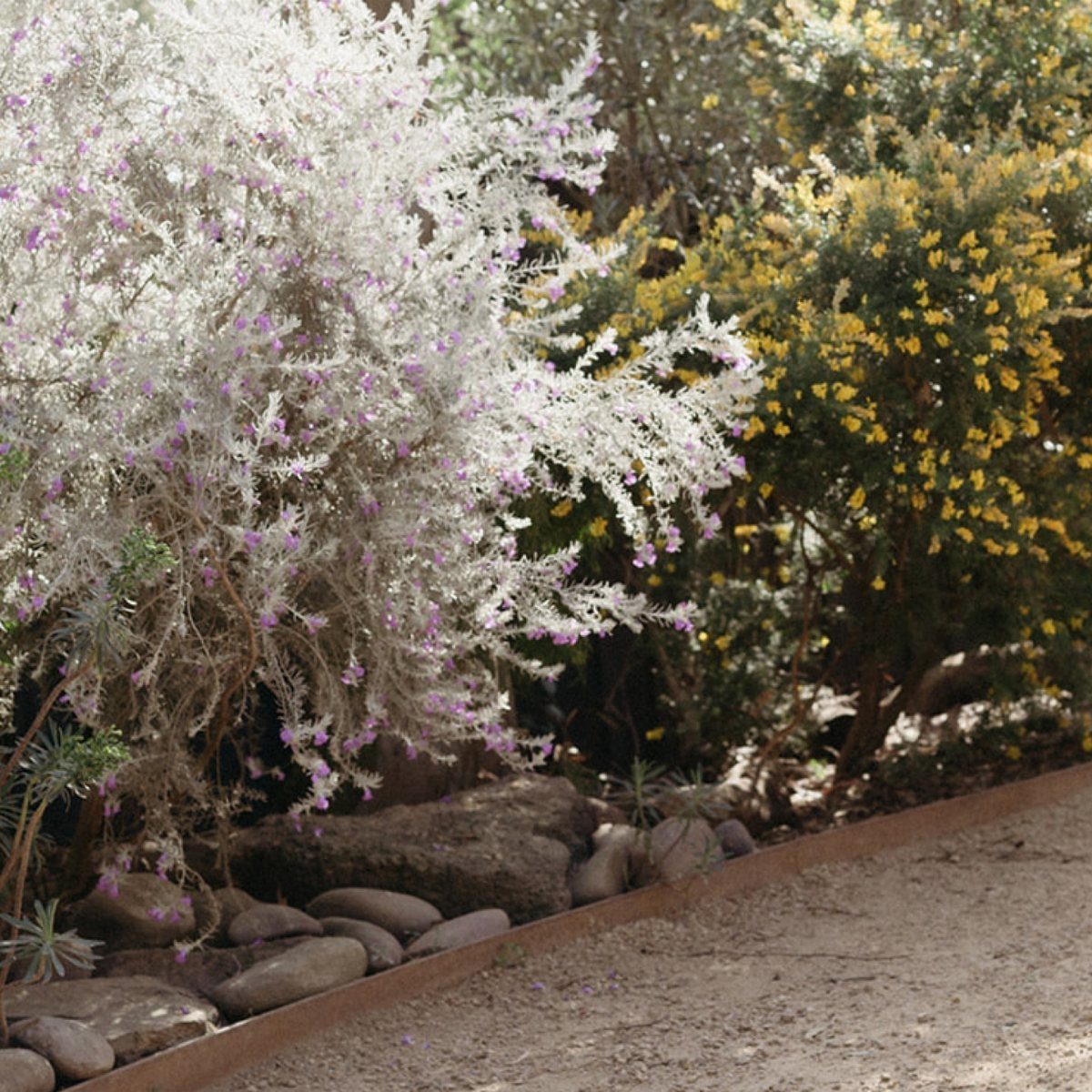
Silvery foliage carries a border when flowers pause; paired with yellow bloomers, the contrast reads intentional from across the yard. Rock edging and metal strip define the line against gravel, so maintenance means trimming, not weeding.
Shrubs fill space that annuals demand yearly; the upfront cost pays back in seasons of not replanting. I choose varieties for mature size, not nursery height, to avoid chopping later.
Purple blooms on silver-leafed shrubs tend toward spring; the yellow extends color later. The combination works in sun and tolerates the dry edge of a path where roots compete with stone.
13. Shaded Fence Line Wildflower Bed
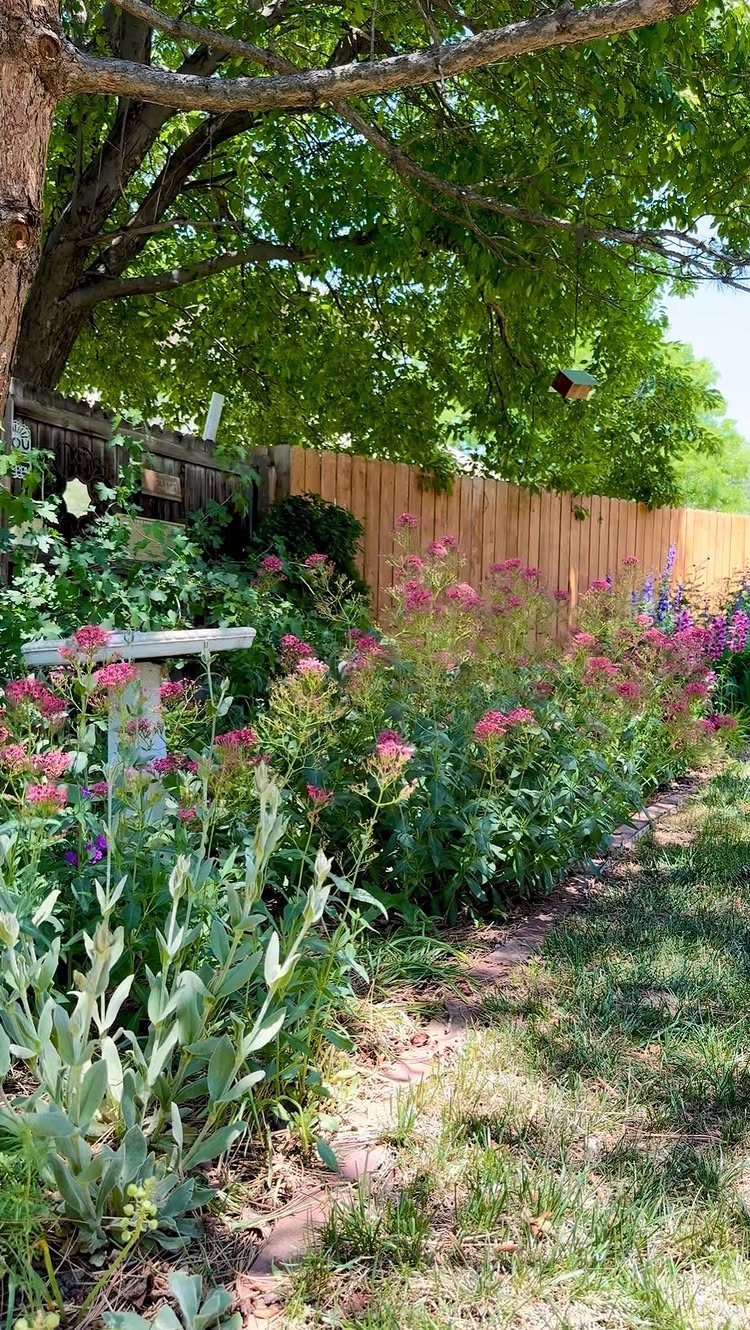
A fence line in shade is often the last place anyone thinks to plant, which is exactly why it works: the spot stays cool, holds moisture longer, and hides bare soil that would otherwise grow mud.
Pink wildflowers and silvery foliage against weathered wood read intentional without any hardscaping.
I let the tree canopy do the watering math; drought-tolerant shade varieties handle dry spells once their roots find footing.
A white birdbath set in among the stems breaks up green and draws birds that pick off pests. Gravel or fresh mulch between plants suppresses the weeds that love the same damp shade.
Wildflower seed mixes keep the upfront cost low and reseed themselves if you let a few heads go brown.
Taller plants at the back add screening if the fence feels low; shorter color in front keeps the bed from looking like a hedge you forgot to trim.
Shade beds fill in slowly, and first-year bloom can disappoint, so this one asks patience. Year 2 is when the border earns its name.
Plant Selection Advice
Hardiness and drought tolerance are the starting points, not the whole story. A plant that survives your winter but hates your summer humidity still needs rescue work.
I start with natives because they already handle the soil and rainfall pattern where I live; beyond that, matching plants from similar bioregions works when local options run thin.
The Maritime Northwest is a modified Mediterranean climate: wet winters, dry summers, but cool and gray instead of hot and sunny. Plants from other temperate regions with that same winter-wet, summer-dry rhythm often do fine there.
Daylilies, black-eyed Susans, purple coneflowers, and serviceberry all tolerate Michigan clay or sand without fussing. Hydrangea arborescens is another that settles in and stays.
New trees and shrubs need drip or soaker lines for two or three summers before their roots run deep enough to find water on their own. Fall bulbs and herbs?
None. Once established, they should live on what falls from the sky.
Regular Maintenance Tips
Even a low-maintenance bed asks for a few timed checks through the year.
Spring means clearing winter debris and topping mulch where it has thinned. Summer work stays light: pull the occasional weed and snip spent blooms on varieties that do not drop them clean.
Fall, cut back perennials and clear leaves that mat. Winter the bed rests; evergreens and grasses carry the structure.
I combine it with weeding; 15 or 20 minutes handles both.
Skipping these small passes is how a bed slides from low maintenance to neglected. The work is light, but the timing matters.
Use a deep layer of mulch. A 2-to-4-inch layer applied to a bed twice yearly will conserve moisture and suppress weeds.
Design Principles
A bed reads as designed when the eye moves in clear layers, not when every plant is different.
Either choice holds together because the structure is already there.
Seasonal interest spreads across the whole year, not just summer. Spring blossoms, summer flowers, fall foliage, and winter structure from evergreens or grasses mean the bed never hits a dead month.
Watering Strategies
Watering is the chore that turns a low-maintenance bed into a daily errand.
Drip irrigation connected to a hose and timer handles it without memory or presence; set it once and the system runs. Timers on outdoor faucets work for vacation absence too.
After that, established plants should stand on regional rainfall if they were chosen right.
The other path is plant selection that matches your actual dry periods. In the Maritime Northwest, dry summers are normal; plants that like that pattern need no supplemental water once settled.
Natives or bioregion matches do the footwork for you. Either strategy works: automate the water, or remove the need.
Frequently Asked Questions
What are the best flowers for a low-maintenance garden?
Hardy perennials and native plants that do not need deadheading, staking, or special soil.
Coneflowers, bee balm, daylilies, and black-eyed Susans all handle average conditions without fussing, and native varieties tolerate your local rainfall and soil from the start. Avoid anything labeled invasive or a vigorous spreader, since those turn into weeding projects later.
What is the 3-5-7 rule in landscaping?
Plant in odd-numbered groups, three, five, or seven of the same plant, for a fuller look with less variety to maintain.
3 groupings of a single perennial repeated through the bed reads as intentional without asking you to track dozens of different plants. Odd numbers simply look more natural to the eye than even pairs.
What is the cheapest way to make my garden low-maintenance?
Shredded leaves or untreated grass clippings work as mulch when budget is tight, and native plants or wildflower seed mixes keep up-front costs low. Edging, even simple steel strips, stops lawn runners from invading beds and cuts weeding in half.