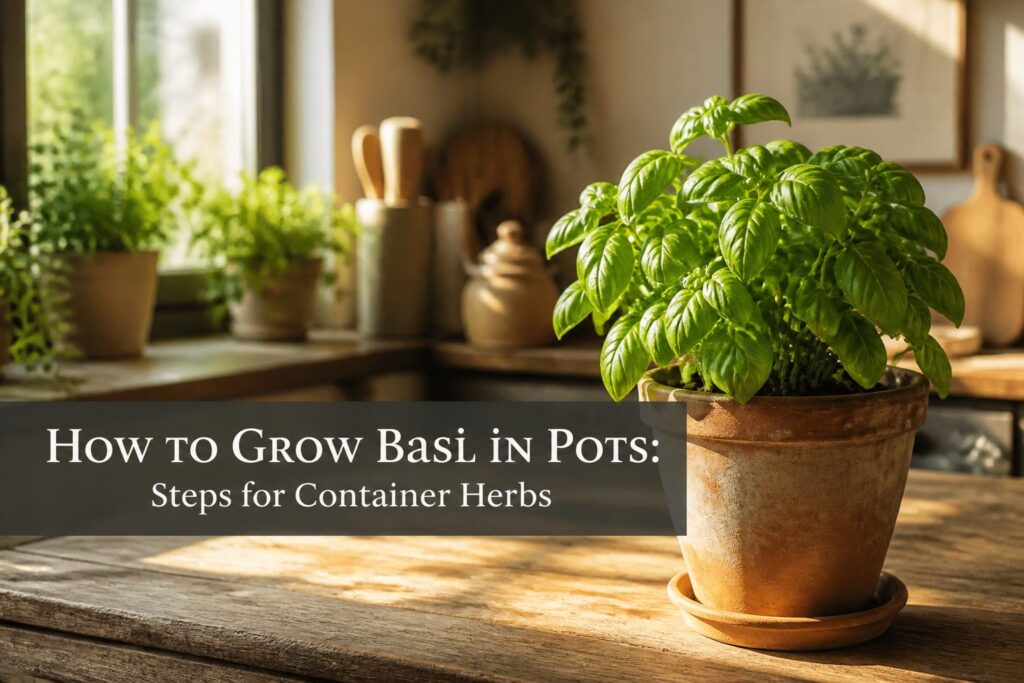
A single pot of basil on a windowsill or fire escape gives you fresh leaves for four to six months, costs under ten dollars to start, and needs no garden space.
Most people lose the plant in the first three weeks because they picked a pot without drainage holes, then watered on a schedule instead of checking the soil.
Terracotta beats plastic here: the clay pulls moisture out through its walls, so roots get air even when the surface still looks damp.
[link-whisper-related-posts]1. Pick a Pot That Drains
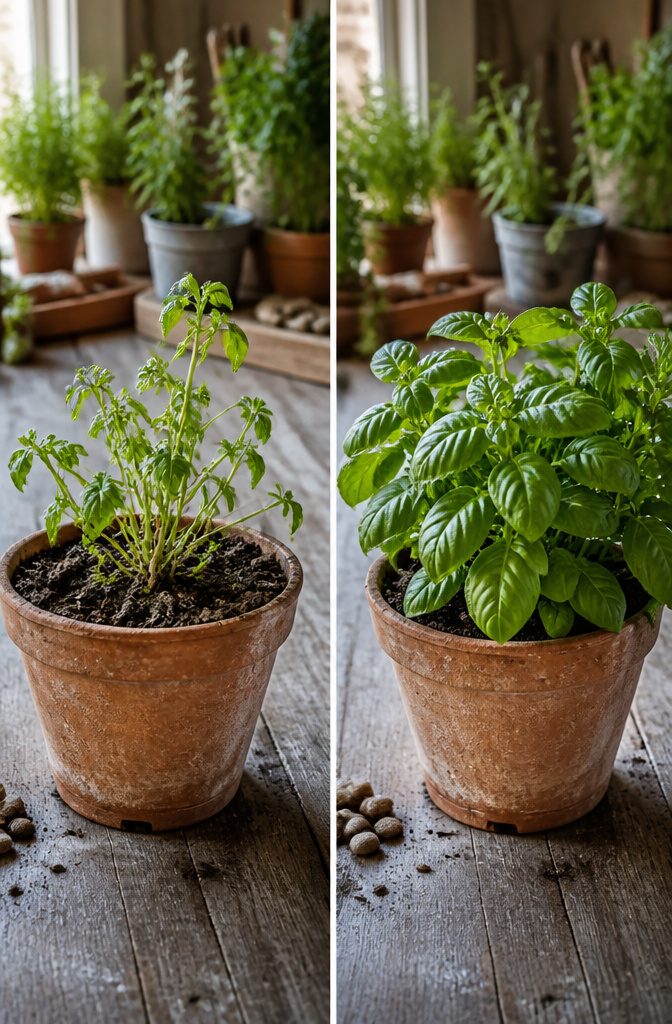
A pot that is 6 to 12 inches deep and 8 to 12 inches wide gives basil roots the room they need without wasting soil on empty depth the plant will never fill.
Drainage holes matter more than the pot’s looks; water that sits against the roots rots them, and no amount of careful watering fixes a sealed bottom.
Terracotta wins over plastic or ceramic for the same reason it looks weathered after one season: it breathes. The clay pulls moisture out through the walls, so roots get air even when the soil reads damp on the surface.
Plastic traps that moisture against the root ball, and glazed ceramic does the same. Breathability keeps the roots alive; the patina is just a side benefit.

Premium Quality: These terra cotta pots are constructed of high-quality clay, which allows more water and air to circulate freely within the pots while yet maintaining their structural integrity. It's an excellent choice for cactus, succulents, and other plants that thrive in dry soil, and it's also appropriate for areas with lower temperatures. The high air permeability of the pot walls helps the soil to dry out more quickly

Premium Quality: These terra cotta pots are constructed of high-quality clay, which allows more water and air to circulate freely within the pots while yet maintaining their structural integrity. It’s an excellent choice for cactus, succulents, and other plants that thrive in dry soil, and it’s also appropriate for areas with lower temperatures. The high air permeability of the pot walls helps the soil to dry out more quickly
2. Fill with the Right Mix
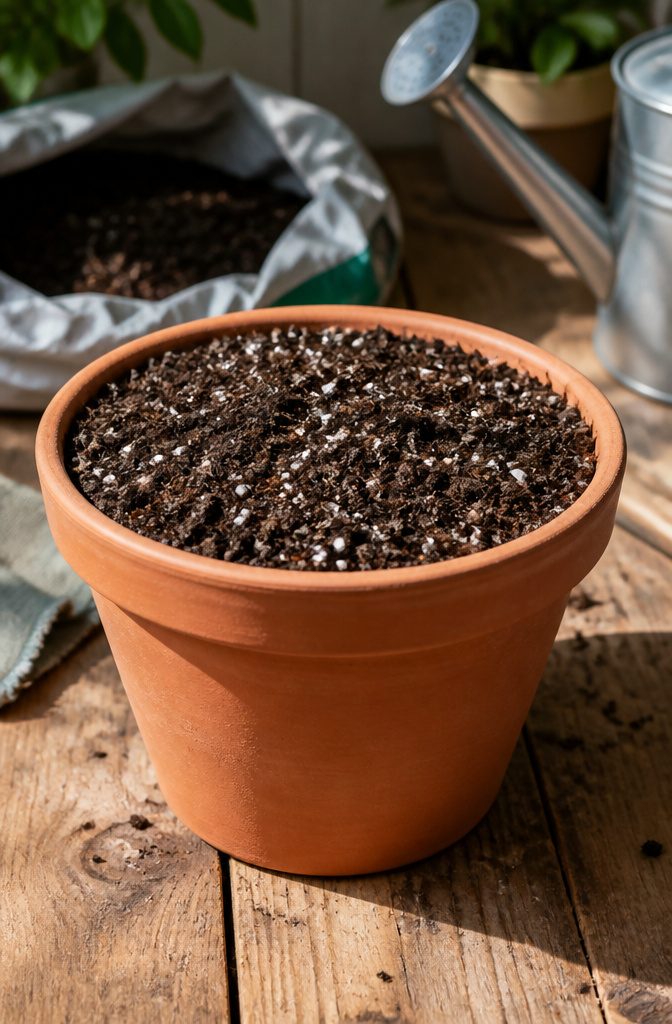
Bagged potting mix is worth the few extra dollars over whatever dirt sits outside your door.
Garden soil packs down hard in a container, turning into something closer to concrete than a place roots want to grow, and it drains so poorly that basil rots before it ever gets going.
The right stuff is light, holds air, and lets water move through without drowning the plant.
I go with a mix enriched with compost, then stir in perlite if the bag feels heavy.
The white grit keeps the soil loose so roots can breathe. A pH between 6.0 and 7.5 is what basil actually wants; too far outside that range and the leaves yellow while the plant stalls.
A pH range of 6.0 to 7.5 is best.
That window comes from University of Minnesota Extension testing, and it lines up with what most bagged mixes already deliver. If your plants struggle for no clear reason, a soil test is the cheapest diagnostic you can buy.
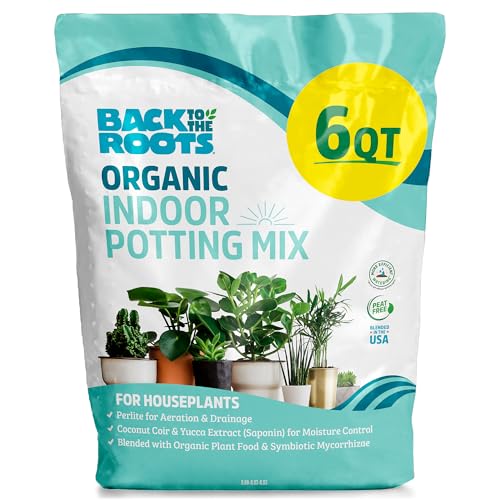
Includes 6qt of Back to the Roots Indoor Potting Mix. Our Potting Mix contains organic yucca extract that aids in retaining moisture in the soil which keeps your indoor plants happy and healthy

INDOOR GROWING: Growing indoors is easy under the right conditions; Miracle-Gro Houseplant Potting Mix is an indoor plant potting soil that combines key elements container plants need to thrive
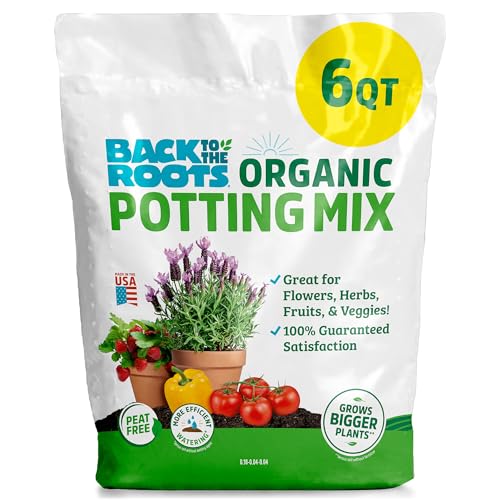
Includes 6qt of Back to the Roots Premium Blend Potting Mix. 100% Organic and Peat-Free, made from upcycled plant matter and wood fines from across the U.S. No imported peat, just better soil with a lighter carbon footprint.
3. Plant Seeds or a Start
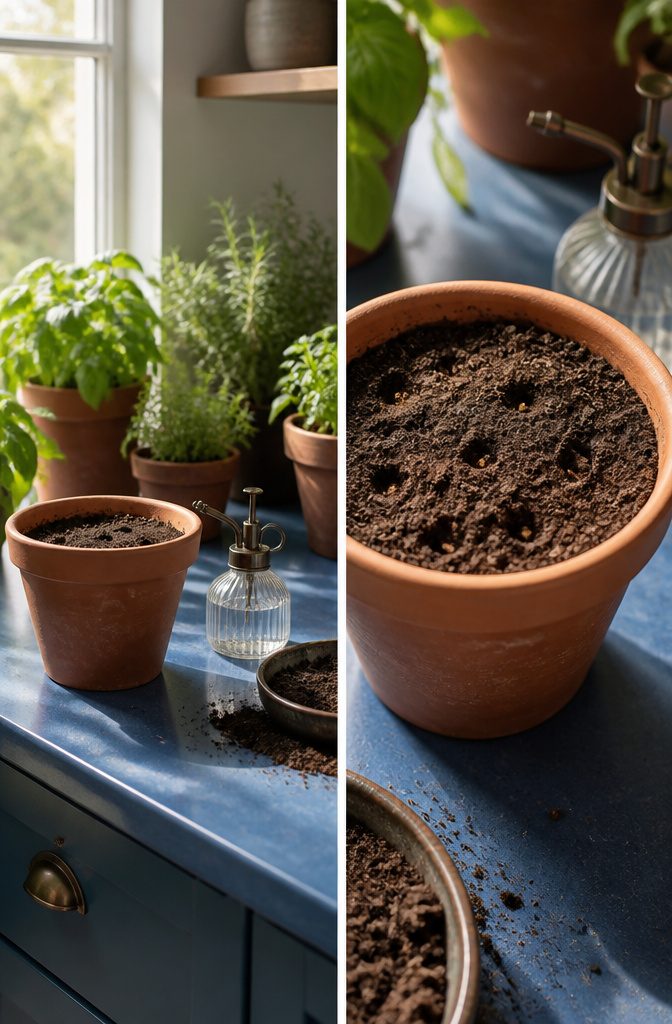
Basil gives you two ways in, and the better choice depends on how patient your stomach is.
Seeds cost less and let you pick from oddball varieties like ‘Purple Ruffles,’ which I have only ever started from seed because garden centers rarely stock it.
Sow them about 1/4 inch apart, barely cover with soil, and mist the surface so nothing washes away. At around 70°F they pop up in five to seven days, recognizable by those broad, D-shaped seed leaves pressed flat against each other.
A young plant from the nursery skips that wait. I buy starts for Genovese and Thai basil when Memorial Day weekend catches me without seedlings ready, which happens most years.
Ground or pot temperature needs to hit at least 70°F either way, and basil sulks in cold soil, so May is the safer bet than April for transplanting.
Seeds let you control timing and cost maybe two dollars a packet; starts run four to six dollars but hand you a month of growth.
For a single pot on a fire escape, one start wins on speed. For three or four pots scattered around the kitchen and balcony, seeds spread the same money further and the staggered planting means less glut, more steady leaves.

Quick, at home results for Soil pH Innovative and inexpensive soil test kit features an easy-to-use capsule system and patented color comparator Contains all components...
4. Water When the Top Inch Dries
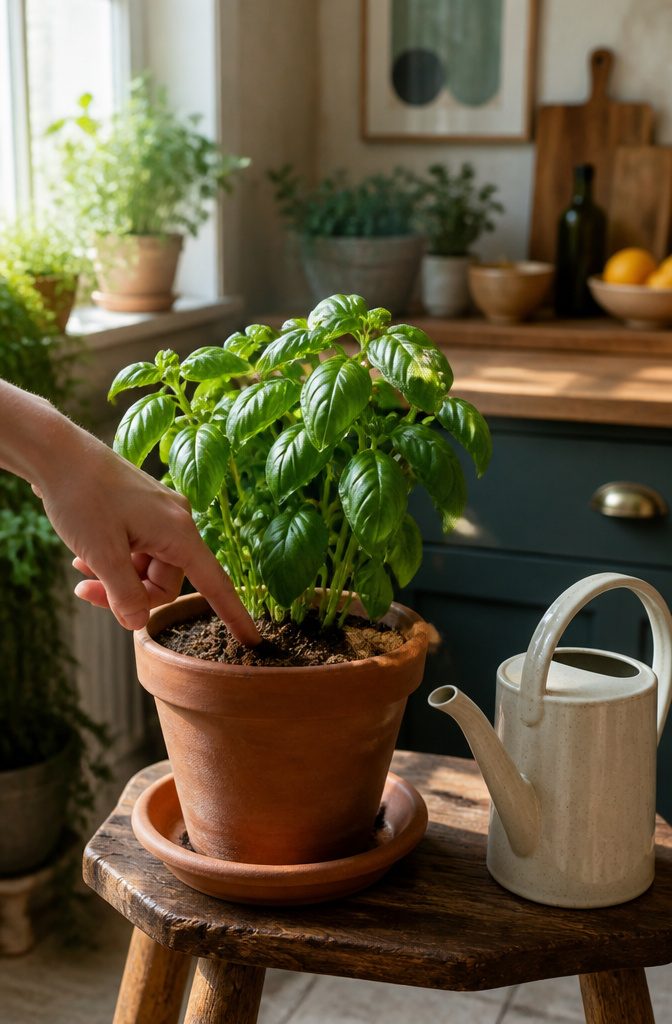
The finger test is the only tool I have ever needed for basil in pots growing: push a knuckle into the soil and water when the top inch feels dry.
In summer, with my plants on a sunny windowsill, that check turns into a routine every day or two.
Winter slows everything down, and the same pots can go several days, sometimes close to a week, before that top layer stiffens under my skin.
Droopy leaves do not always mean thirsty roots. A basil plant with dry soil will wilt, but so will one drowning in a saucer that never got emptied.
Root rot sets in fast when drainage holes sit underwater, and the leaves look nearly identical either way. The real signal is the soil itself.
Water until it runs from the bottom, then tip out the tray. Consistent moisture means damp, not soggy; the line between them is the empty saucer.

HERBS CULINARY SEED VARIETY PACK: Spice up your kitchen with 10 must-have culinary herbs! From classic Basil and Cilantro to fragrant Lavender and savory Thyme, this pack has everything for cooking, garnishing, and creating fresh flavors.

HERB PLANTS & SEEDS - Start an indoor herb garden from seed with basil, chives, dill, cilantro and parsley, each in its own burlap pot.

15 Herb Seeds Variety Pack – 4300 Seeds Included: Start your own herb garden with this all-in-one heirloom herbs seeds kit. Includes Genovese Basil, Sweet Basil, Italian Oregano, Rosemary, Thyme, Cilantro, Dill, Mint, Sage, Lavender, Chives, Garlic Chives, Parsley, Chervil, and Scallions. Each herb seed packet is USA-sourced and tested for high germination. Grow these herb garden seeds in your backyard, windowsill, raised beds, or pots for fresh flavors all season long.
5. Give It 6 to 8 Hours of Sun
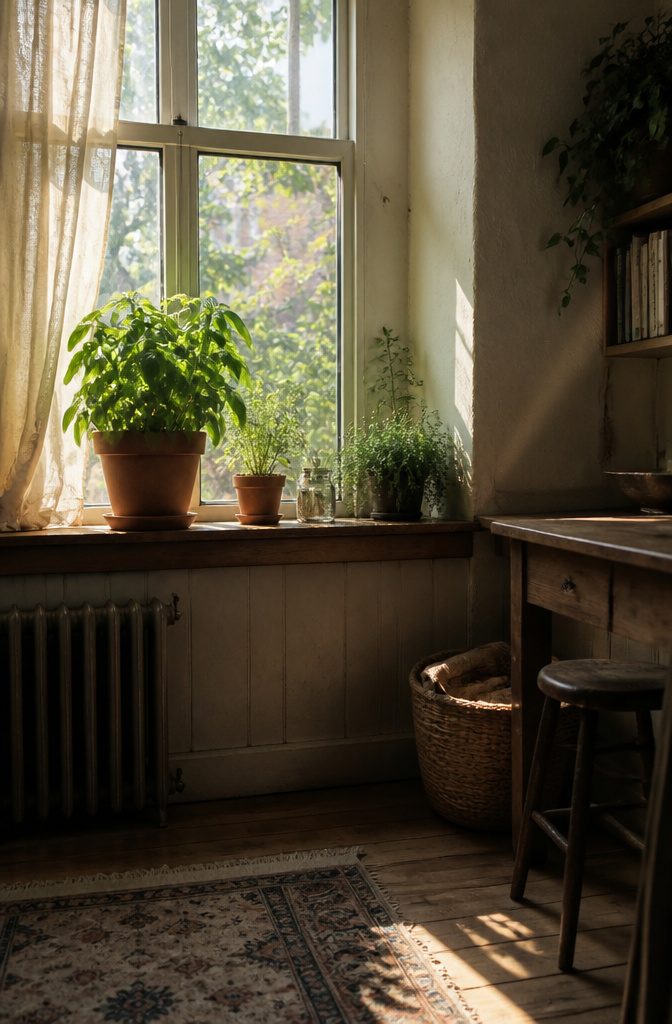
Basil grown in pots needs 6 to 8 hours of direct sun each day to stay compact and keep producing those broad, fragrant leaves.
A south-facing window is the best bet indoors; west-facing works in a pinch, but east and north windows usually leave the plant hungry for more.
The first time my basil started stretching toward the glass with three-inch gaps between leaf pairs, I learned what too little light looks like. Turning the pot every few days helps, but leggy growth means the plant is already behind.
In winter, even a good south window drops below what basil wants, so a grow light on a timer for 14 to 16 hours becomes worth the outlet space.
Hang it 6 to 12 inches above the plant and check the maker’s guide, since LED strength varies.
Temperature matters just as much as light. Basil shuts down below 50°F, so I move pots outside only after nights stay consistently above that mark, then haul them back in when fall threatens.
The back-and-forth is a small chore, but losing a full plant to one cold snap stings worse.

Monitor Your Plants Easily: The high-quality, clear plastic of these cell trays lets you observe your plants without disturbing their root growth.

EASIER SEED STARTING: Our Burpee SuperSeed tray with 16 extra-large flexible pop-out cells is designed to simplify indoor seed starting. Just add seed starting mix, seeds, water and light to get growing! Rows are labeled alphanumerically for seedling identification with included Plant-o-Gram diagram.

Adjustable Vents: The seed trays have adjustable vents that allow you to regulate the temperature and humidity of your seedling environment for total control over the growing process.
6. Pinch to Harvest and Delay Flowers
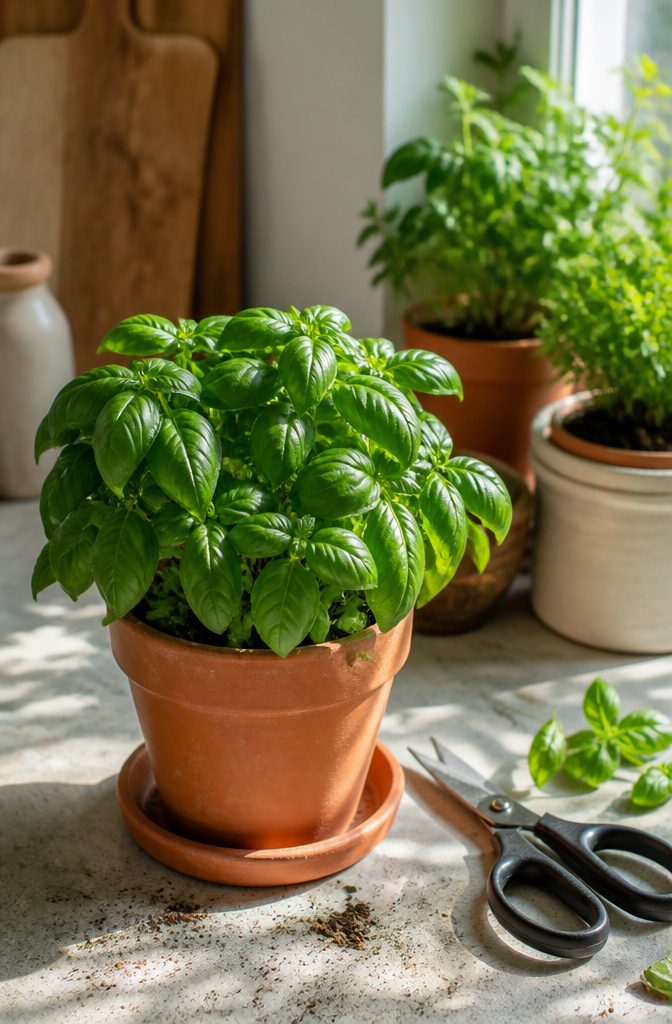
Once a basil plant reaches 6–8 inches and carries several leaf pairs, cut the stem just above a leaf pair to force two new branches from that node.
The first season I grew basil in pots, I treated it like a houseplant and only snipped a leaf here and there when I needed one.
The stems shot up thin and tall, and by late June every plant had bolted. The leaves turned bitter, not the bright, peppery sweetness I had planted for.
Heat, long days, and a crowded pot all push basil toward flowering faster. Now I check the stem tips every few days for a tight cone of buds.
At the first sign, I cut that stem back to the leaf pair below the buds rather than just pinching the bud off, because the plant will otherwise push out more flowers from the leaf joints.
Regular pinching keeps the plant bushy and productive. When a plant turns woody and keeps flowering despite the cuts, I root a few cuttings and start fresh rather than fight a plant that has already moved on to seed.

【What You Get】 6 pack of 6 inch high-fired terracotta pots, 6 plastic saucers, and 6 pot meshes. Terra cotta pot dimensions: 6” (top diameter) x 5.3” (height) x 3.8” (base diameter). Saucer dimensions: 5.2” (top diameter) x 1” (height) x 4.6” (base diameter). Flower pot hole conical mesh pad: 2.9”(diameter )* 2.1”(height) – all designed for seamless compatibility.
Pot Types Compared
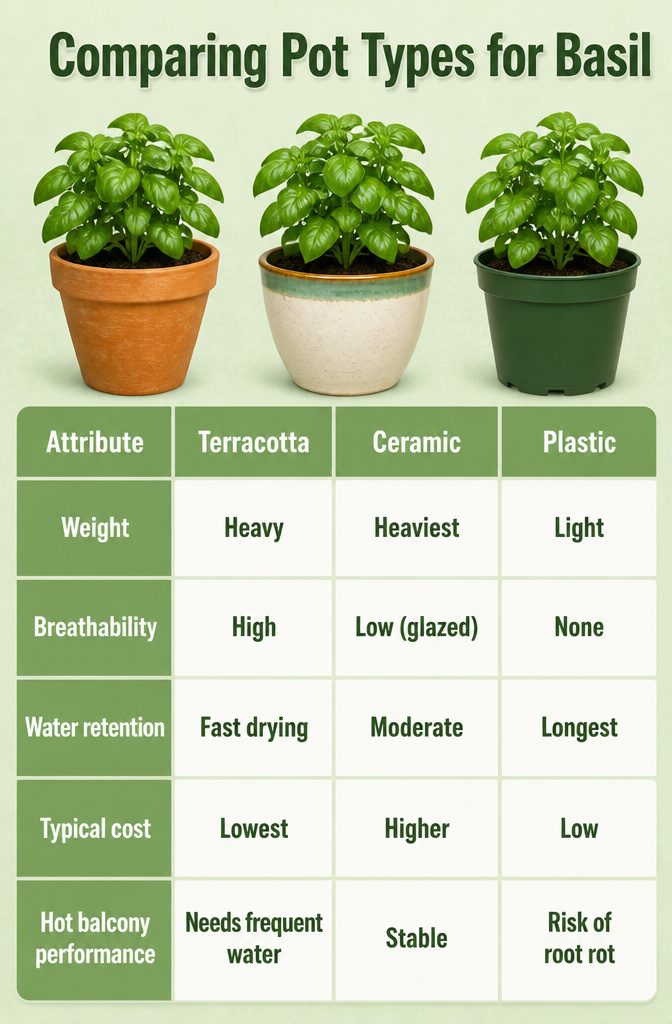
Terracotta, ceramic, and plastic each handle a hot apartment balcony differently, and the wrong choice turned my first basil attempt into a daily wilt watch.
Terracotta breathes.
Water escapes through the clay itself, which keeps roots from rotting but means the soil dries fast in summer sun. Ceramic glazed on the inside holds moisture longer, though the glaze traps that breathability.
Plastic holds water longest of all and weighs almost nothing, a real consideration if your balcony has a weight limit or you move pots to chase shade.
Cost runs the opposite direction. Terracotta is cheap enough to find at any garden center.
Ceramic costs more for the firing and glaze. Plastic is usually cheapest, though it cracks in UV after a couple seasons.
I buy terracotta now for basil, despite the extra watering. The breathability matters more than the convenience, and the weight keeps a full plant from tipping in wind.
The plastic pots I started with? I regret them.
They held too much water, the roots sat soggy, and I lost two plants to rot before I understood why. On a balcony that bakes past ninety degrees, that fast-drying terracotta is the control I wanted all along.
| Attribute | Terracotta | Ceramic | Plastic |
|---|---|---|---|
| Weight | Heavy | Heaviest | Light |
| Breathability | High | Low (glazed) | None |
| Water retention | Fast drying | Moderate | Longest |
| Typical cost | Lowest | Higher | Low |
| Hot balcony performance | Needs frequent water | Stable | Risk of root rot |
Soil and Compost Options
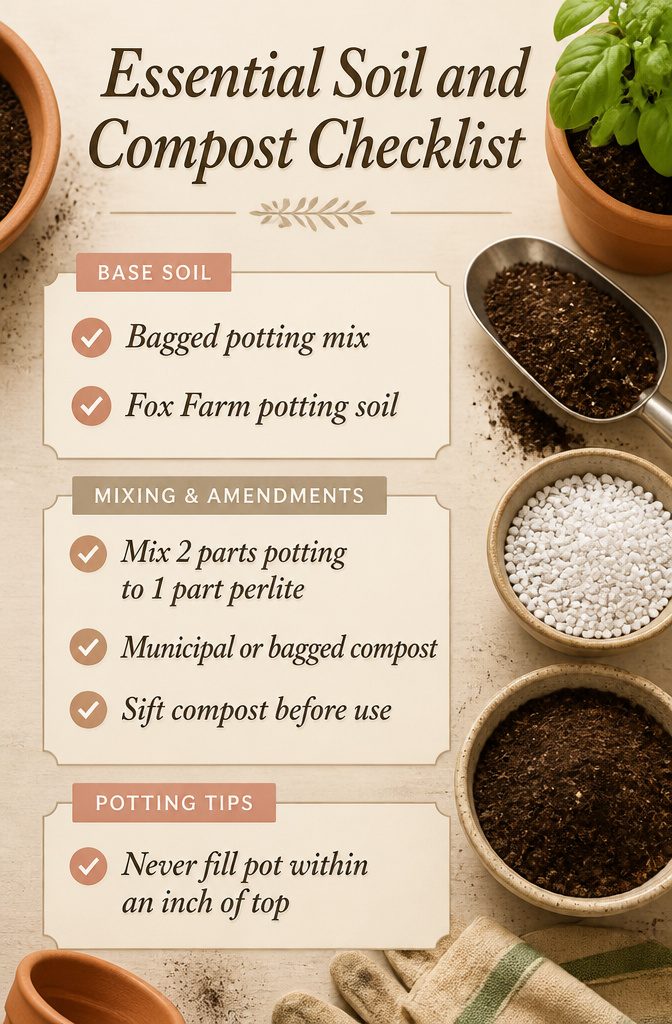
Bagged potting mix is the only base worth buying for basil in pots.
Garden soil from a yard or flowerbed turns heavy and waterlogged in a container, so I stopped using it after one soggy failure. The roots sat wet, and the seedlings yellowed within a week.
Here is what goes into my mix now:
- Fox Farm potting soil is the bagged brand I reach for. It drains well straight out of the bag and does not need amendment for a single basil plant in a 6-inch pot.
- For a 12-inch pot holding three plants, or any setup where I want faster drainage, I blend two parts potting mix to one part perlite. That white grit keeps the soil loose so water moves through instead of pooling.
- Compost comes two ways. The municipal pile is free and works fine, but it varies batch to batch. I sift it and mix in no more than a third of the total volume, or the basil leaf flavor softens and loses intensity. Bagged compost is more consistent and easier to store on a balcony, though you will pay more for that convenience.
- Never fill the pot more than an inch below the rim. Soil flush to the top washes out with every watering, and lower than that wastes growing space the roots could use.
Sweet Basil and Its Cousins
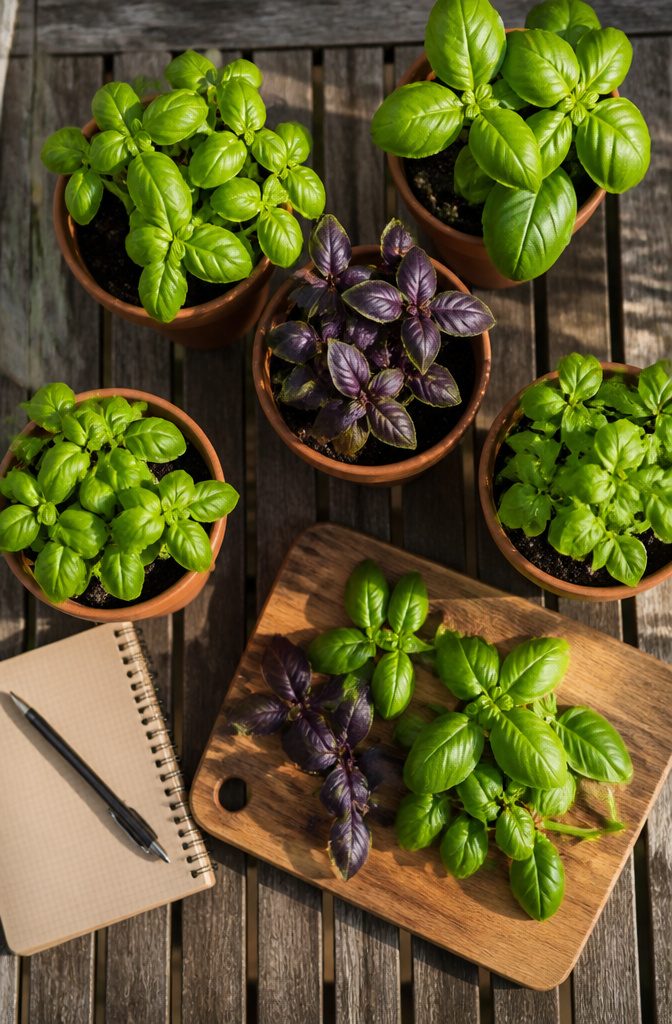
Most seed racks carry a dozen basils these days, but only a few earn space on my fire escape.
- Sweet basil is the workhorse I actually cook with. Traditional, mild, and the one sources mean when they say basil’s flavor improves with heat. I grow this in volume for sauces and for freezing in olive oil.
- Genovese is the Italian favorite for pesto and large-batch dishes. The leaves run extra-large, which speeds up prep when you’re stripping stems for a big blend.
- Greek Columnar grows upright like a small shrub, a "thriller" shape that fills a pot’s vertical space without flopping. The flavor is stronger than sweet basil, so I use it sparingly in finished dishes.
- Amethyst carries sweeter notes and dark purple foliage I planted once for curiosity. It reads ornamental on the deck; I reach for it in salads where the color shows.
- Pesto Perpetuo is sterile, so it never flowers and run to seed. The variegated leaves look sharp, and the lemon-anise flavor is milder, almost bright. Seed cost runs higher for specialty varieties like this one; I buy Genovese and sweet basil in bulk packets and treat the others as single-pot experiments.
Aphids, Mites and Whiteflies
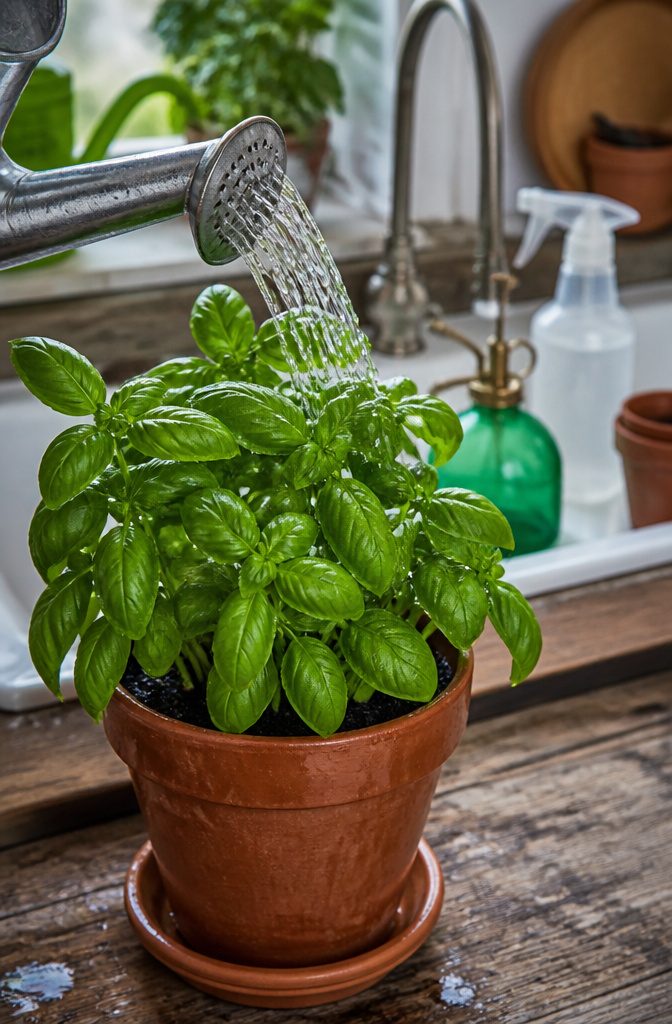
Aphids show up as pale green clusters on the new growth, spider mites leave a fine webbing between the leaf and stem, and whiteflies scatter in a tiny white cloud when you brush the plant.
Check the undersides of leaves every few days, because that is where all three like to hide before you notice the damage.
The rinse that actually works in a small space is a gentle stream of water from the kitchen faucet, not the garden hose. Hold the pot sideways, run lukewarm water over the foliage, and let it drain thoroughly.
Insecticidal soap is the backup for a heavy infestation, though on a single potted plant I usually skip straight to the sink method and repeat it twice a week.
Neem oil was what I tried and abandoned. It left a residue that collected dust, and in an apartment with limited airflow the smell lingered for days.
I also learned when to give up: once a plant is covered in webbing and the leaves have turned stippled bronze, the mites have won.
That basil goes in the trash, pot and all, rather than risking the herbs on either side of it.

🌱 Complete 5-Pack Seed Starting Kit: Includes 5 clear seedling trays with drainage holes, 5 sturdy clear base trays, 5 humidity domes with adjustable vents, and 10 plant labels for easy seed identification.
Frequently Asked Questions
What is the best way to water basil?
Water when the top inch of soil feels dry, which usually means every day or two in summer and several days to a week in winter.
Water until it runs from the bottom, then empty the saucer so the roots never sit in standing water.
Droopy leaves can mean either too much or too little water, so always check the soil rather than guessing from the foliage.
How do I keep my basil plant from flowering?
Cut the stem just above a leaf pair as soon as you spot a tight cone of buds at the tip, not just pinch the bud itself.
The plant will otherwise push out more flowers from the leaf joints. Regular cutting keeps growth bushy and productive; once a plant turns woody and keeps flowering despite pruning, start fresh with new cuttings.
Can I grow basil indoors?
Yes, basil grows fine indoors with 6 to 8 hours of direct sun from a south-facing window or a grow light hung 6 to 12 inches above the plant for 14 to 16 hours daily.
Keep temperatures above 50°F and use a pot with drainage holes filled with bagged potting mix, not garden soil.
Does basil grow better in pots or in the ground?
Basil grows well in pots, and containers offer control over soil quality, drainage, and placement that garden soil cannot match.
You can move potted basil to chase sunlight, bring it inside during cold snaps, and avoid the compacted, poorly draining conditions that rot container roots when garden soil is used.
How long will a potted basil plant last?
A potted basil plant stays productive for a single growing season before it turns woody and pushes toward flowering and seed.
Once regular pinching no longer keeps it bushy, root a few cuttings and start fresh rather than trying to revive a plant that has already shifted to reproduction.
Why is basil difficult to grow?
Basil is not especially difficult, but it sulks in cold soil below 50°F and rots fast when water sits against the roots.
The most common failures come from sealed-bottom pots, garden soil that packs hard in containers, and overwatering without checking whether the top inch has actually dried.
Does basil like deep or shallow pots?
Basil does best in pots 6 to 12 inches deep and 8 to 12 inches wide, which gives roots room without wasting soil on empty depth the plant will never fill.
What matters more than depth is drainage: holes in the bottom matter more than the pot’s appearance, because sealed containers trap water and rot roots no matter how carefully you water.