The 6 builds below run from a single morning with cinder blocks and eleven 2x4s to a full weekend with cedar, a miter saw, and chunky timber framing.
Which one fits comes down to whether you already own cushions or still need to buy them: the plans that leave cushion size open ask you to do the math yourself, and the rest tie their frames to standard pad sizes.
[link-whisper-related-posts]1. DIY Modular Outdoor Sectional Sofa
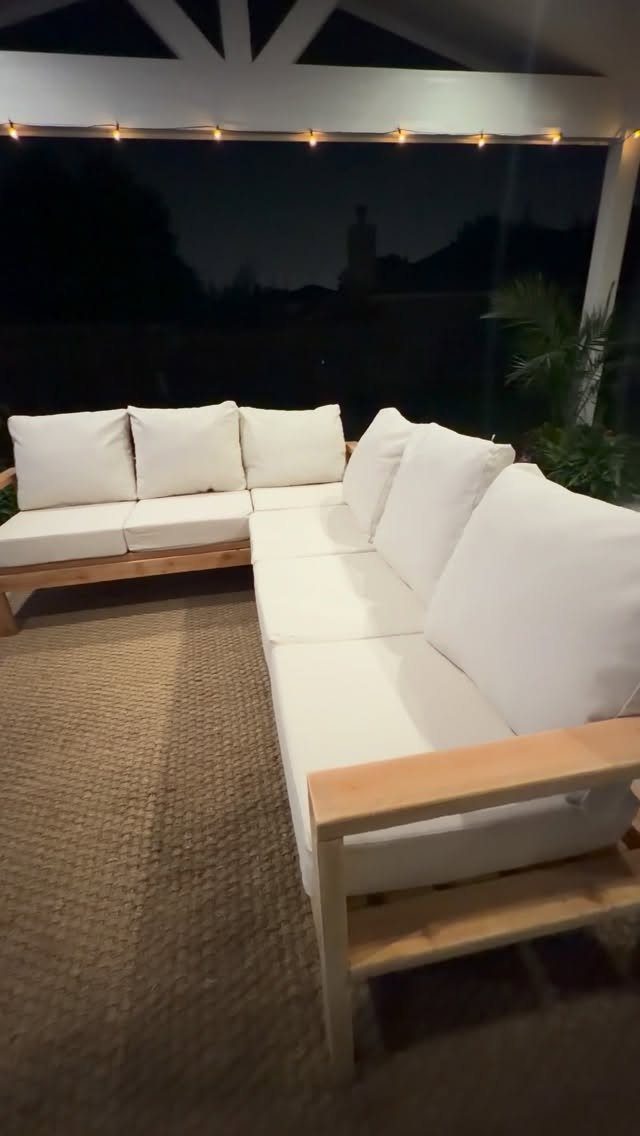
Three separate pieces, a corner chair and two one-armed sofas, lock into an L you can rearrange when the party changes shape. Each section fits standard 24 x 24 inch cushions, so replacement covers stay cheap and easy to find.
Light wood frames the whole thing, with horizontal slat boards along the sides that keep throw pillows from sliding through and give it some visual weight without extra lumber.
Build the corner piece with two open sides, then butt a two-seater and a three-seater against it. Mix the order, split them apart, or add another middle section later.
Full sun without a roof will ask more of your finish.

【Set Size】 Outdoor Deep Seat Patio Cushion Set includes 1 seat cushion measuring 24"W x 24"D x 4"T and 1 back cushion measuring 24"W x 20"H x 4"T (after full fluffing, allow 24hrs to expand). Measure your furniture’s SEATING AREA (not total width) before purchase. Our patio couch cushions suit outdoor chairs, sofas, and other deep chairs. Ideal decoration for garden, patio, balcony, beach, and other indoor and outdoor scenes

About Size: Kindly measure your seating area beforehand to prevent any issues due to size discrepancies. The accurate size is crucial for maximizing your comfort and the overall visual appeal. Each package contains 1 seat cushion (22” W x 24” D x 4” T) and 1 back cushion (23" W x 19" H).

All-Weather Protection for Everyday Outdoor Living: Built for real outdoor use, this patio chair cushion features water-resistant, tear-resistant fabric that stands up to light rain, sun, and daily wear. Ideal for porch, deck, garden, or backyard seating, it helps protect your outdoor furniture cushions so they stay looking great season after season
2. Patio DIY Outdoor Couch
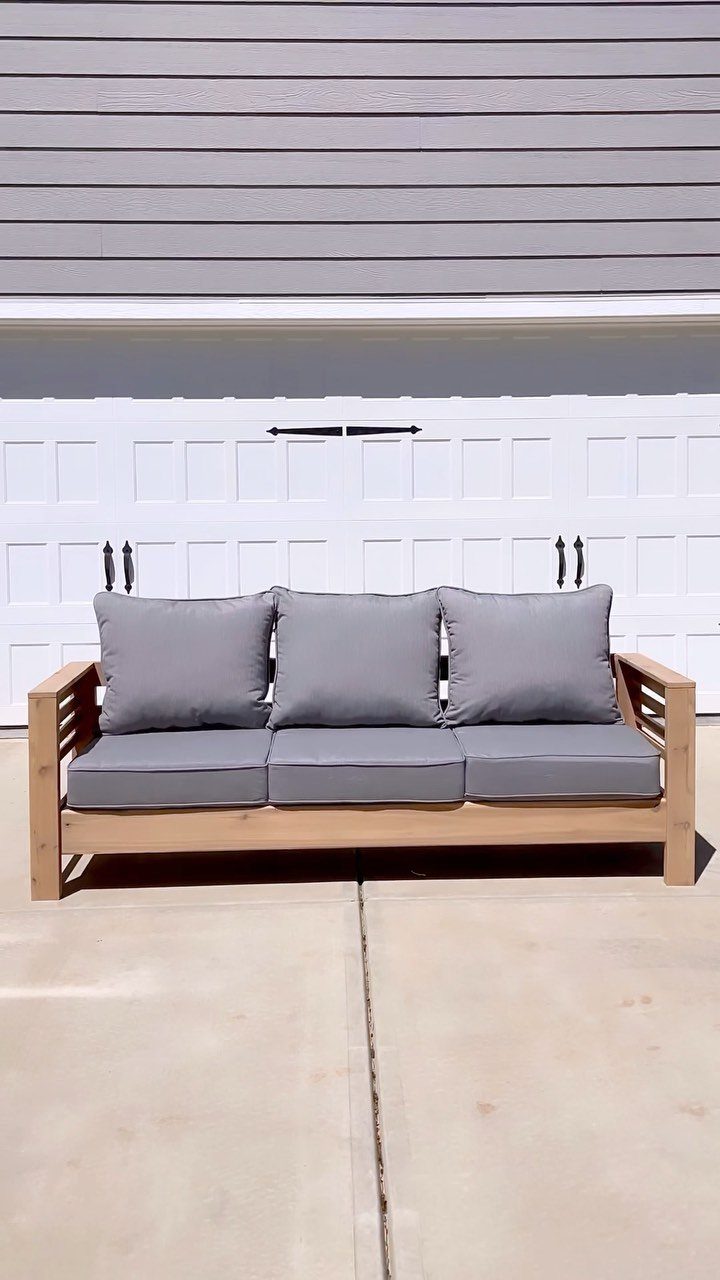
A plain three-seater frame on a concrete slab, gray cushions against white garage door. Nothing clever here, which is the point: this is the build for someone who wants a couch, not a weekend puzzle.
Pressure-treated lumber carries the load, and the cuts stay simple enough that a first-timer with a circular saw finishes in a day. The same bones work on a sunroom floor or a paver patio with shims to level the legs.
No cushion size is pinned to the plan, so measure what you have or what you can afford before you cut.
That freedom cuts both ways: you will need to do the math yourself, or build the frame to match a cushion set after you find it on sale.

6PC Modular L Shaped Sectional – This modular outdoor sectional sofa includes 2 single chairs with built in side tables, 2 single chairs, 1 corner seat, and 1 coffee table. Arrange as an L shaped outdoor sectional, l shaped patio furniture, or sectional patio furniture–flexible layouts for garden, backyard, deck, balcony, sunroom, or poolside. A true outdoor sectional furniture set.

Oversized Soft Seating: This item is shipped in 3 boxes and may not be delivered at the same time. ComfCove oversized patio furniture is designed for true comfort, with each seat offering a generous 24.5-inch width and 27.5-inch depth—that’s wider and deeper than most standard outdoor patio sofa sets. Plus, the tall 30.8-inch high backrest supports you from shoulders to lower back, so you can truly lean back and unwind

Natural Elegance With Lasting Strength: Featuring an advanced heat-transfer wood-grain finish, the sturdy iron frame of this patio furniture mimics the soulful texture of natural timber. This premium craft delivers the rustic beauty of wood with the rust-resistant endurance of metal outdoor furniture. Enjoy rock-solid, touch-friendly stability by the pool or under the sun—highly resistant to splitting, fading, and rust, with absolutely no seasonal oiling required.
3. Simple Modern Inspired Outdoor Couch
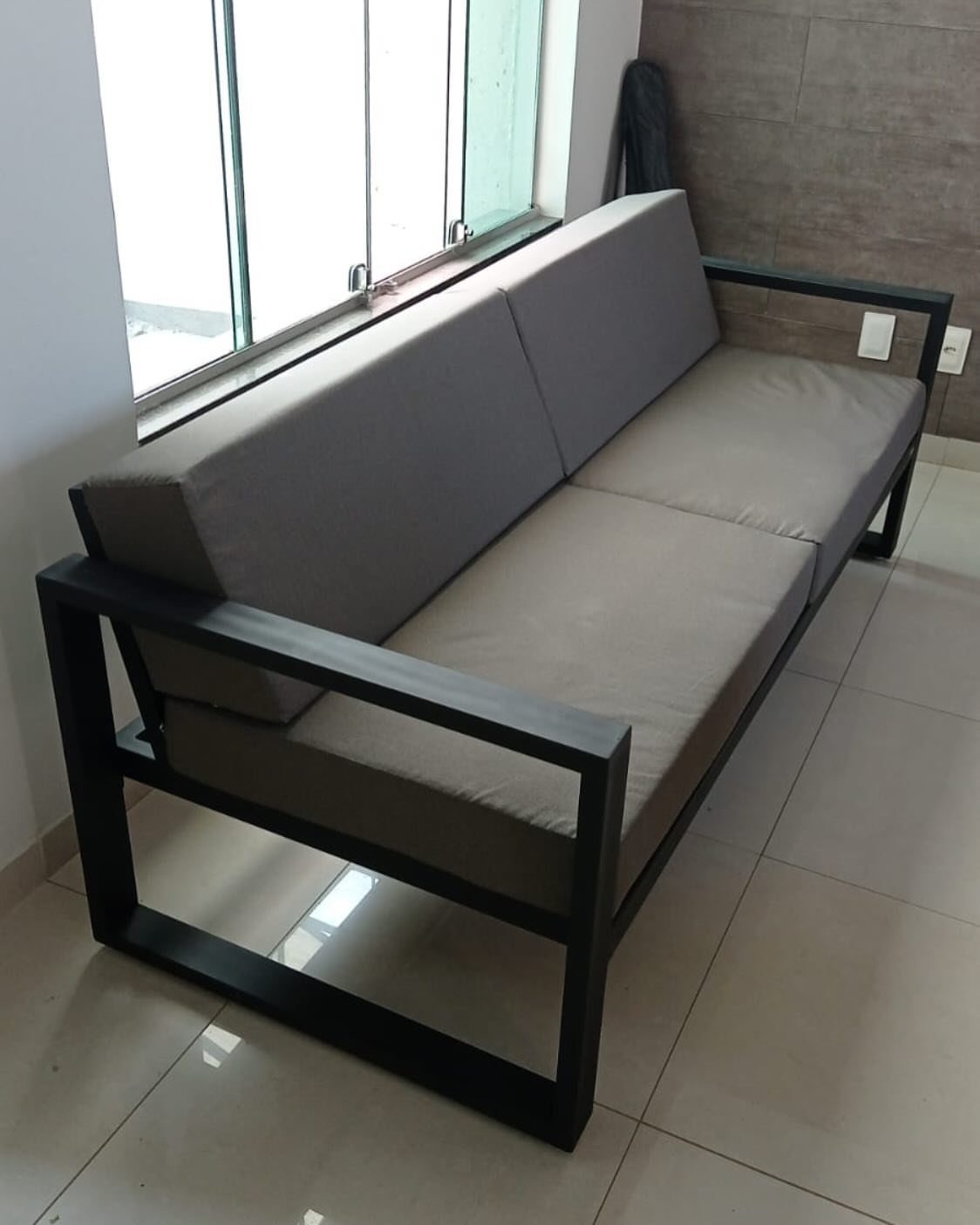
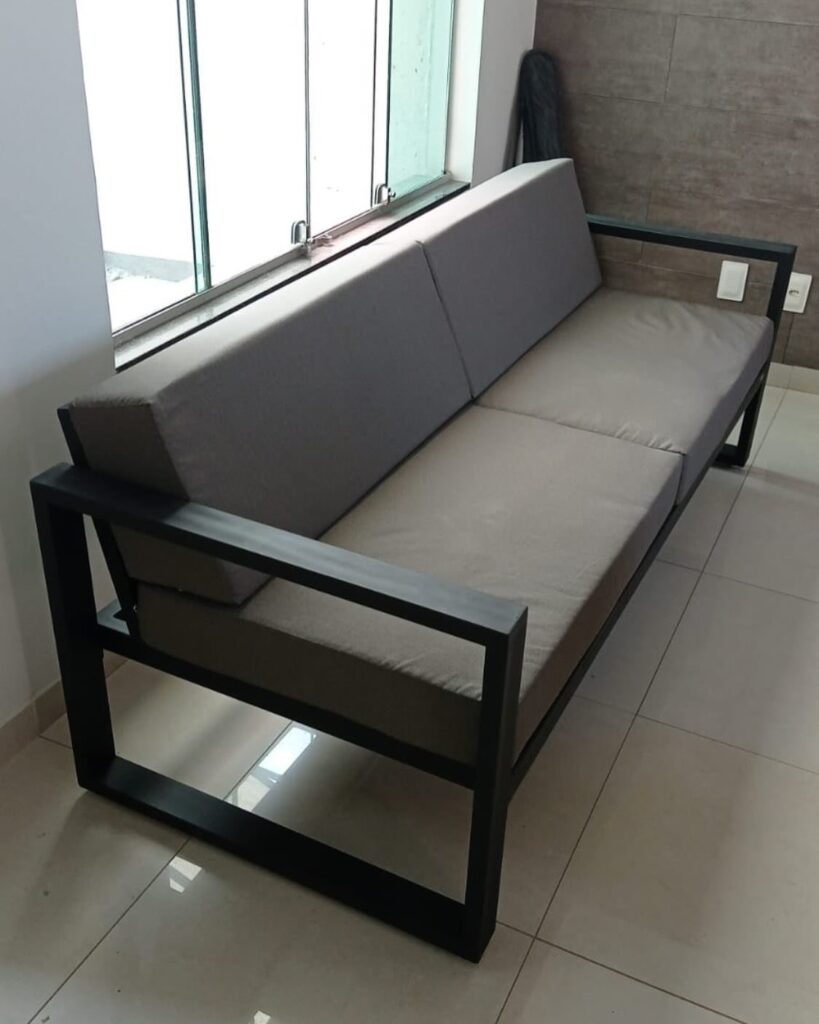
Black metal frame, gray cushions, clean lines against a sliding glass door. The modern look comes from IKEA cushions paired with a black metal frame you can spray-paint if the finish starts to wear.
The cut list is specific: 2 x 3s at 24 1/2, 30 1/4, 57 1/2 and 27 1/4 inches, plus an alternate list for 24 x 24 or 28 x 28 inch cushions if the IKEA set you want is out of stock.
A miter saw handles every cut; no angles beyond a simple corner joint.
The metal legs and tight frame read more balcony or screened porch than open yard. For full exposure, swap the indoor cushions for outdoor-rated foam and touch up the frame paint where it scratches.
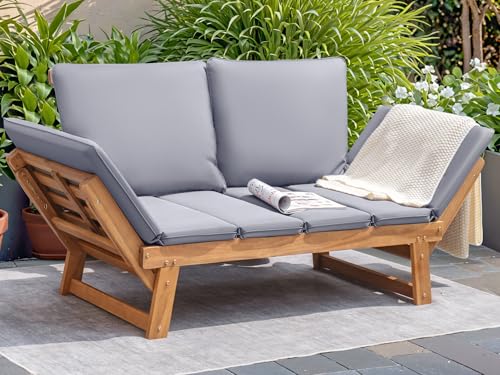
Utilize Your Outdoor Area: Devoko outdoor couch can easily meet your needs to spend leisure time in your patio, porch, balcony, poolside and other outdoor space with a comfortable sitting or lying experience. Protect your sofa-simply bring it inside when severe weather approaches.
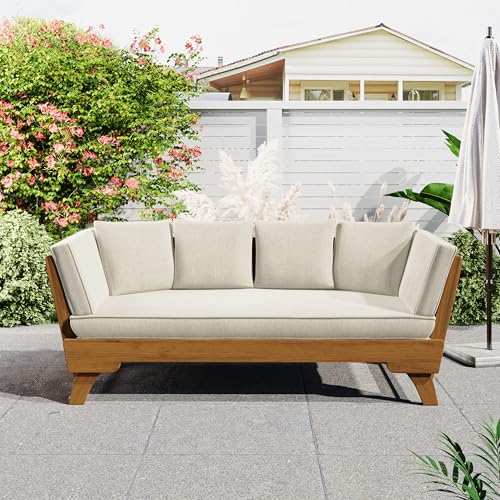
Convertible Outdoor Daybed Sofa Design: Tailor this outdoor sofa to your preference with independently adjustable armrests that allow you to switch between a loveseat, chaise lounge, or daybed effortlessly. Whether you're sitting, lounging, or napping, this outdoor furniture adapts to your comfort needs with ease

Convertible Outdoor Daybed Sofa Design: Tailor this outdoor sofa to your preference with independently adjustable armrests that allow you to switch between a loveseat, chaise lounge, or daybed effortlessly. Whether you're sitting, lounging, or napping, this outdoor furniture adapts to your comfort needs with ease
4. Cinder Block Outdoor Sofa
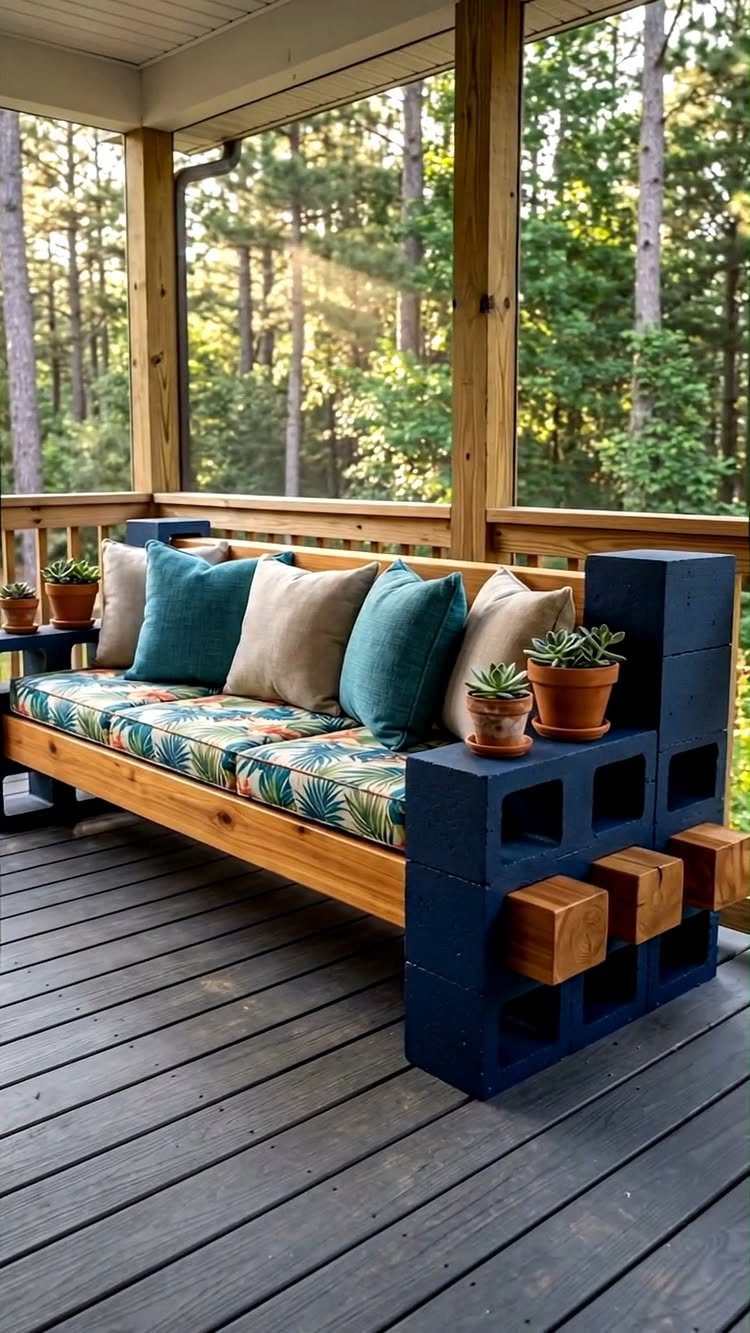
Blue-painted cinder blocks stacked two high, wooden beams dropped into the cores, floral cushions on top.
The blocks are the legs, the beams are the frame, and the whole thing comes apart with a helper and a truck for the fall.
Eleven 2 x 4s, deck screws, stain, and cushions: that is the list.
3 cut lengths only, so a borrowed miter saw and a free morning get you to seating. Raw concrete weathers to its own finish, or you can match the blocks to your deck stain instead of painting.
The gap between beams will flex if you span too far without a middle block column.
A pair of cinder block stacks at each end works for a compact two-seater; add a center stack for a longer couch or heavier use.

【Universal Fit】This waterproof patio sofa cover fits standard 2-seater outdoor wicker, teak, and metal sofas (up to 60"W x 35"D x 35"H). For the best fit, measure your sofa and choose a cover 1-3 inches larger. Garden patio furniture covers all seasons

Oversized Comfort: Experience unparalleled relaxation with our generously proportioned sofa. Its expansive seating area provides ample space for you and your guests to stretch out and unwind, making it ideal for entertaining or solo lounging

UNWAVERING FRAME STRENGTH: The solid aluminum frame has high strength, can withstand greater weight and pressure, and is not easily deformed or damaged. The surface of the chair frame is treated with powder coating to ensure that the color is as durable as new and provides effective rust protection.
5. Chunky Timber Outdoor Sofa
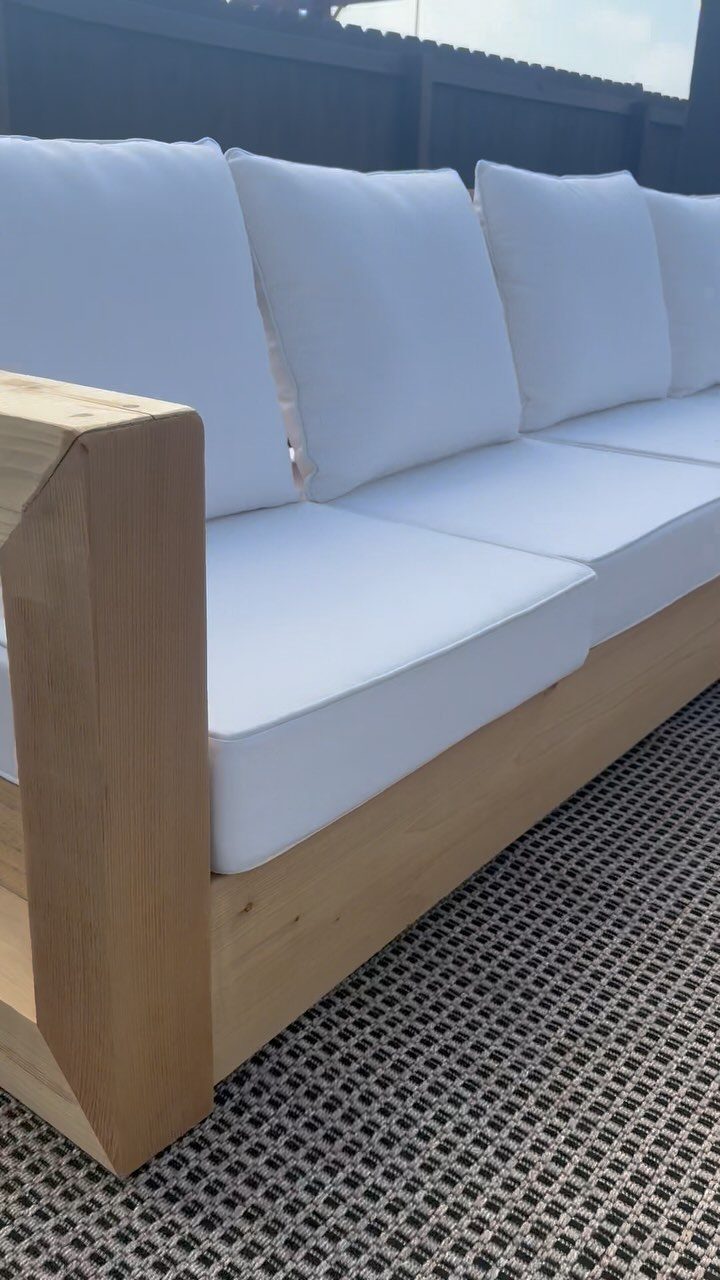
Thick timber, wide armrests you could set a drink on, six feet between them for stretching out. The chunky frame reads handmade in a way thin lumber never manages, and the deep seat cushions sink in like a real sofa.
Light, almost raw wood and white cushions keep the whole thing from looking heavy.
Plain white cushions from a big-box store work fine; the deep seat means standard outdoor pads will look skimpy, so size up or layer two. Budget for the cushions first, they will cost more than the lumber.
An X-brace or extra slats on the arms would stiffen the frame later, but the plain version stands up as is.
This one wants a level surface; the weight helps it stay put, but racking on uneven ground will stress the joints over time.

Utilize Your Outdoor Area: Devoko Outdoor Sectional Couch is designed to fit your outdoor area, whether you want to create a comfortable leisure area on your patio, deck, or garden. Its flexible modular design allows you to arrange the pieces to suit your space and style.

【Solid Acacia Wood Frame with Teak Finish】Crafted from durable acacia wood, this outdoor daybed features a rich teak finish that enhances natural texture while providing strong structural support. The sturdy frame supports up to 600 lbs, making it a reliable patio sofa, outdoor couch, or backyard furniture centerpiece for daily outdoor lounging.

PATIO SEATING FOR TWO: Classic wicker loveseat design for everyday entertaining or relaxing; fits smaller outdoor spaces
6. Cedar Plank Outdoor Sofa with Ottoman
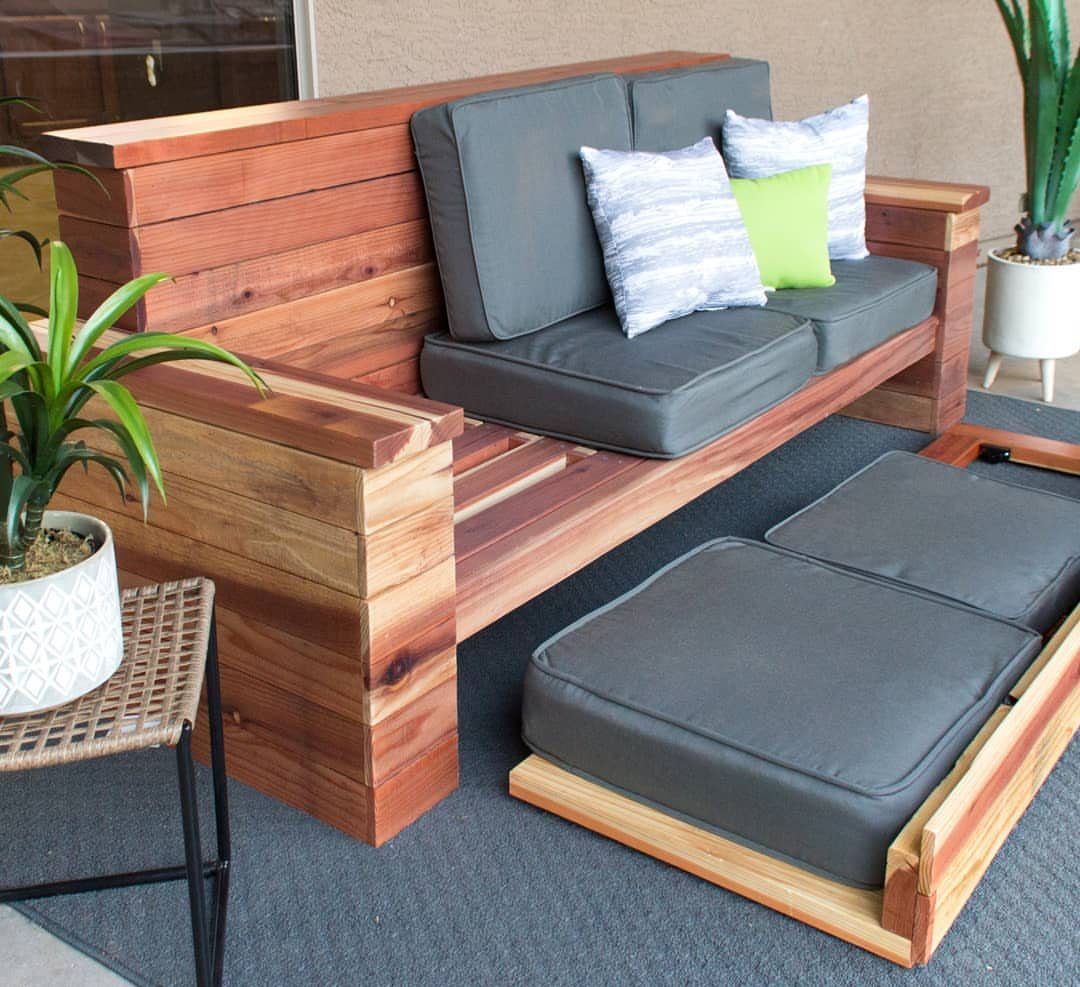
Cedar planks, dark gray cushions, a wooden ottoman that slides out or stays attached depending on how you build it.
Fence boards sit on top with a spacer block for even gaps, the kind you can cut from scrap and clamp in place as you go. Nails or screws; screws split the thin cedar less if you pre-drill.
Build it as a separate piece on casters, or fix it in place and gain storage space underneath.
Cedar pickets are cheap but thin; this is a weekend build for a covered patio, not a piece you leave out in driving rain without maintenance.

Outdoor Seat Cushion Covers Replacement Set Size: Deep seat cushion cover x 2pcs: 24”L x 24”W x 4”H, backrest cushion pillow cover x 2pcs: 24”L x 22”W x 4”H. COVER ONLY
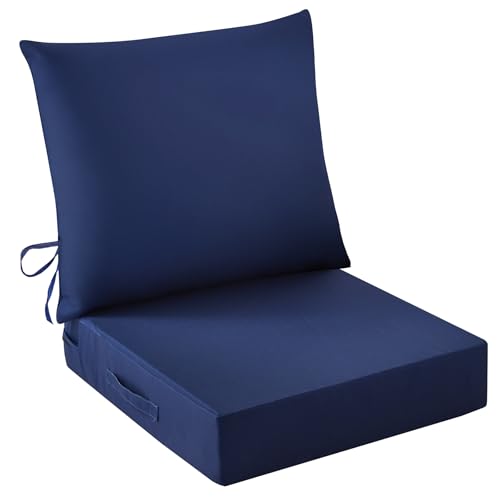
Set Size - Our Patio Furniture Cushions Set includes 1 seat cushion measuring 24"W x 24"D x 5.75"T and 1 back cushion measuring 25"W x 22.5"H.(Please measure the dimensions of your patio chair to ensure proper fit). Designed for relaxation, our patio cushions for outdoor furniture are crafted with 30D high-density foam to deliver exceptional, sag-resistant support. Perfect for patio chairs, garden benches, camping, or even indoor use.

Premium Dual-Layer Comfort: The back cushion features an innovative layered design, combining memory foam for exceptional softness with high-density foam for reliable support. Meanwhile, the seat cushion is crafted from durable high-density foam to deliver long-lasting comfort and structure.
Choosing the Right Wood
Cedar, redwood, and teak will outlast the weather on their own, but the bill for a single sofa in those woods can run past what most weekend builders want to spend.
Pressure-treated wood drops that cost down sharply and still holds up in full sun and rain. The weight and the treatment itself turn some builders away; they would rather not handle the chemicals.
I have built with both.
Cedar smells better and machines cleaner, but the price gap is real. Untreated pine only belongs under a solid roof; outside, it will swell and check within a season or two no matter how thick the paint.
Whatever you choose, match the hardware to the exposure.
Exterior screws, exterior glue, exterior finish. The wood is only part of the system.

🛋️【Universal Compatibility & Adjustable Design】 Our sectional couch connectors are designed to fit most rattan and wicker furniture, making them perfect for patio configurations. These connectors adjust up to 2.36 inches to accommodate various furniture thicknesses. Please measure your sofa frame before purchasing to ensure proper fit.

Extra-Large Modular Design: This 9-piece set includes 4 corner chairs, 2 armless chairs, 2 ottomans, and 1 coffee table. Arrange into expansive U-shapes, long sectionals, or multiple separate seats to fit your patio, backyard, or poolside gatherings

【5-in-1 Convertible Design】Flexible modular setup with detachable armrests converts into bistro, loveseat, 3-seat bench or full sofa set. Backrest adjusts multiple angles under chaise lounge mode for sunbathing, ideal for balcony, patio and poolside.
Cushion Considerations
Order your cushions before you cut a single board.
The common stock sizes are 24 x 24 inches and 28 x 28 inches, and most published cut lists assume one of those two.
If you are adapting a plan, the math is simple enough: three cushions wide means three times the cushion width for the overall frame, plus an inch and a half for the seat boards, plus whatever the arms add.
Ana White’s 24 x 24 list calls for 72 inch front and back rails, which is 24 x 3. For 28 inch cushions, that same rail becomes cushion width times three.
Cushions go out of stock without warning, especially the odd sizes. Lock them in, measure them yourself when they arrive, then head to the lumber yard.

Adaptable Layout, Ready for Any Moment: This versatile outdoor sofa offers three distinct configurations, allowing you to effortlessly switch from a cozy seating area to an outdoor daybed, inviting you to unwind for a nap in the gentle breeze.

Sturdy & Durable Structure: This patio daybed is made of 100% natural acacia wood, which is solid and weather-resistant. Coming with the stable wood construction and durable polyester materials, this daybed has satisfying bearing capacity and wonderful durability for long-lasting use. Smooth zippers are included on the cover of 2 pillows for easily removing.

[Craft Meets Tech] Crafted with premium PE wicker featuring Stereoscopic Dent Reinforcement (SDR) technology on both edges, this outdoor furniture set combines traditional weaving craftsmanship with modern structural innovation. The reinforced wicker edges enhance durability and stability, helping maintain its elegant appearance through years of outdoor use
Finishing Techniques
Leave the screw holes open until after staining. Wood filler drinks color differently than the surrounding grain and will telegraph through as spots.
Sand with the grain, vacuum off the dust with a soft brush, then wipe with a damp cloth and let it dry.
Apply stain with a foam pad, wipe the excess with a shop towel, and build layers to the depth you want. Plug the holes with color-matched filler only after that, and only if you care about the look.
For protection, a water-based spar urethane in semi-gloss will do the job.
Plan on four coats, not one or two. Sand between passes with 300 grit or higher; the surface should feel silky, not tacky, before the next coat goes on.
Water stops beading, it is time to recoat. That is your maintenance signal.

Oversized Comfort: Experience unparalleled relaxation with our generously proportioned sofa. Its expansive seating area provides ample space for you and your guests to stretch out and unwind, making it ideal for entertaining or solo lounging

Outdoor Modern Furniture - Sleek Iron Frame & Minimalist Design: The black metal sofa upgrade your patio’s aesthetic instantly. The angular powder-coated iron frame and neutral grey cushions blend seamlessly with contemporary fire pit tables, string lights, or urban balcony gardens.

Oversized Comfort: Experience unparalleled relaxation with our generously proportioned sofa. Its expansive seating area provides ample space for you and your guests to stretch out and unwind, making it ideal for entertaining or solo lounging
Cost Efficiency
The gap between store-bought and homemade is widest at the bottom of the market. A basic cedar outdoor sofa from a retailer costs far more than the lumber; one builder paid about $330 for cedar in mid-2024.
Your time is not free, but a Saturday with a circular saw and a drill is cheaper than the markup on assembled furniture.
The real savings come from skipping the parts you do not need. No ottoman, no sectional wedge, no built-in storage unless you want it.
Budget for the cushions first. Cushions will outspend the lumber on almost every build, and a frame cut to fit pads you already own is a frame you do not have to buy twice.

Utilize Your Outdoor Area: Devoko outdoor couch can easily meet your needs to spend leisure time in your patio, porch, balcony, poolside and other outdoor space with a comfortable sitting or lying experience. Protect your sofa-simply bring it inside when severe weather approaches.

All-Weather Rust-Proof Aluminum Frame for Long-Lasting Outdoor Use- Built with 100% thick-gauge pure aluminum and treated with an anodized and powder-coated finish, this outdoor patio furniture stands up to sun, rain, and coastal air without a spot of rust or fading. This all-weather outdoor sofa is designed for zero maintenance—it looks as good in year three as it does on day one, and it’s perfect for all outdoor environments. It’s the rust-proof patio sofa you can rely on for years of outdoor enjoyment.

All-Weather Aluminum: Patio sofa built thick-gauge pure aluminum and treated with an anodized and powder-coated finish, this outdoor patio furniture withstands sun, rain, and coastal air while effectively resisting rust and fading. This all-weather outdoor sofa is designed for hassle-free upkeep — it retains its polished appearance through years of regular use, and fits seamlessly into all outdoor environments. It’s the rust-proof outside couch you can count on for long-term outdoor enjoyment
Frequently Asked Questions
How can I make an easy DIY outdoor couch?
Eleven 2 x 4s, deck screws, stain, and cushions will get you there with only three cut lengths to remember.
A borrowed miter saw and one free morning are enough if you keep the design plain. Cinder blocks stacked for legs, beams dropped straight into the cores, no joinery needed at all.
Is it cheaper to build your own patio furniture?
Yes, and the savings are biggest on the cheapest ready-made pieces.
One builder spent about $330 on cedar in mid-2024 for a sofa that would cost far more assembled. Your Saturday with a saw is cheaper than retail markup, and you skip the ottoman or storage you never wanted.