These 7 tomato planter ideas run from free reclaimed materials to a single purchased structure, and the right choice depends on whether you need to use vertical space, hanging space, or ground space.
A five-gallon bucket flipped upside down with basil on top and tomatoes trailing below takes no more room than a folding chair, while a wooden raised bed with marigolds planted alongside asks for a few feet of patio or yard and a back that prefers not to bend.
[link-whisper-related-posts]1. 5 Gallon Buckets
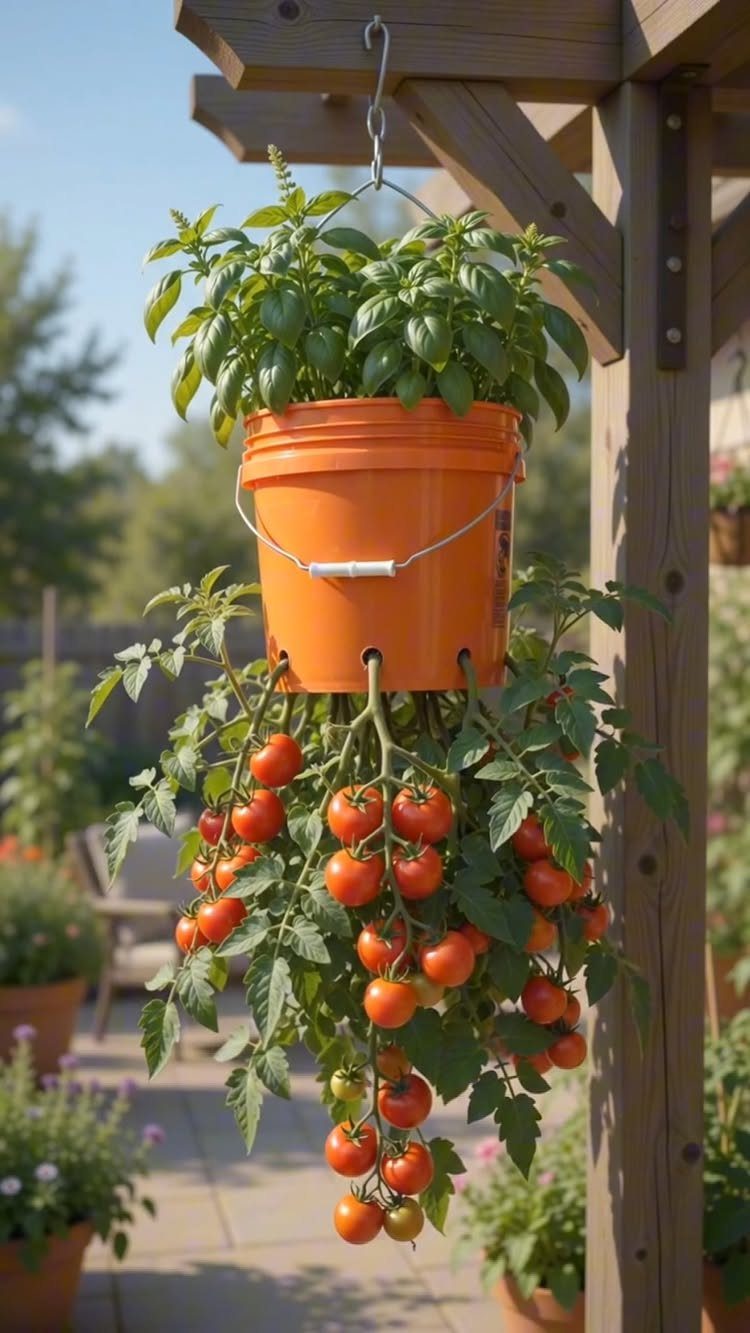
Five-gallon buckets hang from a wooden pergola with basil planted on top and tomatoes growing out through holes in the bottom.
The setup flips the usual arrangement: roots reach down, vines trail below, and the whole thing takes about as much ground space as a folding chair.
Larger indeterminate tomatoes do fine in these buckets if you stay on top of watering. The small soil volume dries fast in summer heat, and nutrients wash through quicker than in a raised bed.
A single cord tied high above the plant, pulled taut and wrapped around the stem as it grows, keeps everything from tangling.
This suits anyone with a post, beam, or sturdy hook overhead. Cost runs near zero if you already have the bucket.
2. Vertical PVC Pipe Garden
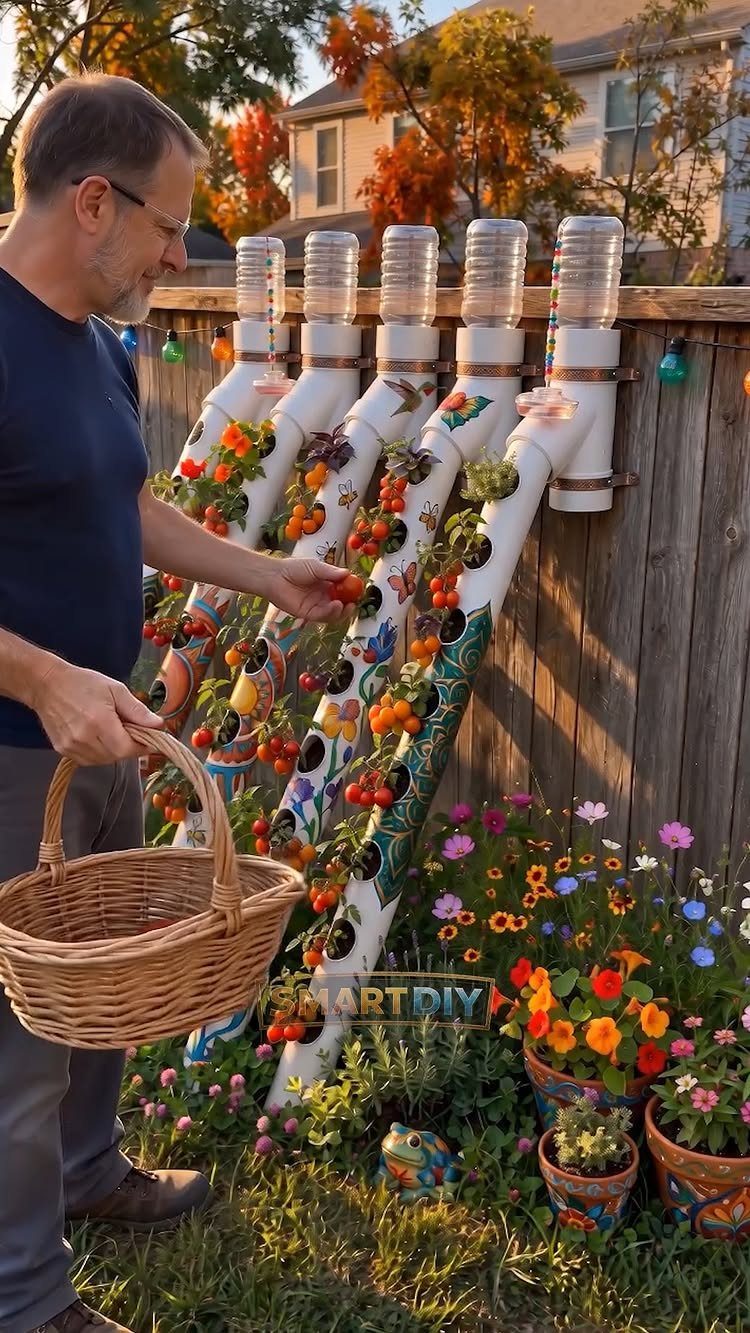
A man harvests cherry tomatoes from vertical PVC pipes mounted on a wooden fence, the plants growing from holes drilled along the length of each pipe.
The design turns a wall or fence into twelve to eighteen plants in the footprint of a small patio.
I would cut standard PVC into sections first, then drill planting holes evenly spaced so each plant catches sun without shading its neighbor.
A sturdy base matters more than the pipe color, though paint can match your outdoor aesthetic if you want.
Soil in pipes dries faster than in ground beds, so water carefully and check often. The vertical arrangement moves air between plants, which helps keep foliage diseases down.
This is for the gardener who has run out of horizontal space but still has wall.
3. Hanging Planters
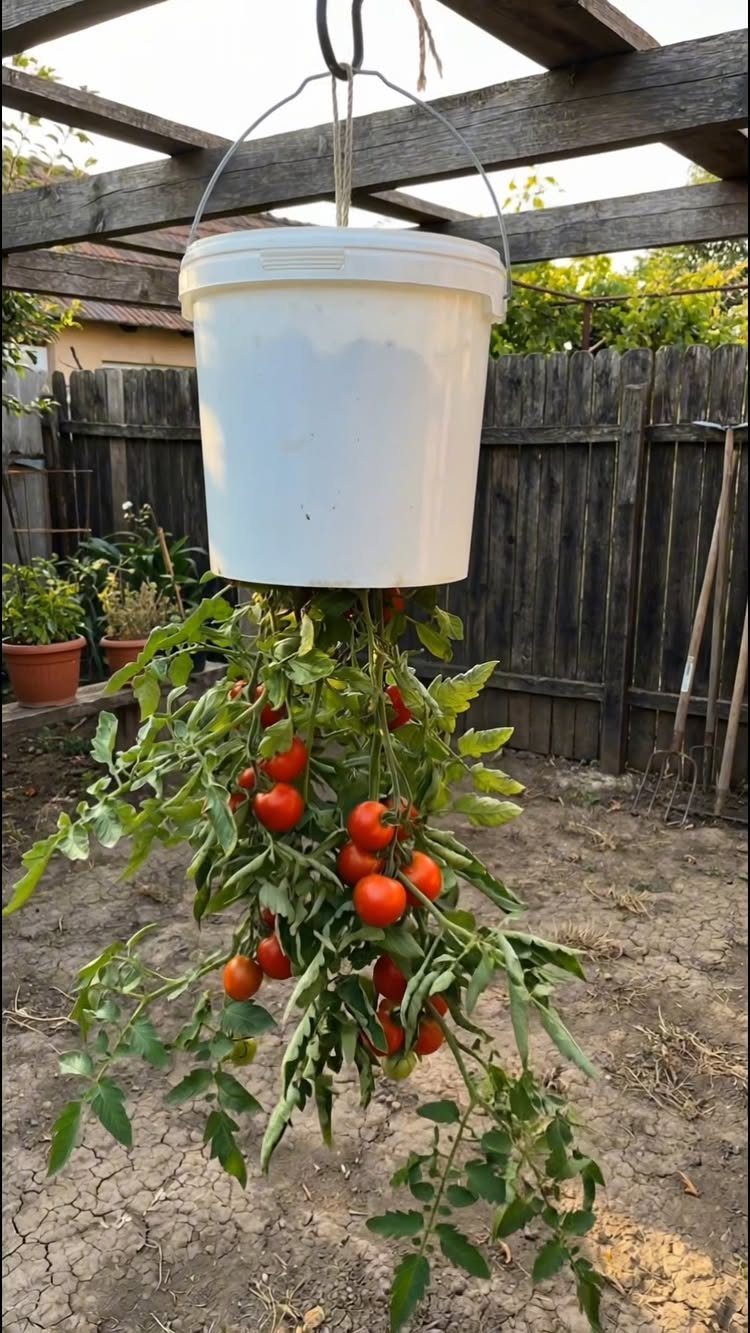
White plastic buckets hang upside-down from a wooden beam, tomato plants growing through holes in the bottom with fruit suspended in open air.
The method keeps fruit off dirt and away from some pests, though I have found it trades one problem for another.
Fabric or plastic pots work for this, but drainage holes matter more here than in any other setup; waterlogged roots rot fast when excess water has nowhere to go.
Compact determinate varieties handle the confined root space better than sprawling indeterminates.
I would rotate these weekly for even sun, and I would hang them where a failing hook does not drop a heavy pot of wet soil onto anything I cared about.
Best for a balcony rail or beam with solid hardware already in place.
4. DIY Planters from Reclaimed Materials
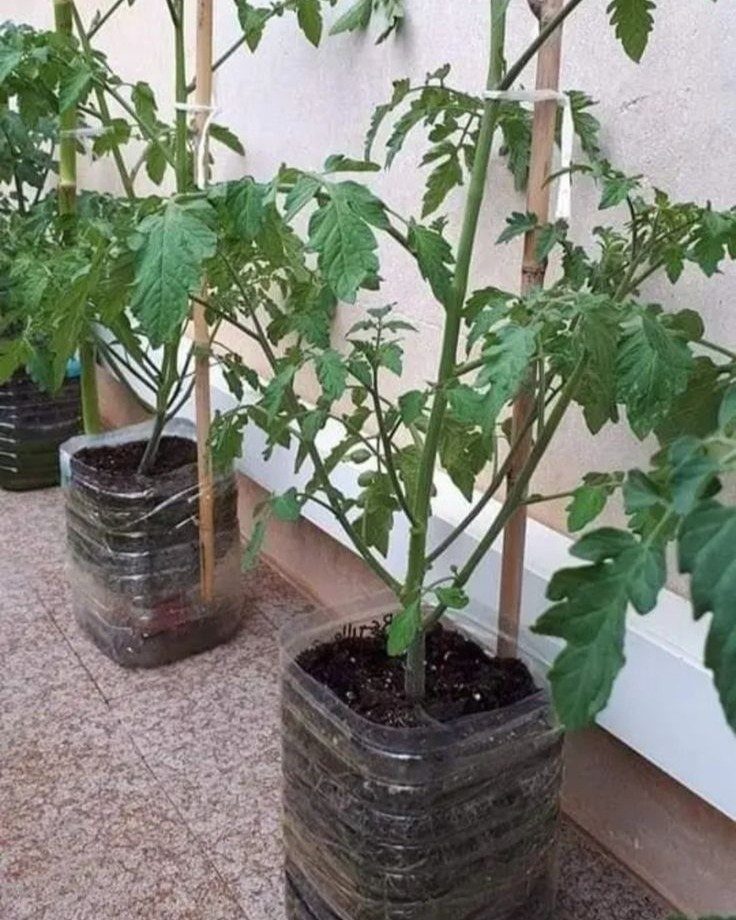
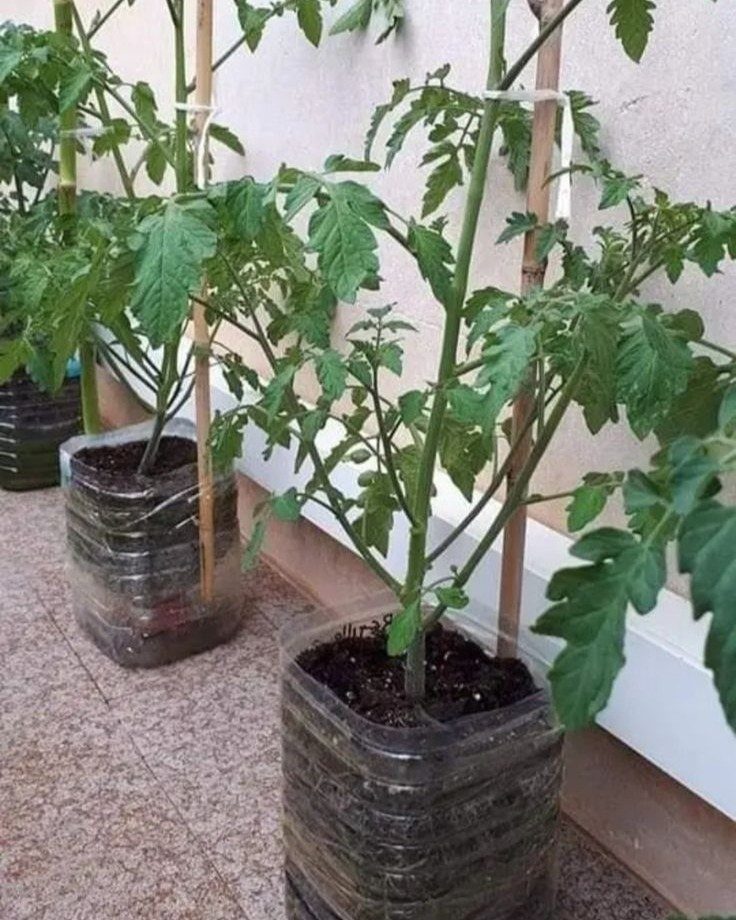
Clear plastic water jugs, cut open and filled with soil, line a tiled patio wall with tomato seedlings staked by bamboo canes.
The containers cost nothing if you already drink the water, and the transparency lets you see root health and moisture levels without guessing.
I like that this turns a material headed for recycling into something that outlasts a single season if you store it out of sun in winter. Bamboo canes stake the seedlings against wind.
Any reclaimed vessel works: detergent bottles, storage bins, food buckets. The character comes from the mismatch, not from trying to make them match.
This is for the gardener who would rather spend nothing and have it look like they spent nothing.
5. Trellis Planters
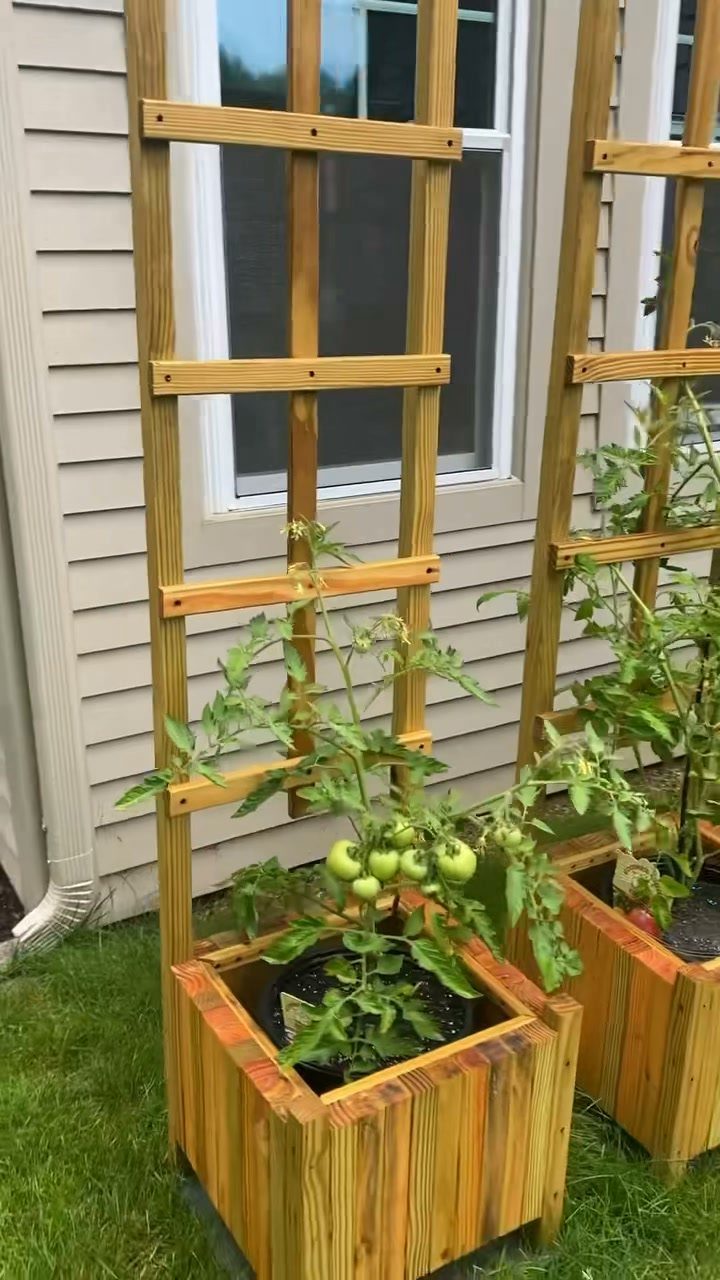
Wooden planter boxes sit paired with tall attached trellises, the kind of setup that lets a tomato vine climb high without ever needing a separate cage.
I would build or buy these with the trellis integral to the box, not bolted on later; the joint takes stress all season and wobbles annoy if it is an afterthought. Vine tomatoes love this.
Determinate bush types do not need the height and look sparse against all that vertical structure. A 44-inch frame handles most varieties, though I have seen 58-inch versions for aggressive climbers.
This suits the gardener who wants one purchase that handles both container and support.
6. Burlap Lined Crate Planters
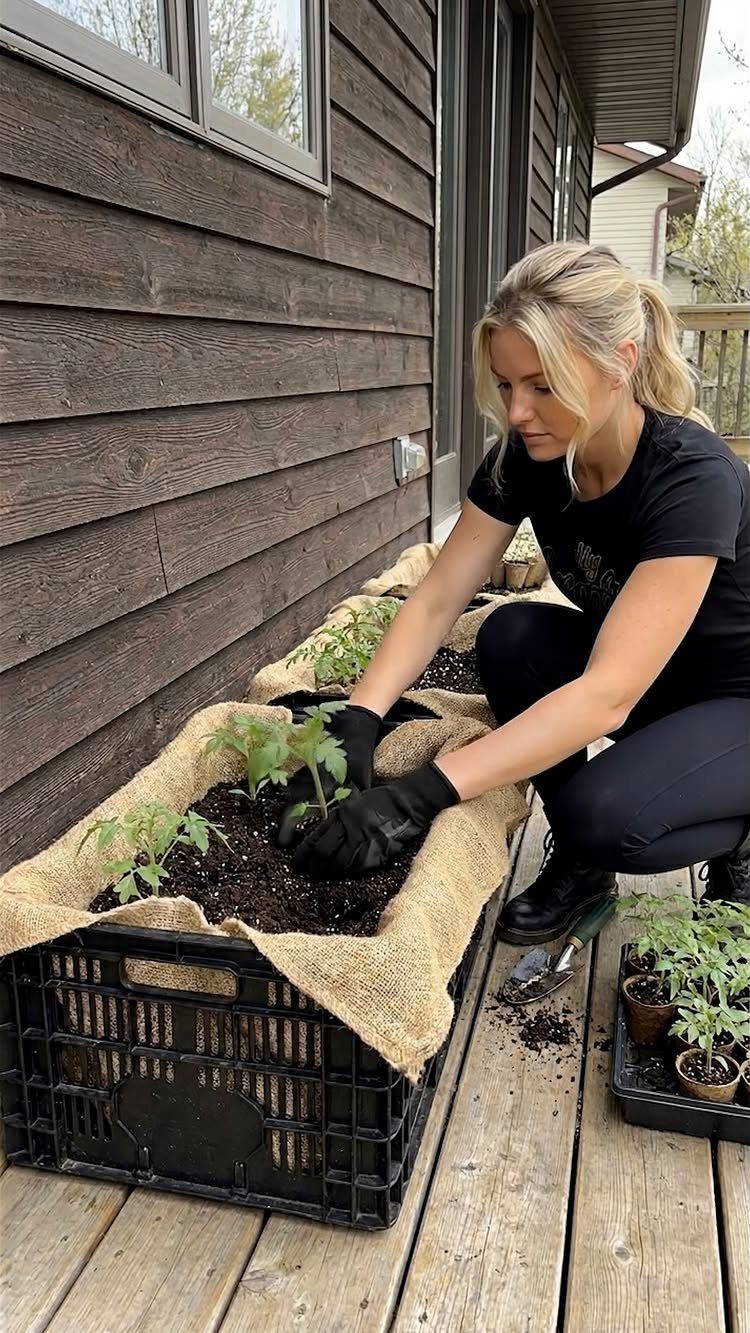
A woman kneels on a wooden porch, planting seedlings into black plastic crates lined with burlap and filled with soil.
The burlap holds the dirt in place while letting water drain, and the crate structure keeps the whole thing rigid enough to move.
I would line with landscape fabric instead of burlap if I wanted the setup to last more than a season or two; burlap breaks down, which is fine for a single summer but means rebuilding next year.
The crates stack for storage and group into a mini garden if you have several.
Black plastic absorbs heat, so soil dries faster and roots warm earlier; in a cold spring this helps, in a hot July it needs more frequent watering.
This is for the gardener who wants portable, replaceable, and does not mind rebuilding.
7. Wooden Raised Garden Bed
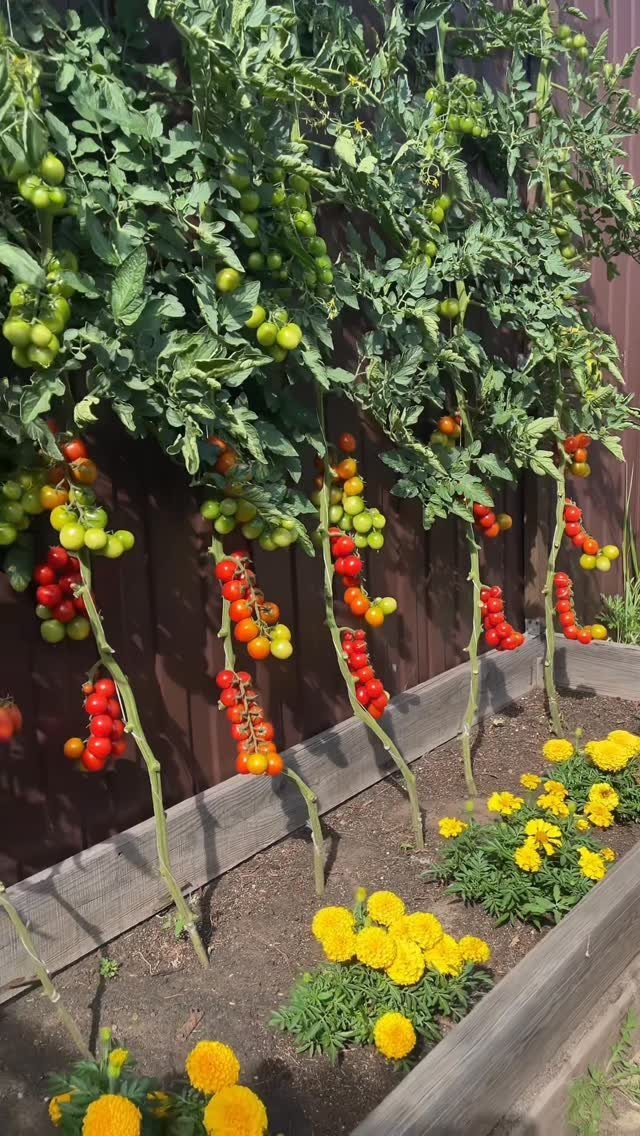
Tomato vines heavy with ripe and green cherry tomatoes grow vertically in a rectangular wooden raised bed alongside blooming yellow marigolds against a brown fence.
The pairing is not decorative accident: marigolds draw pollinators and some pest species away from the tomatoes, and the raised bed warms soil faster than ground level in spring.
Cherry tomatoes root shallow enough that a raised bed does not need to be deep; slicing varieties need more room to spread.
Cedar or redwood lasts longest against wet soil; pine works if I line it or accept that I will be rebuilding it sooner.
The wood frame contains soil quality and drainage in a way in-ground planting does not, and the height saves my back during harvest.
This is for the gardener with a few feet of patio or yard who wants one structure to last.

ADJUSTABLE SIZE:This tomato cage can be seamlessly adjusted to reinforce existing plant supports or extend vertical growing space for your plants. From delicate seedling stage to full harvest season, this plant support cage fully meets the needs of healthy and upright growth for your plants
Frequently Asked Questions
What type of planter is best for tomatoes?
The best planter depends on your space and habits. Fabric pots need more frequent watering but drain well; plastic buckets hold moisture longer but can overheat roots.
For indeterminate tomatoes, I would choose at least a 5-gallon container so roots have room to spread. Square planters use patio space more efficiently than round ones.
What should never be planted near tomatoes?
Marigolds draw pollinators and distract some pests, but keep tomatoes away from fennel, dill, and mature walnut trees; the first two stunt their growth and walnut roots release a toxin that wilts them within a season.
It does not mention plants to avoid, so I will stick to what it does say: that combination works because the marigolds bloom yellow and the raised bed setup lets both share soil without competition.
What are common mistakes to avoid when growing tomatoes?
Letting soil dry out tops the list, especially in small containers like five-gallon buckets or PVC pipes where the volume is limited.
Another is picking determinate bush varieties for tall trellis planters; they look sparse against vertical structure and never fill the frame. Check hooks and supports before hanging heavy pots of wet soil.
Is a 5 gallon bucket big enough to grow a tomato plant in?
Yes, though it demands attention. Larger indeterminate varieties will grow in them if you stay on top of it and tie a cord high above to manage the trailing vines.