The builds below run from $60 in raw lumber to a full sectional that can swallow a weekend budget whole on cushions alone.
What lands you on one plan over another is usually your cushion situation, standard sizes or custom, since those dimensions drive every cut before the first board leaves the store.
I would check frame widths against what is actually on sale before cutting anything; custom outdoor upholstery eats a budget faster than the wood and screws combined.
[link-whisper-related-posts]1. Modular Outdoor Sectional
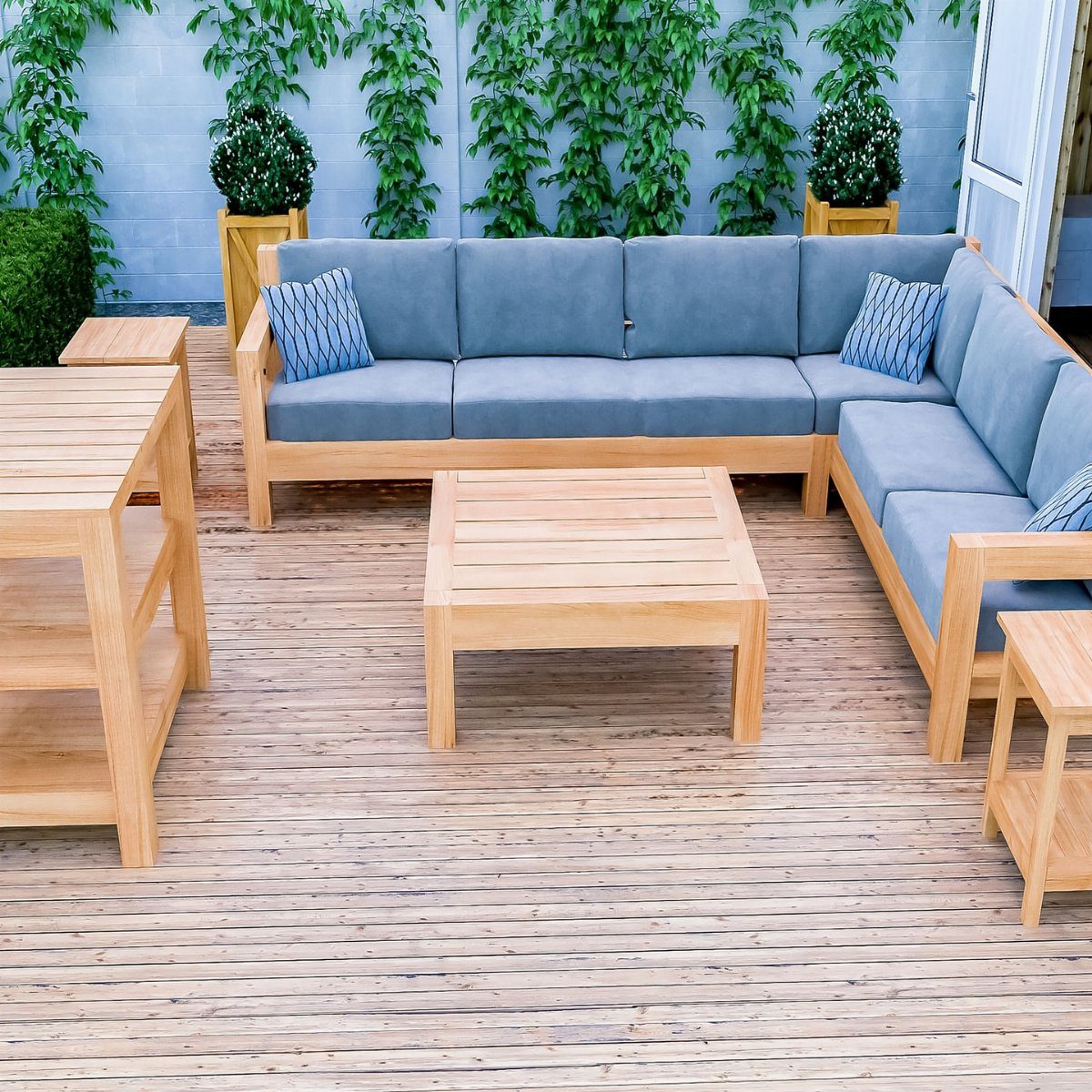
Three separate pieces make up this sectional: a corner chair without armrests on two sides, plus a two-seater and a three-seater sofa that push against it.
The reader can rearrange them later or build only the pieces that fit their deck.
Horizontal slats between the legs are optional but worth adding. They keep throw pillows from sliding through and give the frame a cleaner look.
Cut three 1x3s to fit the exact gap between each pair of legs, around 27 1/4 inches, though framing lumber varies piece to piece so measure after assembly.

【7-Piece Replacement Set】Our outdoor chair cushions include 4 seat cushions and 3 back pillows—designed specifically for 6-seat patio sectionals. An easy all-in-one solution to refresh your outdoor space without the hassle of mixing and matching. Please carefully measure your existing furniture before ordering to ensure proper fit.

【𝗦𝗶𝘇𝗲 & 𝗣𝗮𝗰𝗸𝗮𝗴𝗲 𝗥𝗲𝗺𝗶𝗻𝗱𝗲𝗿】Please measure your outdoor furniture first for a perfect fit. Our patio furniture cushions are vacuum-packed for shipping and will expand to full 4" thickness within 48-72 hours. Due to natural fabric properties, slight color variations may occur under different lighting or screens

𝐖𝐀𝐑𝐍𝐈𝐍𝐆: Due to vacuum compression, the outdoor cushions thickness may not initially reach the specified dimensions, 𝐩𝐥𝐞𝐚𝐬𝐞 𝐚𝐥𝐥𝐨𝐰 𝐭𝐡𝐞 𝐜𝐮𝐬𝐡𝐢𝐨𝐧𝐬 𝐭𝐨 𝐬𝐢𝐭 𝐟𝐨𝐫 𝟒𝟖-𝟕𝟐 𝐡𝐨𝐮𝐫𝐬 𝐭𝐨 𝐚𝐜𝐡𝐢𝐞𝐯𝐞 𝐭𝐡𝐞 𝐟𝐮𝐥𝐥 𝟒-𝐢𝐧𝐜𝐡 𝐭𝐡𝐢𝐜𝐤𝐧𝐞𝐬𝐬 𝐚𝐟𝐭𝐞𝐫 𝐠𝐞𝐧𝐭𝐥𝐲 𝐟𝐥𝐮𝐟𝐟𝐢𝐧𝐠 𝐭𝐡𝐞𝐦
2. Modern Outdoor Sofa
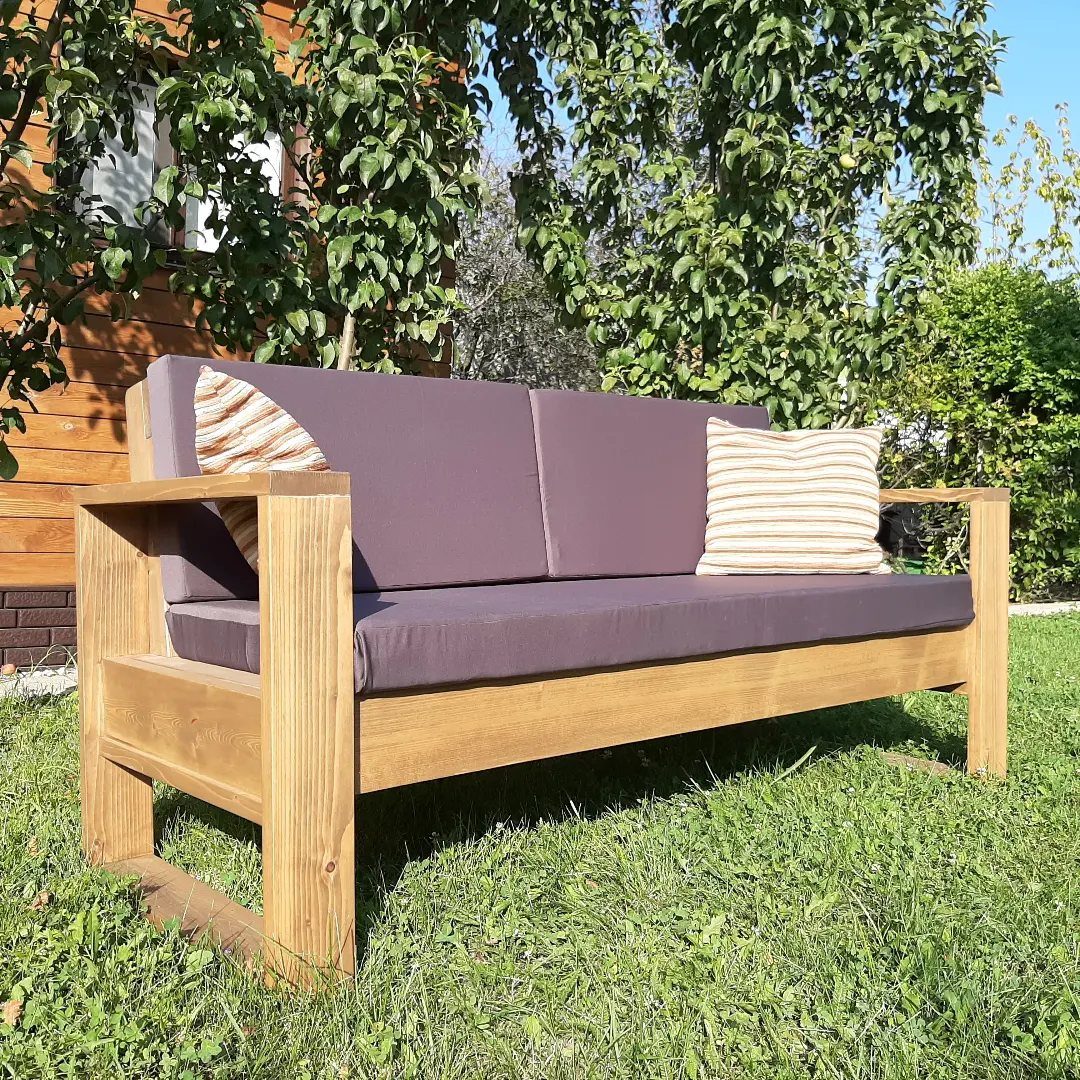
Cedar keeps its shape through wet seasons better than pine, which is why most outdoor builds that last start there. A straight, low frame with a backrest tilted just enough to sit in for an hour without shifting around.
The build order runs: sides first, then the seat base, then the backrest, then marry the three together.
Cushions go on last and should be deep enough to overhang the front rail by a few inches, or the wood edge presses against the back of your knees.

Protection of Your Sofa Cushion: The outdoor cushion cover can make your old cushion look new, and can protect the cushion from daily wear and scratches, but also can avoid accidental splash stains and pet scratches,It is an ideal choice for families with children and pets

【Perfect Fit for Loveseats】Includes 1 seat (46"L x 26"W x 4"H) and 2 backs (24"L x 19"W x 4"H). Whether you need outdoor loveseat cushions for a wicker frame or love seat cushions for outdoor furniture for a standard patio set, this size fits most wicker loveseat cushions outdoor applications.

[3 Piece Wicker Cushion Set ] Aegisun’s 3 piece wicker cushion set includes 1 loveseat cushion (44" x 19") and 2 U-shape cushions (19" x 19" x 5"). Designed as outdoor cushions for wicker furniture, it fits most rattan chairs, patio benches, and outdoor settees. Please measure your chair before purchasing for best fit.
3. Wood Pallet Outdoor Couch
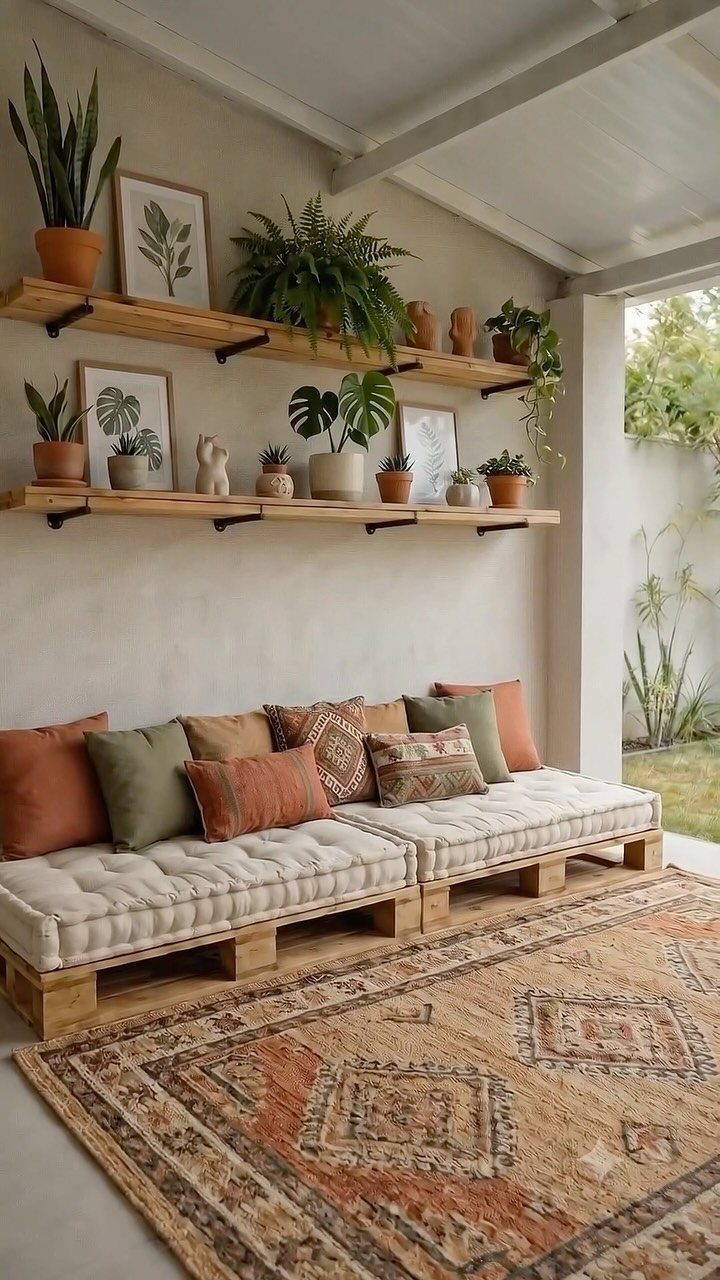
Pallets keep the seat close to the ground, which works well under a covered patio where water pooling is not the main worry.
The thick tufted cushions do most of the comfort work; the pallets just need to be solid, the same size, and screwed together so they do not drift apart.
A 2×4 frame build is the alternative if the pallet source dries up or the slats are too uneven. Basic joinery and a stack of boards will get you a similar low profile with cleaner lines.
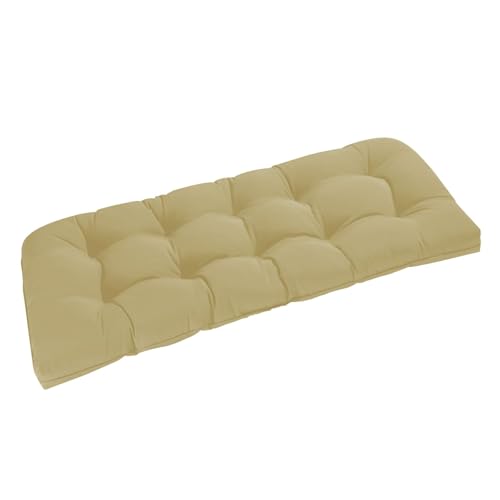
Size and Package: Bench cushion measures 44 X 19 X 5 inches, fitting most standard benches; vacuum-packed shipping may cause slight creases, iron or flatten wrinkles; pressing and tapping after unpacking helps swing cushions fluff up in 24–48 hours

【7-Piece Replacement Set】Our outdoor chair cushions include 4 seat cushions and 3 back pillows—designed specifically for 6-seat patio sectionals. An easy all-in-one solution to refresh your outdoor space without the hassle of mixing and matching. Please carefully measure your existing furniture before ordering to ensure proper fit.

Memory Foam for Ultimate Comfort: Our outdoor seat cushions are filled with shredded memory foam for exceptional support. The plush thickness ensures comfort and provides strong support for you. Memory foam always keeps shape and performs well over time
4. White Painted Wooden Daybed Couch
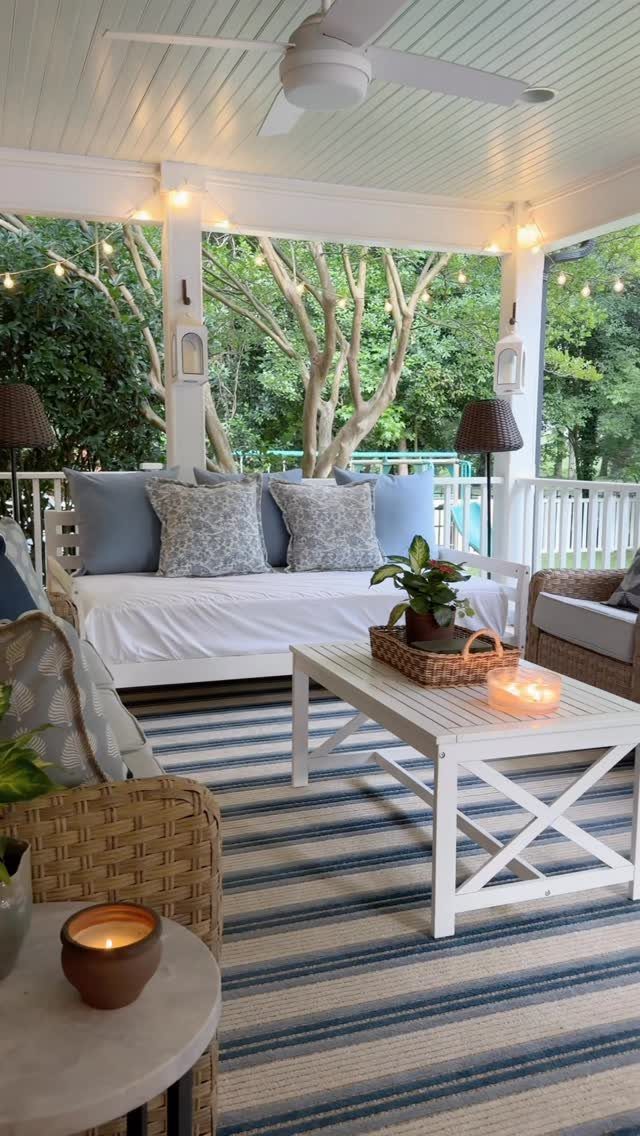
A daybed reads as seating or as a nap spot depending on pillow arrangement, which makes it useful on a covered patio where the weather will not soak the cushions.
The white paint shows dirt fast; plan on washing it down twice a season or going with a darker color from the start.
Check that your cover is deep enough. A daybed sits deeper than a standard sofa, and the first rain that blows in sideways will teach you how much overhang matters.

Extreme Climate Defense: Made from heavy-duty 220GSM ripstop oxford fabric, our twin bed cushion cover withstands 1600+ hours of direct UV exposure while being waterproof, Fade- and tear-resistant, ensures year-round protection from sun, Rain, And stains - No more rushing to store your cushions during sudden storms
5. Slatted Wood Patio Sofa
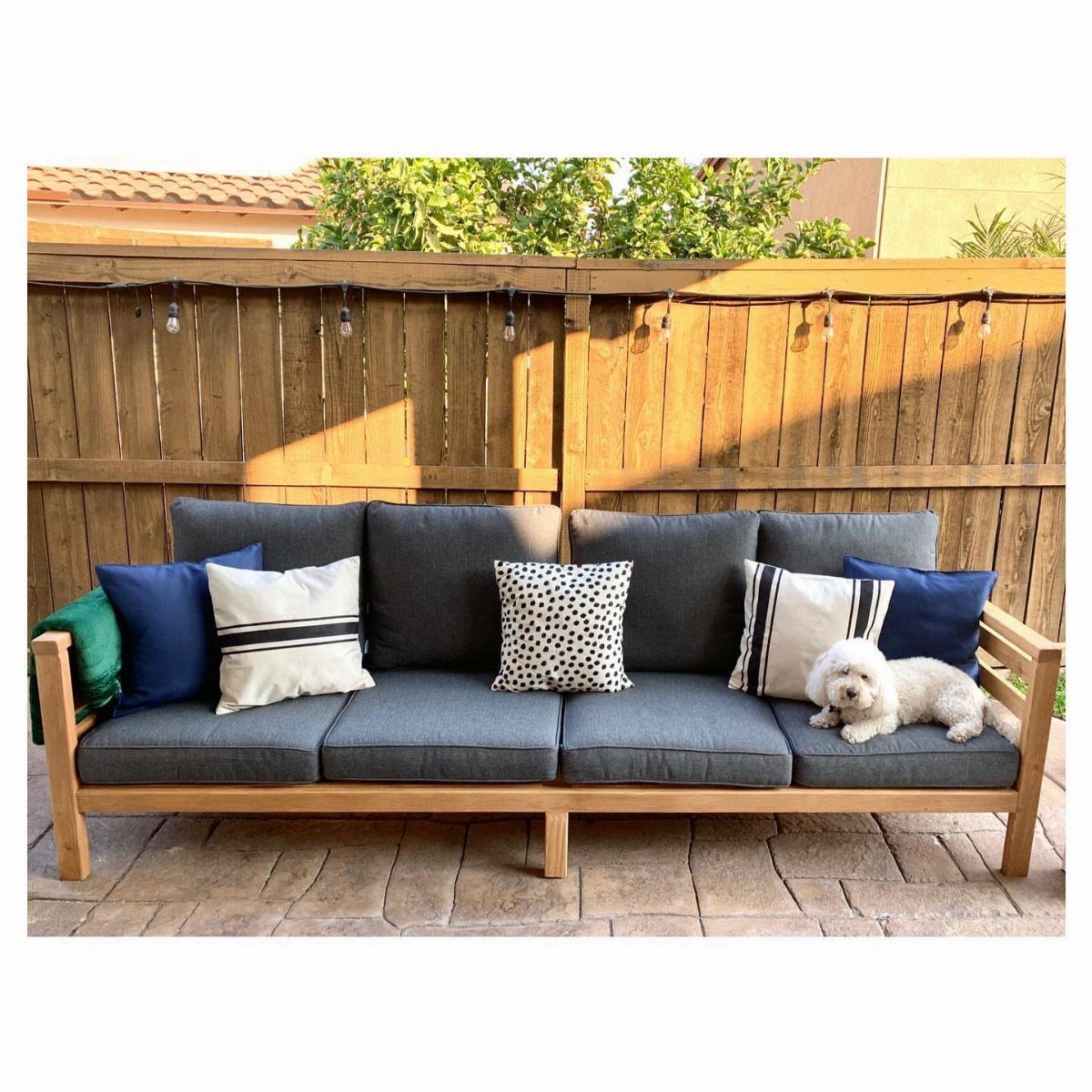
Eleven 2x4s are enough for a four-seat frame if you cut carefully and accept a simpler back.
The slats run across the seat and up the back, spaced to drain water and let air through so the cushions dry faster after a storm.
Stone underneath is forgiving; grass or dirt will rot the feet in 2 seasons unless you set the frame on pavers or post caps.
A matching coffee table plan exists from the same source if you want the set to read as one piece.
6. Woven Rope Wooden Patio Couch
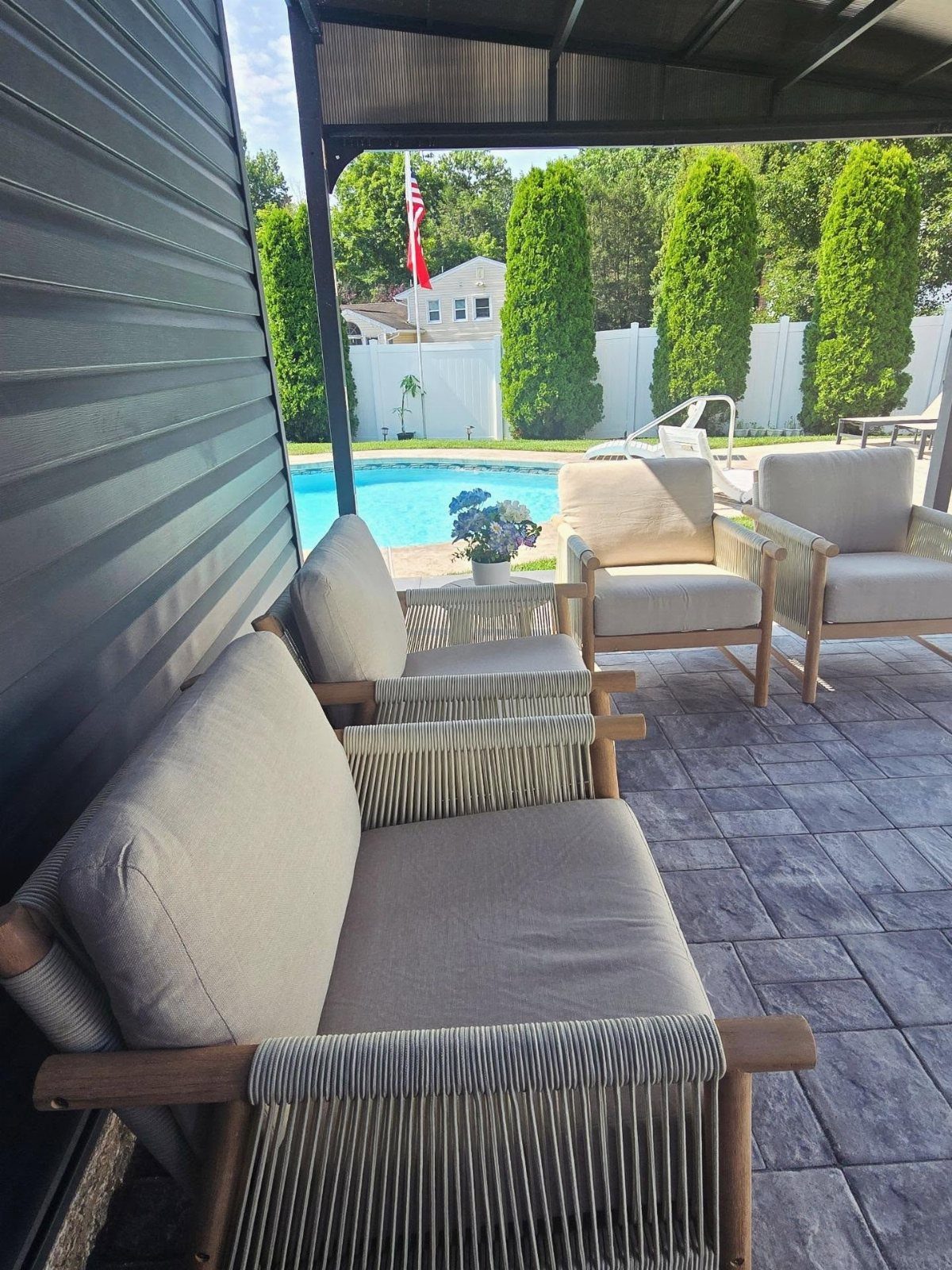
Rope weaving on the arms and back turns a plain wooden frame into something that reads coastal or Scandinavian depending on the stain.
The technique is simple lacing, not macrame: drill holes at intervals, pull the rope through, keep tension even as you go.
Thick, boxy cushions help hide where the rope ends and keep the seat comfortable.
I would check the frame width against standard cushion sizes before cutting anything; custom outdoor cushions run the budget up fast, and a frame built to fit what is already on sale saves more than the rope costs.
7. Unfinished Horizontal Wood Slat Sectional
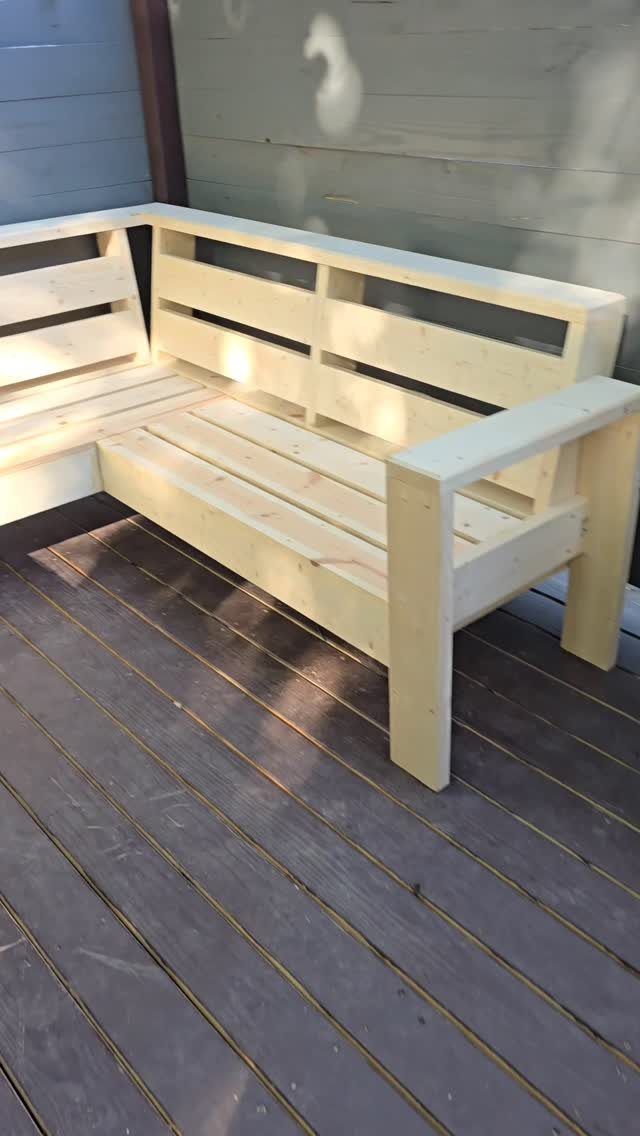
An L-shaped frame built from thick square legs and horizontal slats leaves the wood bare, which saves the step of staining or painting and lets the grain gray naturally in the sun.
The slats run across the seat and continue down to the ground, so the whole piece reads as one solid shape rather than a frame with a platform on top.
The build goes faster when no notching is required; the hardest part is keeping every measurement exact so the slats line up flush.
Sand with 100-grit first, then 220-grit, and fill visible screw holes before the wood weathers and the gaps stand out.

Protection of Your Chair Cushion: The loveseat cover can make your old chair cushion look new, and can protect the bench cushion from daily wear and scratches, but also can avoid accidental splash stains and pet scratches,It is an ideal choice for families with children and pets
8. U-shaped Wooden Outdoor Sectional
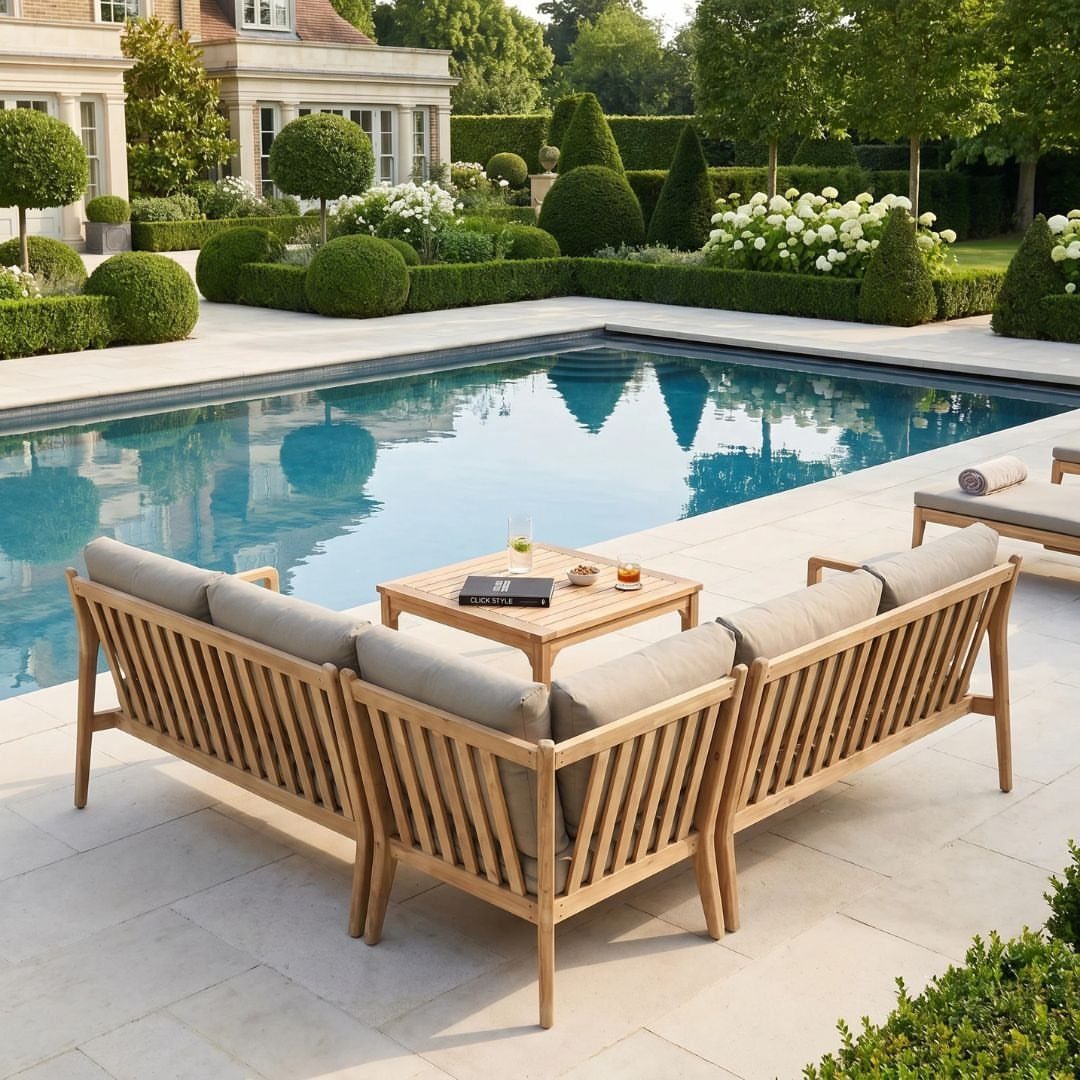
A U-shaped sectional wraps 3 sides of a coffee table, which turns a pool deck or large patio into a room with walls.
The matching low table in the center is worth building from the same plans so the seat heights and leg profiles line up.
The full U takes more lumber than an L or a straight sofa, but the pieces break down: build one arm section, one armless section, and repeat.
Each piece uses the same joinery, so the second and third builds move faster than the first. Tailored cushions keep the look clean; check depths against standard sizes before cutting frames, since custom outdoor upholstery eats a weekend budget whole.

【14-Piece Replacement Set】Our outdoor chair cushions include 6 seat cushions and 8 back pillows (2 Corner Backrest Pillows + 6 Backrest Pillows) —designed specifically for 6-seat patio sectionals. An easy all-in-one solution to refresh your outdoor space without the hassle of mixing and matching. Please carefully measure your existing furniture before ordering to ensure proper fit.

【Non-Slip Rubber Design & Easy Maintenance】Designed for patio cushions for outdoor furniture, each sofa cushion features dense non-slip rubber particles on the bottom to prevent sliding on smooth wicker or exposed frames. Ideal outdoor cushions for patio furniture and outdoor sectional use. Removable zippered covers allow easy machine washing and daily care.

【Check Dimensions Before Purchase】 To ensure a perfect fit, measure your patio furniture and compare with our patio furniture cushions. These couch cushions for patio furniture come vacuum-compressed, so confirm size before opening. After unpacking, let them sit in the sun for 72 hours so the outdoor cushions for patio furniture can rebound to 95%+ of original thickness.
Basic Construction Techniques
Most outdoor couch builds come down to crosscuts and butt joints held with exterior screws and wood glue.
A Kreg Jig or pocket-hole jig hides the screws and keeps the frame square, which matters more than fancy joinery when the piece sits on uneven stone or decking.
Brad nailers speed up slat attachment but do not carry load; use them for trim, not structure. Clamps are the tool you will reach for most, usually more than you own, so buy or borrow extras before assembly day.

Crafted with care from 250 GSM olefin fabric, it features a textured appearance, is resistant to wear and tear, and maintains color fastness after 1,600 hours of direct UV exposure. It retains its like-new appearance even after long-term use in outdoor settings such as porches and gardens.

PACKAGE INCLUDE: This cushion cover set includes outdoor daybed mattress cover twin: 1x twin size mattress cover (75*39*6inch), 2 x pillow covers (27*8inch), 2 x back pillow slipcover (36.5*20inch). COVERS ONLY - mattress and inserts not included. Please verify your cushion dimensions match our listed sizes before ordering

[Super Elasticity] Made of soft, highly elastic, and anti-wrinkle spandex polyester fabric, which is sturdy and breathable. hyha sofa slipcovers can be adapted to suit different cushion shapes and styles.
Importance of Measurements
Cushions drive every dimension that matters.
Measure the ones you actually bought, or the ones you are certain you can get, before cutting a single board. Standard sizes exist, but the cushion you want may run several inches larger or smaller than the plan assumes.
World Market cushions, for example, pushed one builder to redraw every seat depth and back height in her plans. The finished couch ends up 26 inches tall by 62 1/2 inches wide by 30 1/4 inches deep only if the cushions match those numbers.
If yours differ, adjust the cut list proportionally or the frame will swallow the cushions or leave them overhanging like a diving board.

WATER REPELLENT SPRAY: Four Scotchgard Outdoor Water Shield Fabric Spray, 10.5 oz cans, that protects fabrics against the elements

44" and 19": you will get set of 3 outdoor seat cushions, include 1 PCS 44 x 19 x 4 inch loveseat cushion and 2PCS 19 x 19 x 4 inch square shape chair cushions; Please measure your furniture's size in advance, make sure the outdoor seat cushions size fits your furniture

【FadeShield - UV Fade Resistant】FadeShield Proprietary Polyolefin are dependable indoor/outdoor performance fabrics, they are infused with antimiсrоbial silver Ion technology and can withstand 5 years of UV fade resistance, solution-dyed to make sure that each color is deeply ingrained in every fiber for continued vibrancy, even after heavy use. We recommend bringing it indoors when it rains or when not in use to preserve its lifespan and keep it looking beautiful.
Durability Considerations
Framing lumber is the cheap starting point, and it holds up fine if you leave gaps between slats for drainage and coat every surface with an outdoor finish. Whichever wood you choose, the finish matters as much as the species.
Polyurethane or exterior oil needs reapplication on the schedule the can gives you; skip it and the grain opens, the joints loosen, and the couch racks itself apart over two or three seasons.
Budgeting for DIY Projects
A basic outdoor couch can run as low as $60 in lumber if you keep the design simple, eight boards and a handful of screws. That is the floor, not the usual.
A full sectional with stain, sealer, and all-new hardware landed one builder near that mark, though she was reusing leftover material from a matching table project and only counting a fraction of the finish cost.
What actually drains the wallet is ordering cushions made to fit. Standard sizes go on sale; anything cut to order eats a weekend budget whole.
Frequently Asked Questions
Is it cheaper to build your own patio furniture?
A bare-bones outdoor couch can clock in around $60 in lumber when the design stays simple, which undercuts anything you will haul home from a store.
Store-bought sectionals and sofas with outdoor-rated frames routinely cost several hundred to over a thousand dollars. Custom cushions change the math fast, standard sizes hit clearance racks while anything cut to order can swallow the whole budget.
How can I make an easy DIY outdoor couch?
Most builds come down to crosscuts and butt joints held with exterior screws and wood glue, using standard lumber like 2x4s or 1x3s.
Start with a plan that lists cuts in order, build the sides first, then the seat base, then the backrest, and marry the three together before adding cushions.
What is the best fabric to use for an outdoor couch?
Outdoor fabric exists in tiers, and a covered patio often lets you skip the most expensive exterior-rated options since the rain never hits direct.
For cushions left fully exposed, a true outdoor fabric with UV and moisture resistance is the safer choice.